
 Pin it
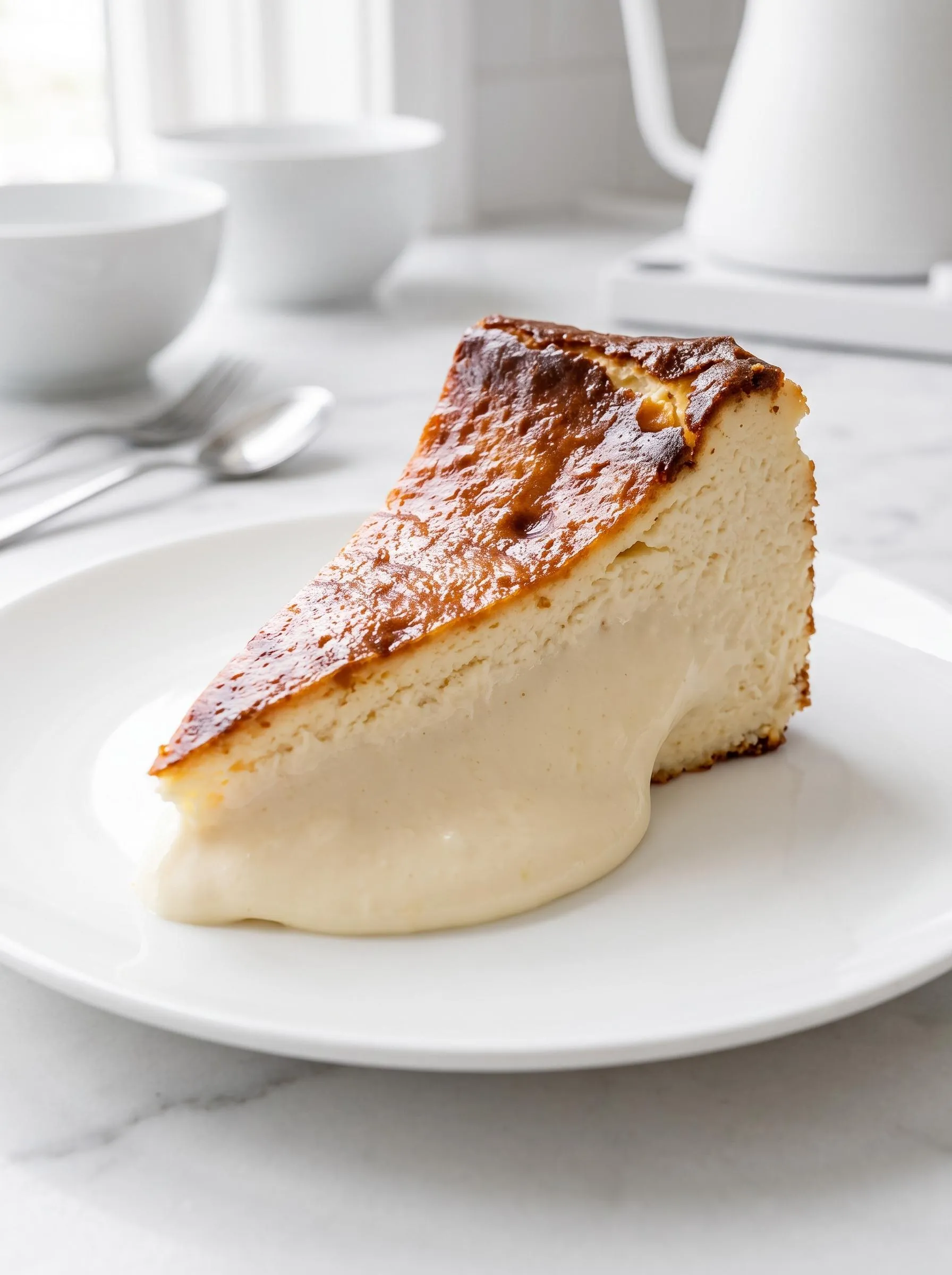
This Basque cheesecake has a unique burnt top and creamy center that makes it a showstopper dessert. Its effortlessly rustic look paired with a rich, custardy texture makes it a dessert I always reach for when I want something impressive but simple.
Ingredients
- Cream cheese room temperature full-fat block style: key for rich smooth texture
- Granulated sugar: sweetens while balancing the creaminess
- Large eggs room temperature: help the cheesecake set just right without cracking
- Heavy cream: adds silkiness and richness
- Vanilla extract: lends a gentle aromatic note
- Salt: enhances all the flavors and balances sweetness
- All-purpose flour optional: used to help give structure if you want a firmer bite, select a good quality unbleached flour
Step-by-Step Instructions
- Sift the flour if using:
- this makes sure it blends evenly and prevents lumps.
- Prepare your pan by lining it with crumpled parchment paper extending above the rim:
- this allows the cheesecake to rise without sticking and creates the iconic rustic edges.
- Beat the cream cheese with sugar until perfectly smooth about 2 minutes on medium speed:
- scraping the bowl down ensures no lumps remain and a uniform texture.
- Add eggs one at a time mixing gently on low speed to avoid air bubbles:
- this keeps the cheesecake creamy and prevents cracks.
- Pour in heavy cream vanilla extract and salt:
- stir just until silky and uniform. The batter will be thinner than a classic cheesecake, which is normal.
- Incorporate the sifted flour if using gently without overmixing:
- this helps with structure but too much mixing can toughen the cake.
- Pour the batter into your prepared pan tapping gently on the counter to release any air bubbles:
- Bake at 425 degrees Fahrenheit in the oven for 50 to 60 minutes, or in the air fryer at 320 degrees for 20 to 25 minutes then finish at 400 degrees for 3 to 5 minutes:
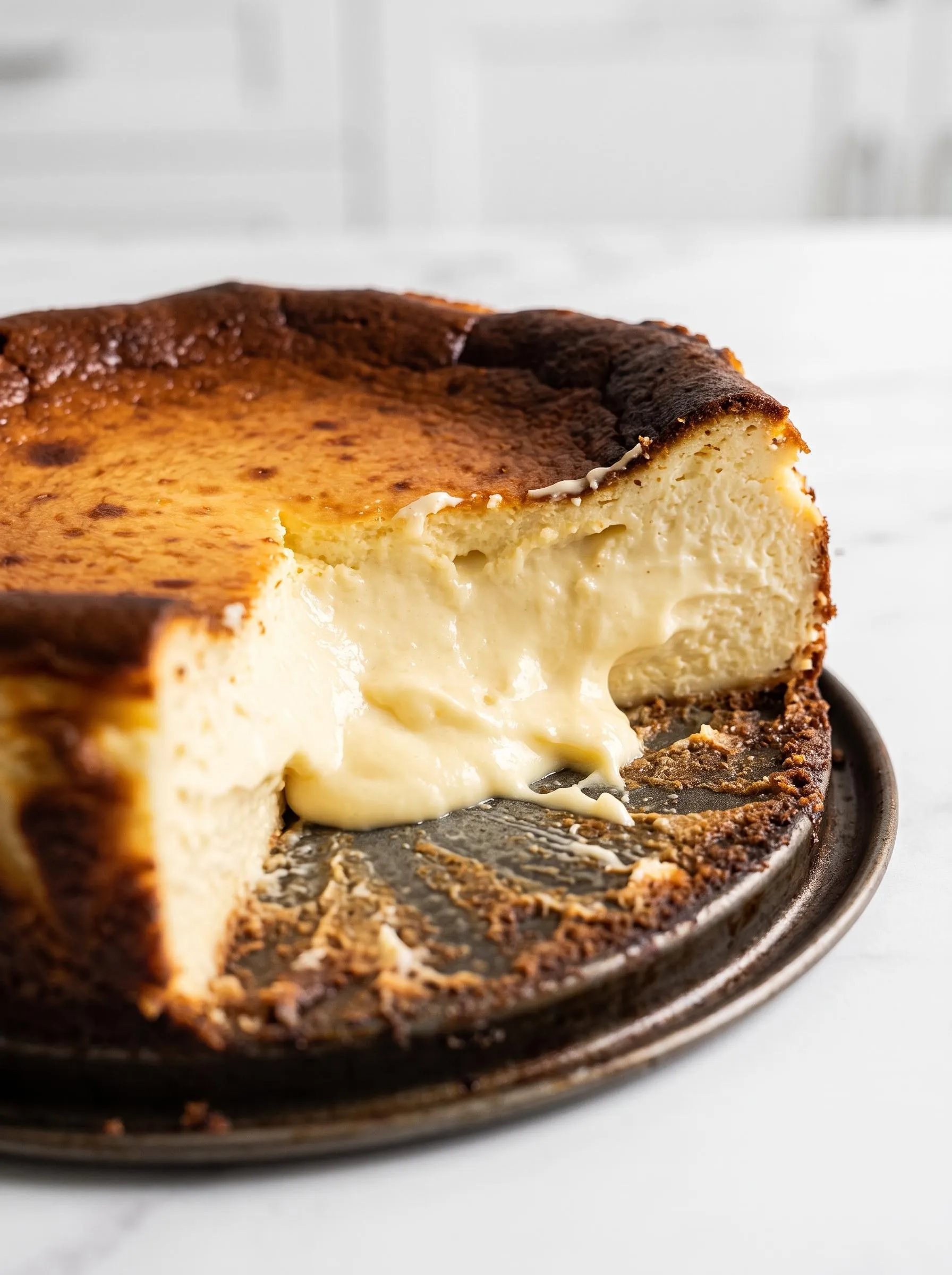
- the top should be a deep mahogany brown and the center should jiggle slightly like custard.
- Cool completely at room temperature before refrigerating for at least 4 hours or overnight for clean cutting slices:
Storage Tips
Store covered in the refrigerator for up to four days to keep the texture fresh. Wrap in plastic wrap or keep in an airtight container to prevent drying out. Leftovers can also be frozen wrapped tightly and thawed overnight in the fridge. When serving chilled take it out 15 minutes ahead to take the chill off for the best mouthfeel.
Ingredient Substitutions
For a lighter version use reduced-fat cream cheese and light cream but note the texture will be less rich and silky. Vanilla bean paste can substitute vanilla extract for a more intense flavor. If wheat flour is a concern omit the flour entirely – the cheesecake will be softer but still delicious. You can replace sugar with a fine coconut sugar or a mild honey but avoid anything with strong flavor that would overshadow the cheesecake.
Serving Suggestions
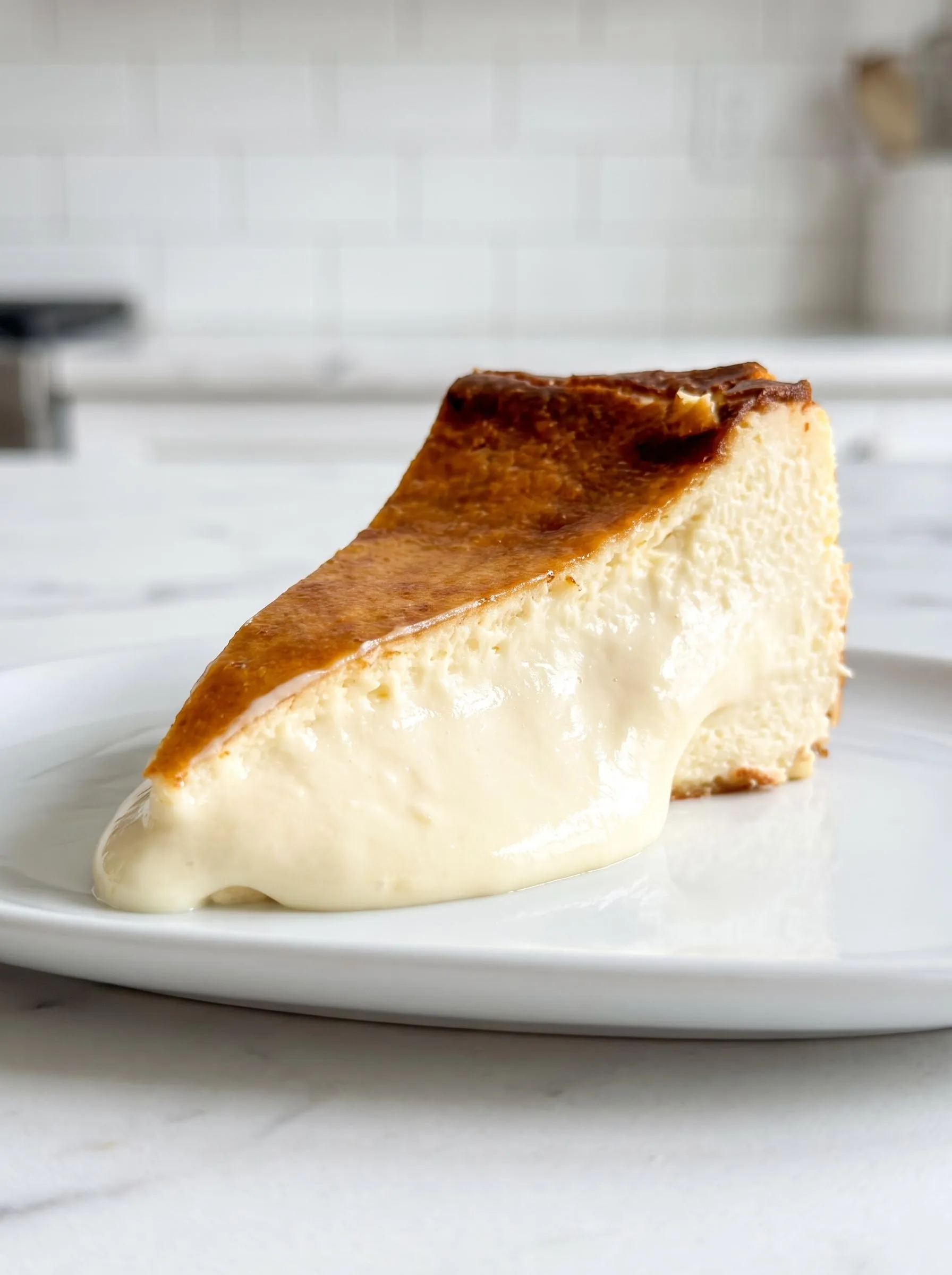
Serve simple with a dusting of powdered sugar or fresh berries to contrast the richness. A drizzle of berry compote or a spoonful of lemon curd brightens the flavors beautifully. Pairs wonderfully with a cup of strong espresso or lightly chilled dessert wine.
Cultural Context
Originating from the Basque region in Spain this cheesecake is a relatively recent invention but has quickly become famous worldwide. Its rustic burnt top contrasts traditional cheesecakes that are usually smooth and pale. The style celebrates imperfection and depth of flavor over polished appearance.
Frequently Asked Questions
- What makes Basque cheesecake different from regular cheesecake?
Basque cheesecake is known for its deeply caramelized, almost burnt top and a creamy, custard-like center, achieved by baking at a high temperature to create a unique texture contrast.
- Can I use an air fryer to bake this cheesecake?
Yes, an air fryer can be used with a smaller 6-inch pan. It requires adjusting cooking temperatures and times to achieve the same caramelized top and creamy interior.
- Why is the batter thinner than traditional cheesecakes?
The batter has a higher proportion of cream and less flour, resulting in a lighter, silkier texture compared to denser cheesecakes.
- What is the purpose of chilling the cheesecake for several hours?
Chilling allows the cheesecake to set firmly, making it easier to slice cleanly while enhancing the texture and flavors.
- Can I use cream cheese straight from the fridge?
Room temperature cream cheese is recommended for smooth, even mixing and to avoid lumps in the batter.
- Should I cover the cheesecake while baking?
No covering is needed; the exposed surface develops the characteristic dark, caramelized crust during baking.
