
 Pin it
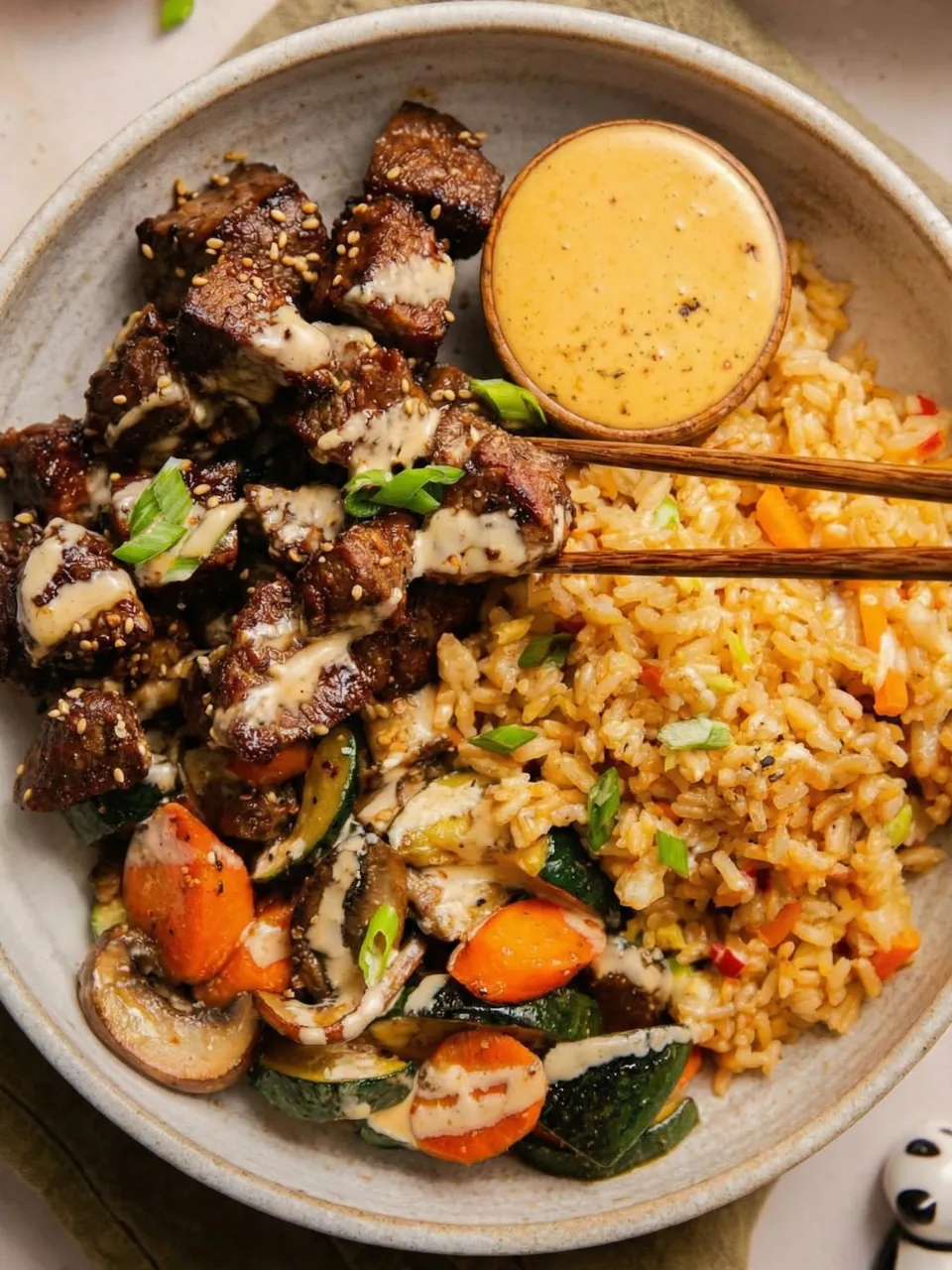
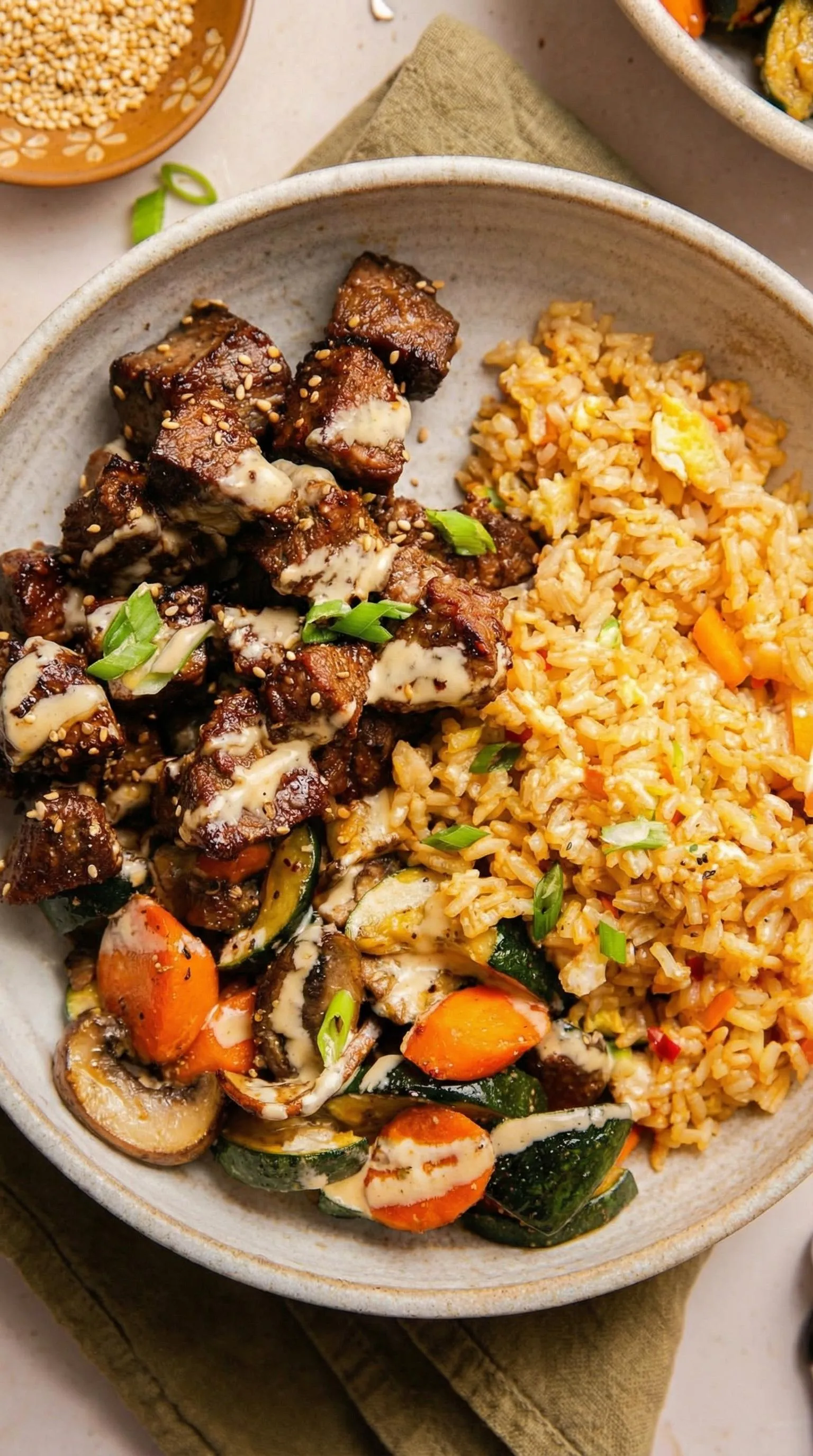
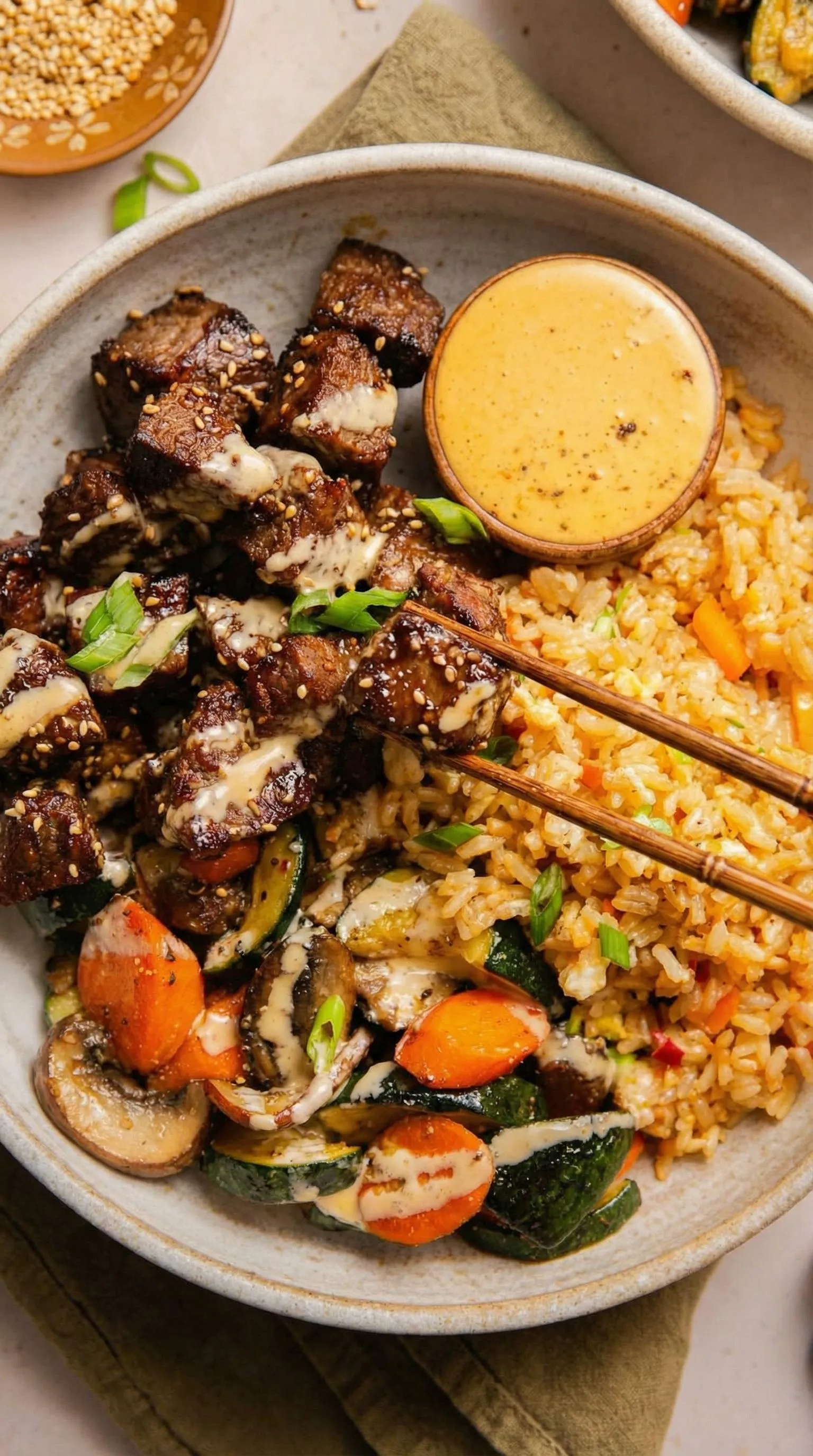
These Hibachi Steak Bowls are packed with tender sirloin, savory sautéed vegetables, and flavorful fried rice for an irresistible meal that brings Japanese steakhouse favorites right to your kitchen. Inspired by beloved restaurants like Benihana and Kobé, this recipe is simple enough for a weeknight dinner but special enough to impress guests. The blend of mirin, garlic, ginger, and teriyaki sauce gives the beef a rich, authentic flavor that pairs perfectly with the crisp veggies and creamy Yum Yum sauce.
I made this during a busy week and found it not only satisfying but also a crowd-pleaser. Now it’s one of my go-to easy dinners when I want something comforting but impressive.
Ingredients
- Two pounds top sirloin steak: cut into chunks for perfect bite-size pieces with great texture
- One tablespoon mirin: to add subtle sweetness and depth typical of Japanese cooking
- Six cloves garlic: minced finely for sharp, aromatic flavor
- Two teaspoons ginger paste: which complements the garlic and brightens the dish
- Three tablespoons sesame oil: divided for cooking vegetables and steak adding toasted nutty notes
- Half teaspoon ground white pepper or black pepper: to season with mild heat
- Kosher salt: to enhance all the flavors naturally
- Four tablespoons unsalted butter: split to enrich both veggies and steak
- Three medium carrots: sliced thin on a bias for visual appeal and crunch
- Two medium zucchinis: cut into half moons delivering freshness and mild flavor
- Four to five ounces sliced baby bella mushrooms: for earthiness and texture
- Half teaspoon garlic powder: to layer additional garlic flavor with the veggies
- One to two tablespoons teriyaki or Japanese BBQ sauce: for authentic glaze and sweetness
- Store-bought Yum Yum Sauce: for finishing with creamy tang. Choose a quality brand like Terry Ho’s if you can find it
- Fried rice: for serving. A convenient frozen brand is perfect or use your favorite homemade rice
Step-by-Step Instructions
- Prep and Marinate Steak:
- Combine the sirloin chunks with mirin, minced garlic, ginger paste, one teaspoon sesame oil, ground pepper, and salt. Toss well so every piece is lightly coated. Let the steak sit at least 30 minutes to soak up all those beautiful flavors before cooking.
- Sauté the Vegetables:
- Heat two tablespoons butter and one tablespoon sesame oil in a large skillet or wok over medium heat until shimmering. Add the sliced carrots, zucchinis, and mushrooms. Stir frequently so they cook evenly and develop golden edges over 10 to 15 minutes. Season with garlic powder, salt, and pepper to taste. Transfer cooked veggies to a clean plate and wipe the pan if necessary before moving on.
- Cook the Steak:
- Add the remaining two tablespoons butter and one tablespoon sesame oil to the same pan, heating over medium-high heat. Once hot, add the marinated steak in a single layer. Toss often and cook quickly for three to four minutes until nicely seared but still tender inside. Pour the teriyaki or Japanese BBQ sauce over the steak, tossing to coat every chunk until glossy. Remove from heat promptly.
- Assemble the Bowls and Serve:
- Divide fried rice evenly into shallow bowls. Top with the sautéed vegetables and glossy teriyaki steak. Drizzle everything with store-bought Yum Yum Sauce or serve it on the side for dipping. Enjoy immediately while hot and flavorful.
Storage Tips
Store any leftovers in an airtight container in the refrigerator for up to four days. To keep the veggies from getting soggy, reheat the steak and rice gently in a skillet then toss in the veggies at the end just to warm through. Avoid microwaving Yum Yum sauce – add fresh when serving.
Ingredient Substitutions
If you can’t find mirin, a mix of dry white wine with a pinch of sugar works well. You can swap baby bella mushrooms for shiitake or button mushrooms depending on availability and taste preferences. Teriyaki sauce can be replaced by hoisin sauce or a mix of soy sauce and honey for a similar sweet-salty glaze.
Serving Suggestions
These bowls are great on their own but can be complemented with a side of steamed edamame or miso soup for a full Japanese-inspired meal. Garnish with sliced green onions or a sprinkle of sesame seeds for extra texture and color at the table.
Cultural Background
Hibachi style cooking originated in Japan as a way to grill and sauté meat and vegetables over a charcoal fire. The influence of American Japanese steakhouses brought these flavors and techniques stateside where they evolved into the popular hibachi bowls packed with fresh seasonal items and bold sauces.
Frequently Asked Questions
- What cut of beef works best for hibachi bowls?
Top sirloin is ideal for its tenderness and flavor, searing nicely without becoming tough.
- How can I achieve a crispy texture for the vegetables?
Sauté the carrots, zucchini, and mushrooms over medium heat, tossing often until golden and tender.
- What is a good alternative to mirin in the marinade?
A mix of white wine and a bit of sugar can substitute mirin’s sweet, tangy profile.
- Can I use fresh ginger instead of ginger paste?
Yes, finely minced fresh ginger works well, adding a bright, aromatic flavor.
- How do I prevent the steak from becoming tough when cooking?
Cook steak quickly over medium-high heat, tossing often, and avoid overcooking to maintain juiciness.
