
 Pin it
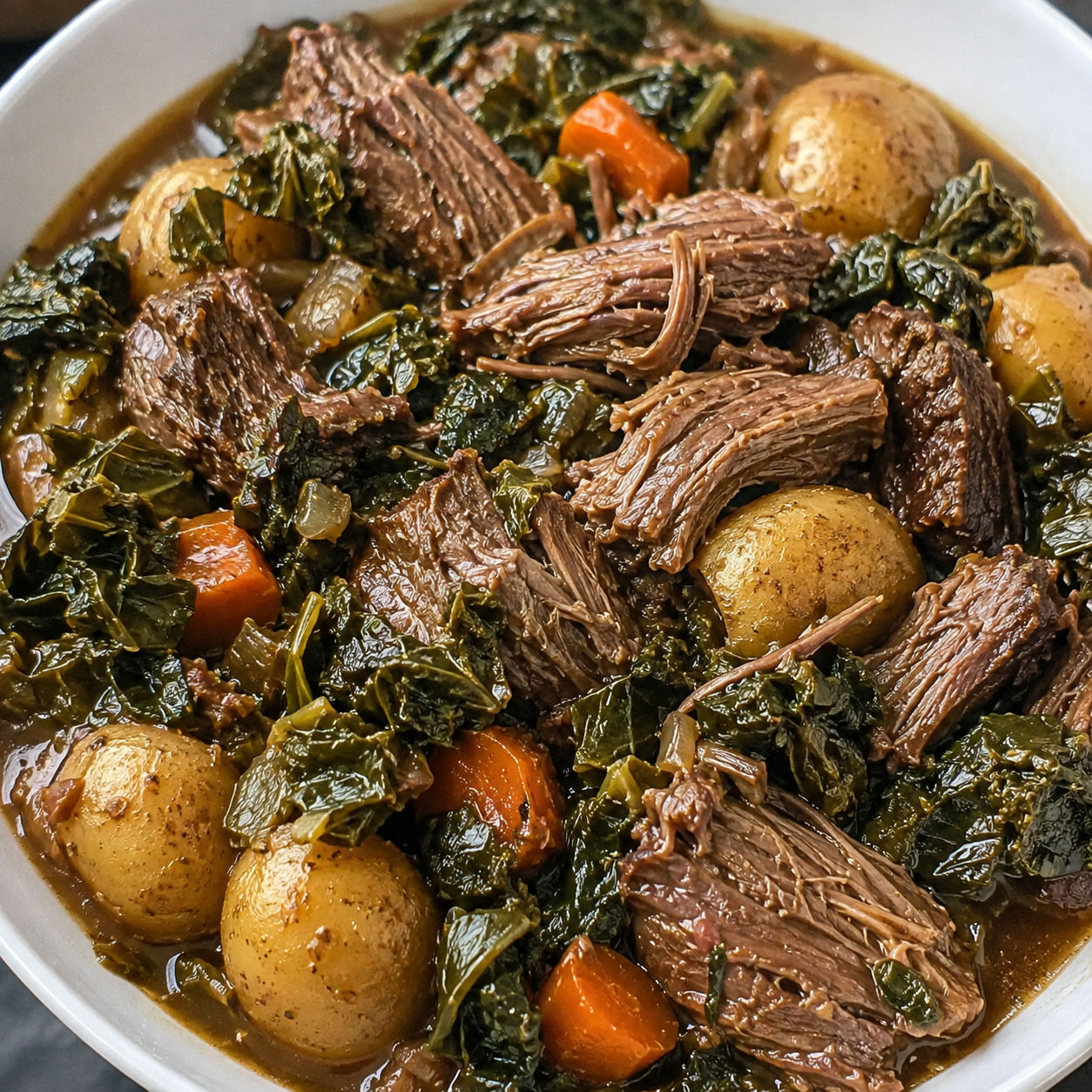
Pot roast dinner with mixed greens Delicious is built for a slow afternoon when you want the whole meal in one heavy pot. The beef cooks until it pulls apart with a fork, while collards, mustard greens, and kale soak up the beefy broth.
I like this version because the greens are not an afterthought. They cut through the richness and bring a peppery bite that keeps the plate from feeling heavy.
The timing matters most. Root vegetables go in after the roast has softened, and the greens go in last so they turn silky without losing all their color.
The Beef And Greens Lineup
This is a sturdy, practical ingredient list. Choose a well-marbled chuck roast, firm potatoes, sweet carrots, and mixed greens with enough body to handle a hot braise.
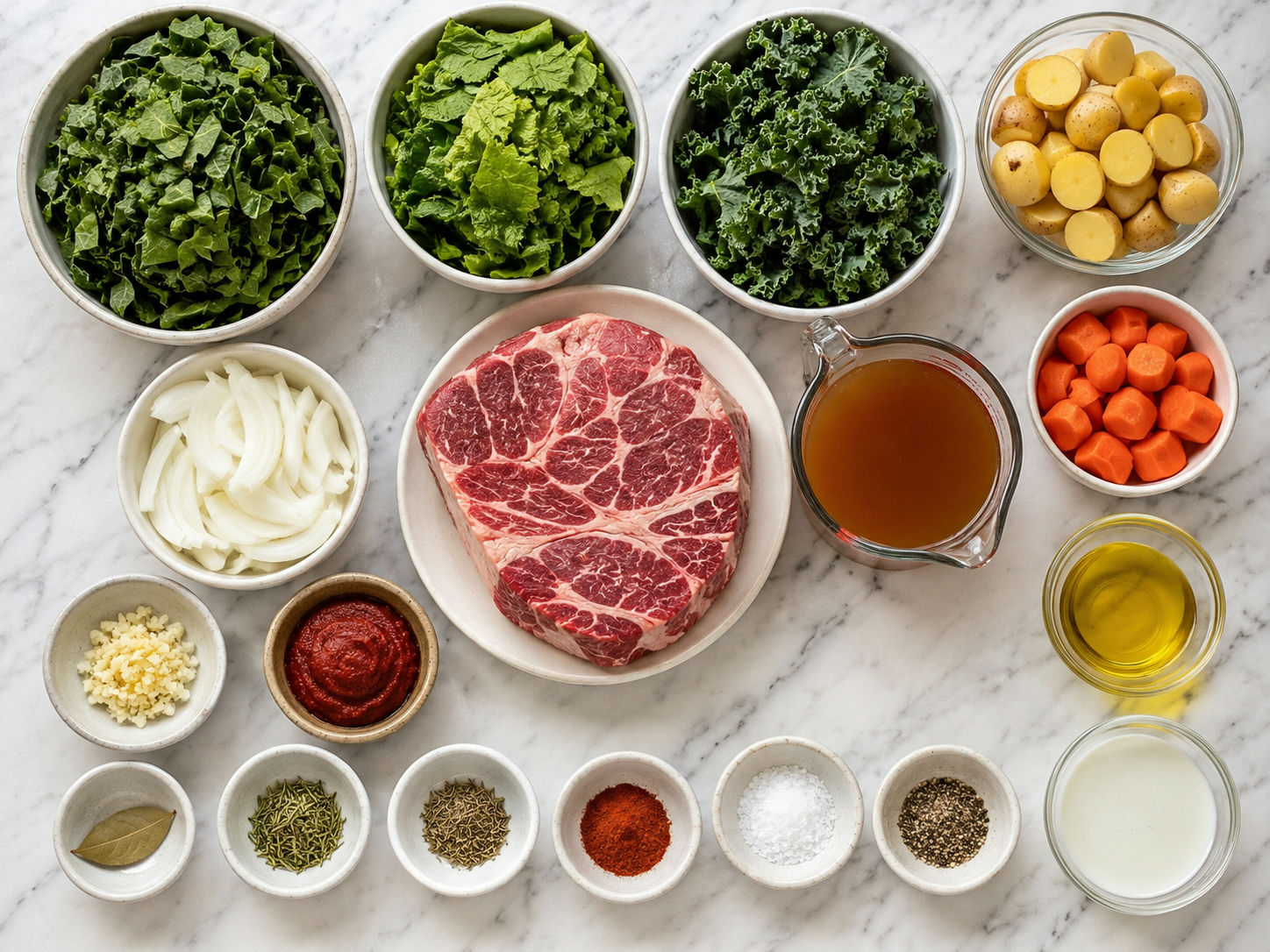
- Chuck roast. The main protein, rich with connective tissue that softens during slow cooking.
- Mixed greens. Collards, mustard greens, and kale bring earthy flavor and keep the dinner balanced.
- Yellow onion and garlic. These melt into the broth and give the gravy a rounded base.
- Carrots and potatoes. They make the pot roast feel like a full dinner, not just sliced beef.
- Beef stock. The braising liquid that becomes the gravy after hours in the pot.
- Tomato paste. A small spoonful deepens the color and adds savory sweetness.
- Apple cider vinegar. A little acid wakes up the greens and cuts the richness.
- Rosemary, thyme, and bay leaf. These give the roast a classic Sunday-dinner aroma.
Cook It Low And Steady
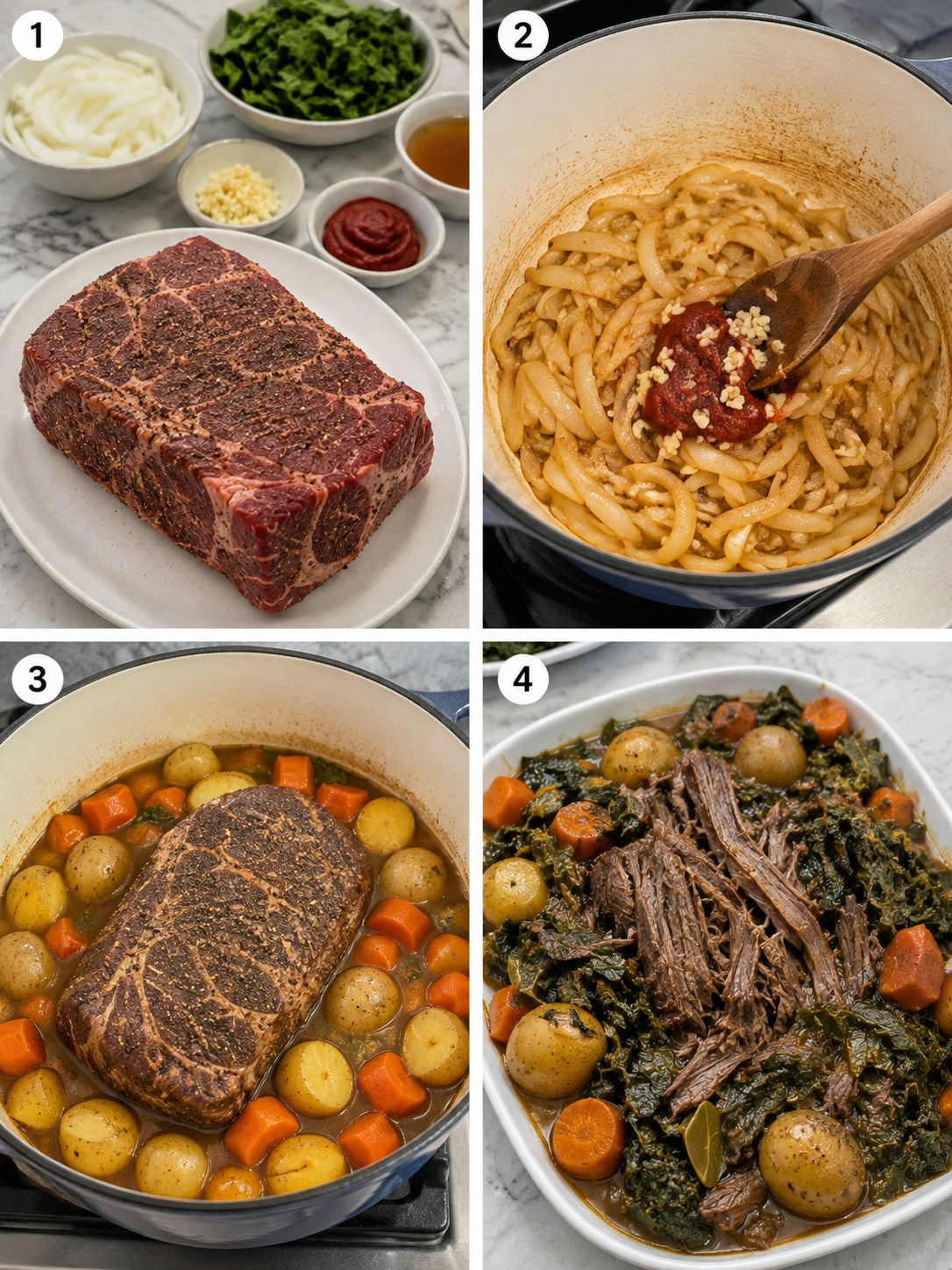
- Season and sear. Pat the roast dry, season it well, and brown it deeply in a Dutch oven. The darker crust gives the broth more flavor.
- Build the braise. Cook the onion and garlic, stir in tomato paste, then pour in stock while scraping up the browned bits on the bottom.
- Braise the beef. Return the roast to the pot with herbs, cover, and cook at 300°F until it starts to soften, about 2 hours.
- Add root vegetables. Tuck in the potatoes and carrots and keep braising until the beef is nearly fork-tender.
- Fold in the greens. Add chopped mixed greens with vinegar and a little of the hot broth spooned over the top. Cover until the greens soften.
- Finish the gravy. Move the beef and vegetables to a platter, simmer the broth with a cornstarch slurry, then spoon it over everything.
Why Chuck Turns Tender
Pot roast is not cooked like a steak. Chuck needs time in moist heat so the tough parts relax and the meat breaks into tender pieces. The USDA safe temperature chart lists safe internal temperatures, but tenderness for chuck usually happens well beyond that point. Go by feel here. A fork should slide in with little resistance.
If you like a more classic beef-only plate, the same low braise shows up in Classic Pot Roast Beef. This version keeps the same comfort and adds greens right into the pot.
Keep The Greens Bright
Mixed greens can handle heat, but they still need good timing. Add them once the beef is almost done. Collards take longer than kale, so chop collards a little thinner if your mix has large leaves. Mustard greens bring peppery heat and can taste sharp at first, but vinegar and beef broth smooth that edge.
The idea is close to the comfort in Gumbo Greens With Rice and Cornbread, where greens carry the broth instead of sitting beside it. For a bolder pepperoncini-style take, I also looked at Mississippi pot roast collard greens while shaping this recipe.
Smart Swaps That Work
You can use beef shin, brisket, or boneless short ribs if chuck is not available. Beef shin takes longer but gives a rich sauce, similar to the winter-greens approach in pot-roast beef with greens. For vegetables, parsnips or turnips can replace some of the potatoes. If you want heat, add sliced pepperoncini or a pinch of crushed red pepper with the greens.
Make The Gravy Taste Full
The gravy starts before the slurry. Browned beef, tomato paste, onions, and stock do most of the work. Cornstarch only thickens what is already there. If the broth tastes flat after the roast is tender, simmer it uncovered for a few minutes before thickening. Then add vinegar a teaspoon at a time until the greens and beef taste lively.
Serve this with Slow Cooker Mashed Potatoes if you want extra comfort, or keep it as a one-pot plate with the potatoes from the recipe.
Storage And Reheat Notes
This dinner reheats well because the beef sits in broth. Store the meat, vegetables, greens, and gravy together so nothing dries out. Warm leftovers in a covered skillet or saucepan over low heat. Add a splash of stock if the gravy has tightened in the fridge.
For freezing, pack the beef and gravy together, but know that potatoes soften after thawing. The flavor is still good. The texture is just more stew-like. For another slow beef dinner with the same cozy feel, try Slow Cooked Beef Dinner.
Conclusion
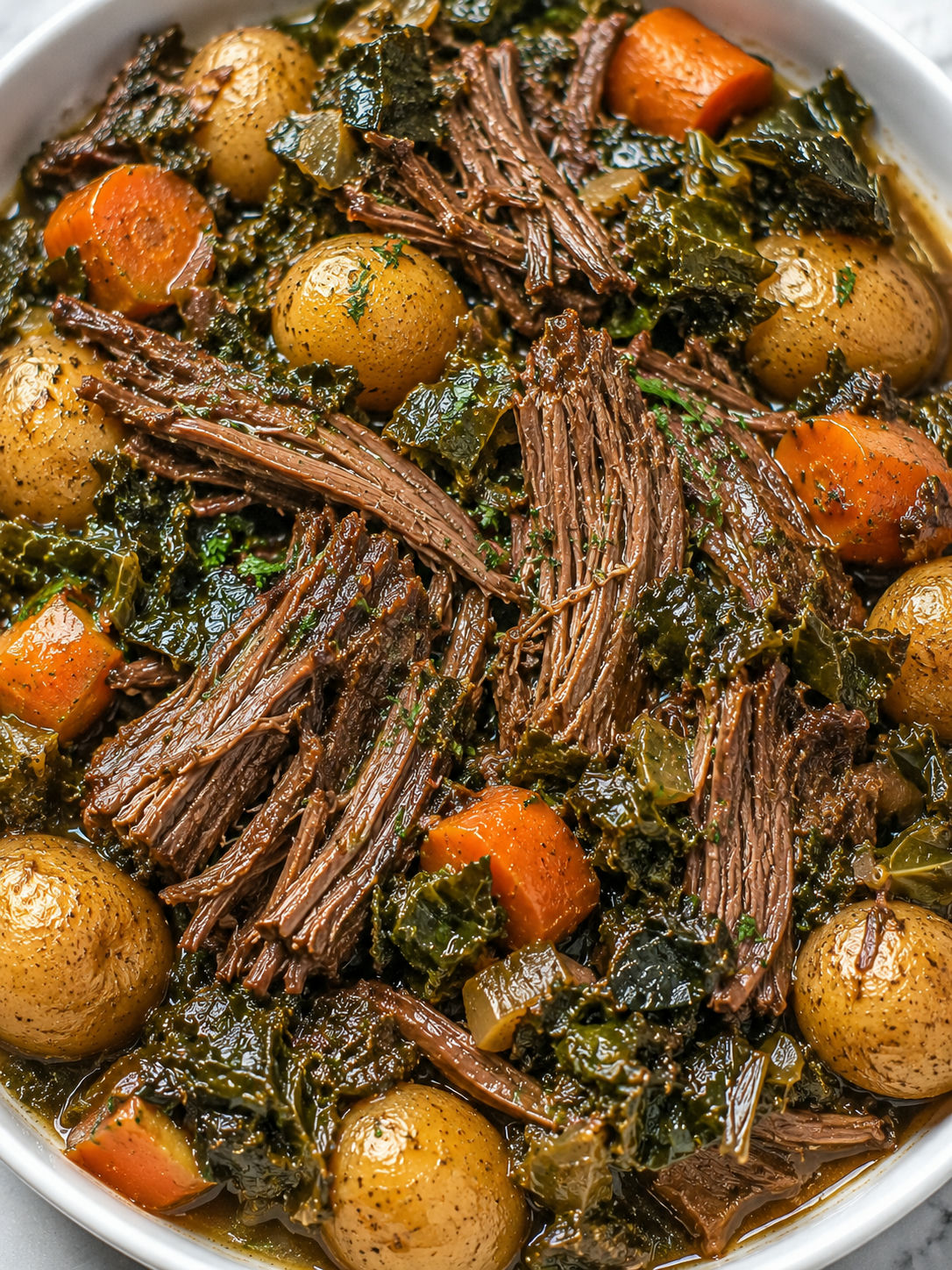
A full Dutch oven pot roast dinner with tender beef, root vegetables, mixed greens, and a savory gravy made from the braising liquid.
Frequently Asked Questions
- What cut of beef is best for pot roast with greens?
Chuck roast is the best easy-to-find cut because it has enough connective tissue and fat to turn tender during a long braise. Brisket or beef shin also work, but chuck is the most forgiving for a home Dutch oven dinner.
- Can I use bagged mixed greens?
Yes, but choose sturdy cooking greens, not tender salad greens. Bagged collards, kale, mustard greens, or turnip greens are fine if they are clean and not too finely shredded.
- When should I add the greens to pot roast?
Add greens during the last 20-25 minutes of cooking. That gives them enough time to soften and absorb the broth without turning dull and mushy.
- Can I make this pot roast dinner in a slow cooker?
Yes. Sear the beef first, then cook it with the broth and aromatics on low for 7-8 hours. Add potatoes and carrots for the last 2 hours, then stir in the greens for the last 30-45 minutes.
- How do I store leftovers?
Cool leftovers quickly and refrigerate them in an airtight container for up to 4 days. Reheat gently on the stove with a splash of broth so the beef stays moist and the greens do not scorch.
- What should I serve with this dinner?
It already has potatoes, carrots, and greens, so you do not need much. Cornbread, rice, or creamy mashed potatoes are good if you want something to catch the broth.
