
 Pin it
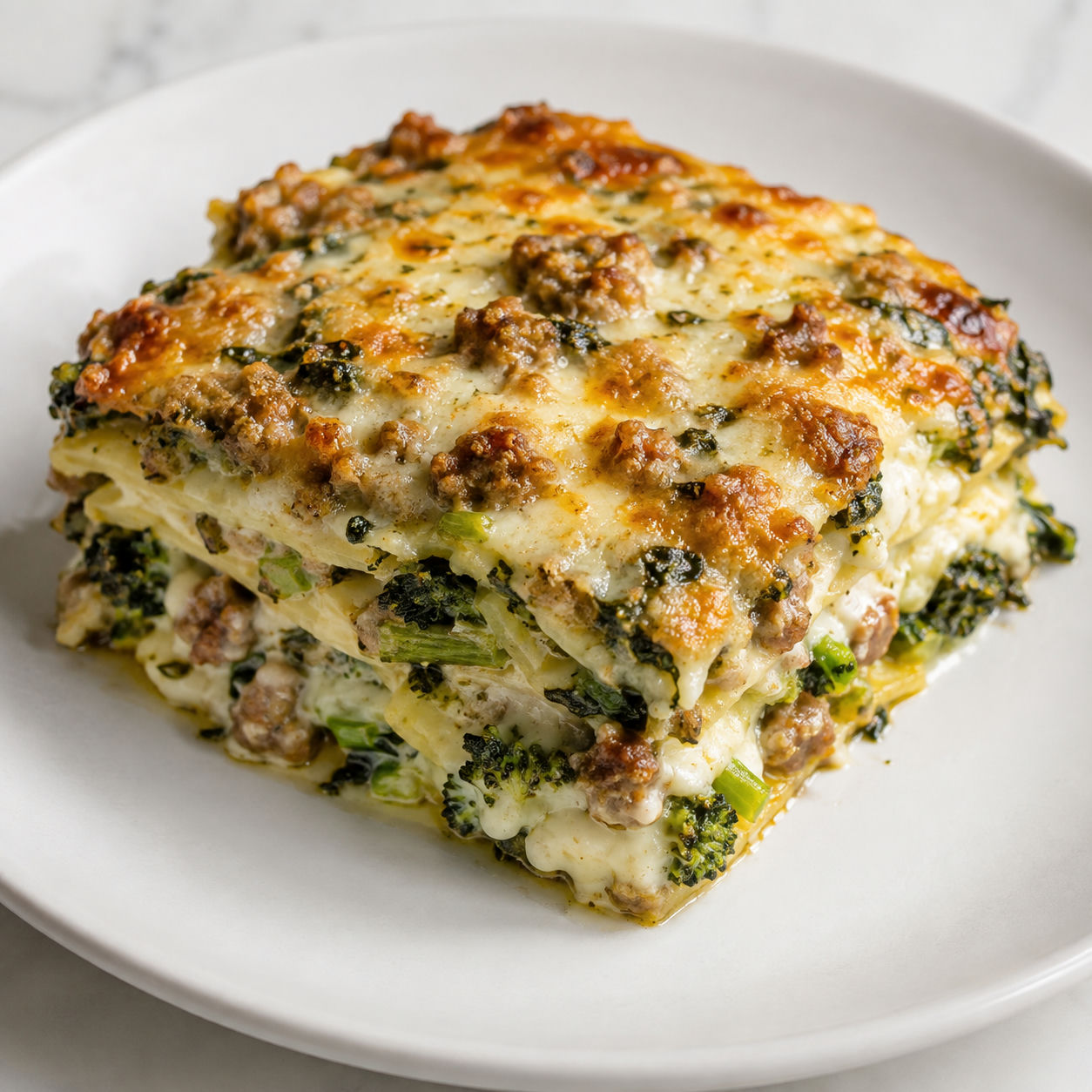
White Lasagna with Italian Sausage, Broccoli Rabe & Parmesan is the kind of baked pasta that tastes like a Sunday project, but it is not fussy. The sausage brings fennel and fat, the broccoli rabe keeps the richness in check, and the Parmesan sauce settles into every noodle.
I like this when red-sauce lasagna feels too heavy. It comes out creamy, savory and a little bitter in the best way, with crisp cheese around the edges and soft layers in the center.
The Creamy Green Lineup
Choose broccoli rabe with crisp stems and deep green leaves, not yellowing tips. For the cheese, grate Parmesan yourself so it melts into the sauce instead of sitting grainy on top.
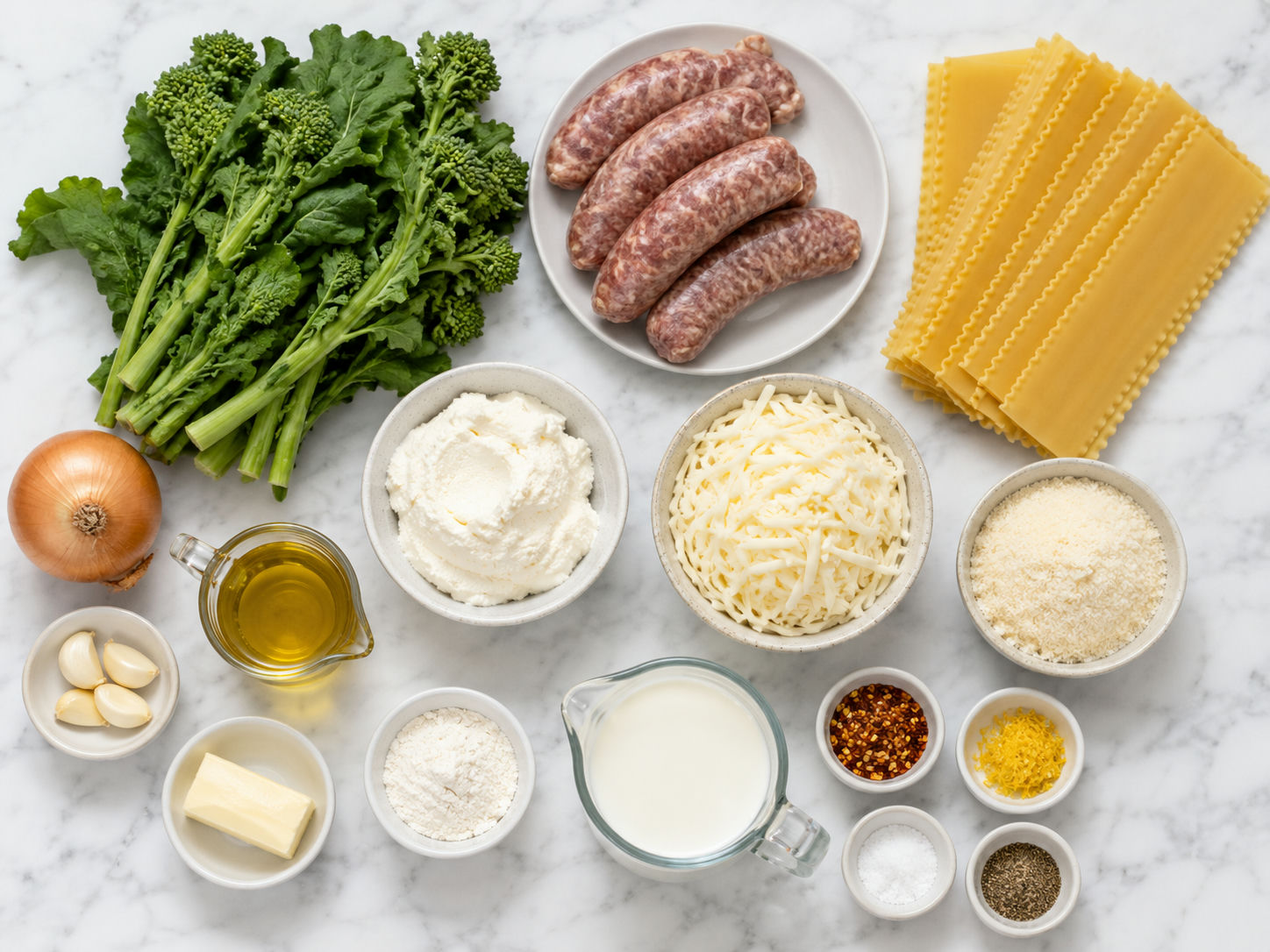
- Italian sausage. Gives the lasagna its savory base, with fennel, garlic and enough fat to flavor the greens.
- Broccoli rabe. Adds a pleasant bitter edge that cuts through the cream and cheese.
- Parmesan. Melts into the white sauce and forms a salty browned crust on top.
- Whole milk, butter and flour. Make a smooth bechamel that keeps the noodles tender.
- Ricotta and mozzarella. Add soft pockets and stretchy layers without turning the pan watery.
- Garlic, onion and red pepper flakes. Build the warm Italian flavor around the sausage.
- Lemon zest. Brightens the broccoli rabe so the finished lasagna tastes rich but not flat.
White Lasagna With Sausage And Rabe
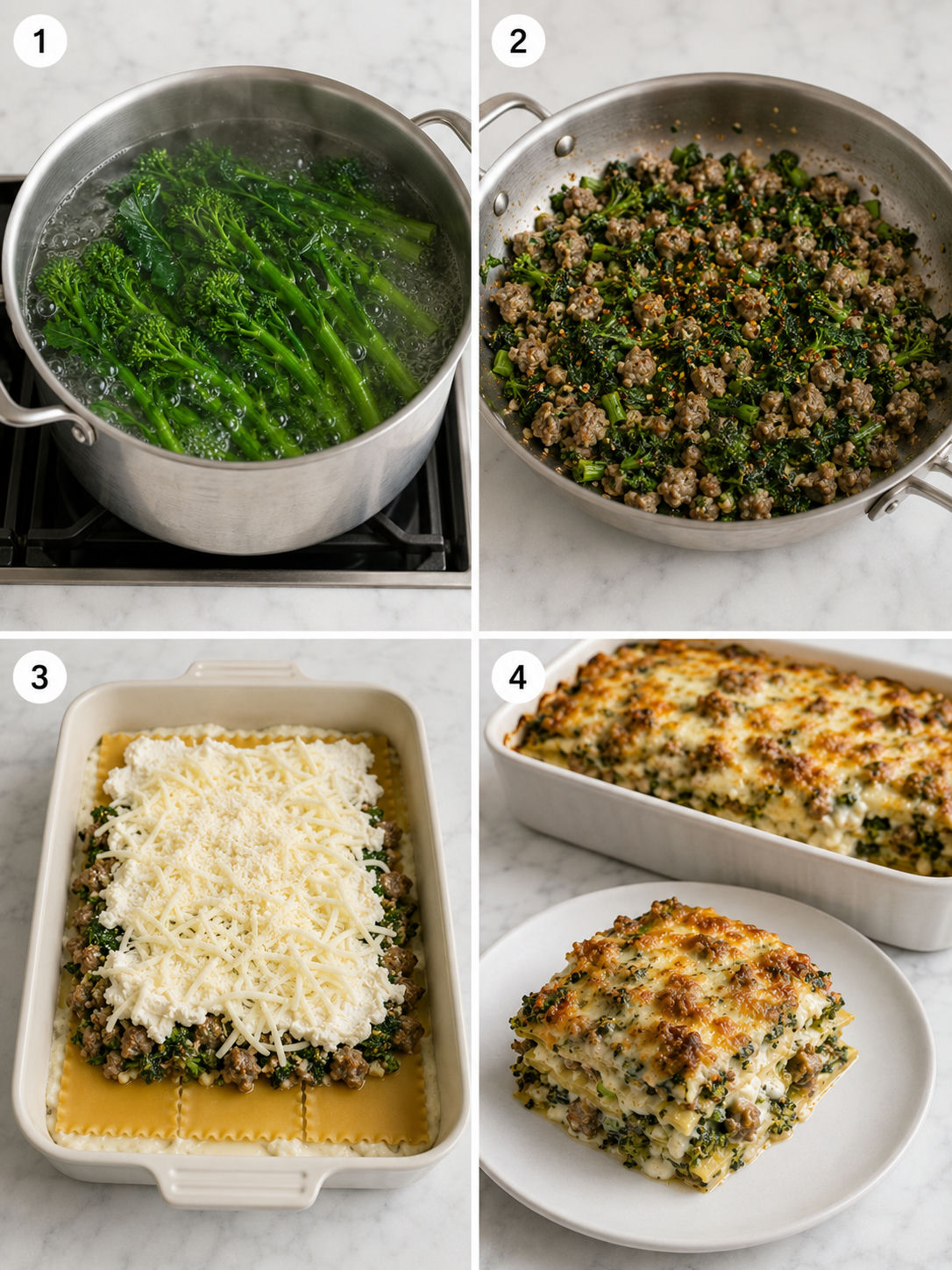
- Blanch the greens. Trim the broccoli rabe, boil it in salted water for 2 minutes, then cool, squeeze and chop it. Removing water now keeps the lasagna from turning loose.
- Brown the sausage. Cook onion and sausage in olive oil until the meat is browned and no pink remains. Stir in garlic, red pepper flakes, chopped broccoli rabe and lemon zest.
- Make the Parmesan sauce. Whisk butter and flour until smooth, then add warm milk slowly. Simmer until it coats a spoon, then stir in Parmesan and nutmeg.
- Layer the pan. Spread sauce in a 13-by-9-inch dish. Add noodles, ricotta, sausage greens, mozzarella and more sauce. Repeat until everything is used.
- Bake until bubbling. Cover and bake at 375 F for 25 minutes. Uncover and bake 18-20 minutes more until the top is browned at the edges.
- Rest before slicing. Let the lasagna stand 15 minutes. The sauce thickens as it cools slightly, which gives you cleaner pieces.
Taming Broccoli Rabe
Broccoli rabe is supposed to have bite. That slight bitterness is why it works so well with sausage and cream. The mistake is letting it carry too much water into the pan. Blanch it briefly, chill it, then squeeze it harder than you think you should. After that, chop it into bite-size pieces so every forkful gets greens instead of one long stem.
The classic pairing of sausage and broccoli rabe shows up in Italian pasta dishes and baked versions like GialloZafferano's lasagna with broccoli rabe and sausage. Here, the Parmesan sauce makes it softer and more dinner-party friendly.
Sauce That Slices Clean
A white lasagna needs sauce that is creamy but not gluey. Cook the flour and butter for about 1 minute so the raw flour taste fades, then whisk in warm milk in a steady stream. Once it thickens, take it off the heat before adding Parmesan. Boiling Parmesan can make the sauce grainy.
If you love creamy sausage pasta, this same comfort-food lane runs through creamy Italian sausage rigatoni and creamy Parmesan Italian sausage soup. This lasagna is thicker and more structured, but the flavor is familiar.
Layering Without Dry Edges
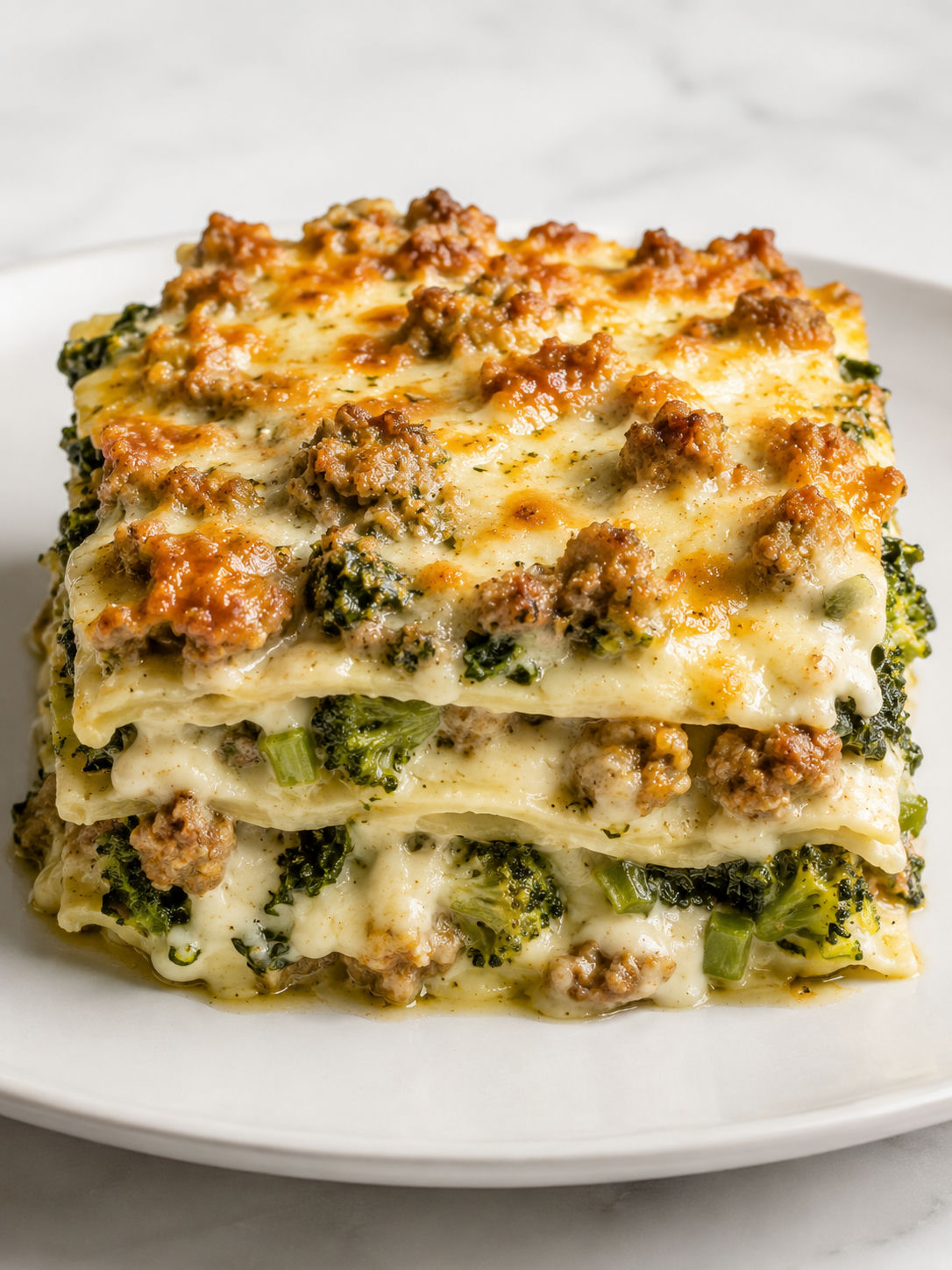
Start with sauce on the bottom and make sure the corner noodles get covered. Dry corners bake up hard, especially with no-boil noodles. Keep the first layers modest. A thin smear of ricotta, a loose scatter of sausage greens and a blanket of sauce will bake better than one overstuffed middle layer.
Covering the pan for the first bake traps steam so the noodles soften. Uncovering at the end browns the Parmesan and mozzarella. FoodSafety.gov lists 160 F as the safe minimum internal temperature for ground meats, which is a useful guide if you want to check the sausage mixture with a thermometer before layering. See the safe temperature chart.
Make Ahead And Reheat
You can assemble this white lasagna the day before. Cover it tightly and refrigerate it, then bake it straight from the fridge with a little extra covered time. The baked leftovers hold well because the sauce firms up around the noodles.
Store leftovers in shallow airtight containers and refrigerate within 2 hours. The cold storage chart is a good reference for timing. Reheat slices covered at 325 F with a spoonful of milk or water around the edge. For another layered comfort dinner, try Parmesan garlic bacon lasagna or keto sausage lasagna roll ups.
Conclusion
Serve this lasagna hot after a short rest, with a sharp salad or roasted vegetables on the side.
Frequently Asked Questions
- Can I use regular broccoli instead of broccoli rabe?
Yes, but the flavor will be milder and sweeter. Cut broccoli into small florets, blanch it for 2 minutes, then chop it so it layers neatly.
- Do I need to boil the lasagna noodles first?
No-boil noodles work well here because the white sauce is loose enough to hydrate them. If using boiled noodles, reduce the milk in the sauce by about 1/4 cup so the lasagna does not feel soupy.
- How do I make broccoli rabe less bitter?
Trim the tough stems, blanch the greens in salted water, then squeeze them dry before sauteing with garlic. A little lemon zest also makes the bitterness taste cleaner.
- Can I assemble this lasagna ahead?
Yes. Assemble it up to 24 hours ahead, cover tightly and refrigerate. Add 10-15 minutes to the covered baking time if it goes into the oven cold.
- Can I freeze white lasagna?
Freeze the baked and cooled lasagna in portions or as a full pan. Thaw overnight in the refrigerator, then reheat covered until hot in the center.
- What should I serve with it?
Serve it with a crisp salad, lemony green beans or roasted potatoes. For another green side with Parmesan, try cheesy roasted potatoes and broccoli.
