
 Pin it
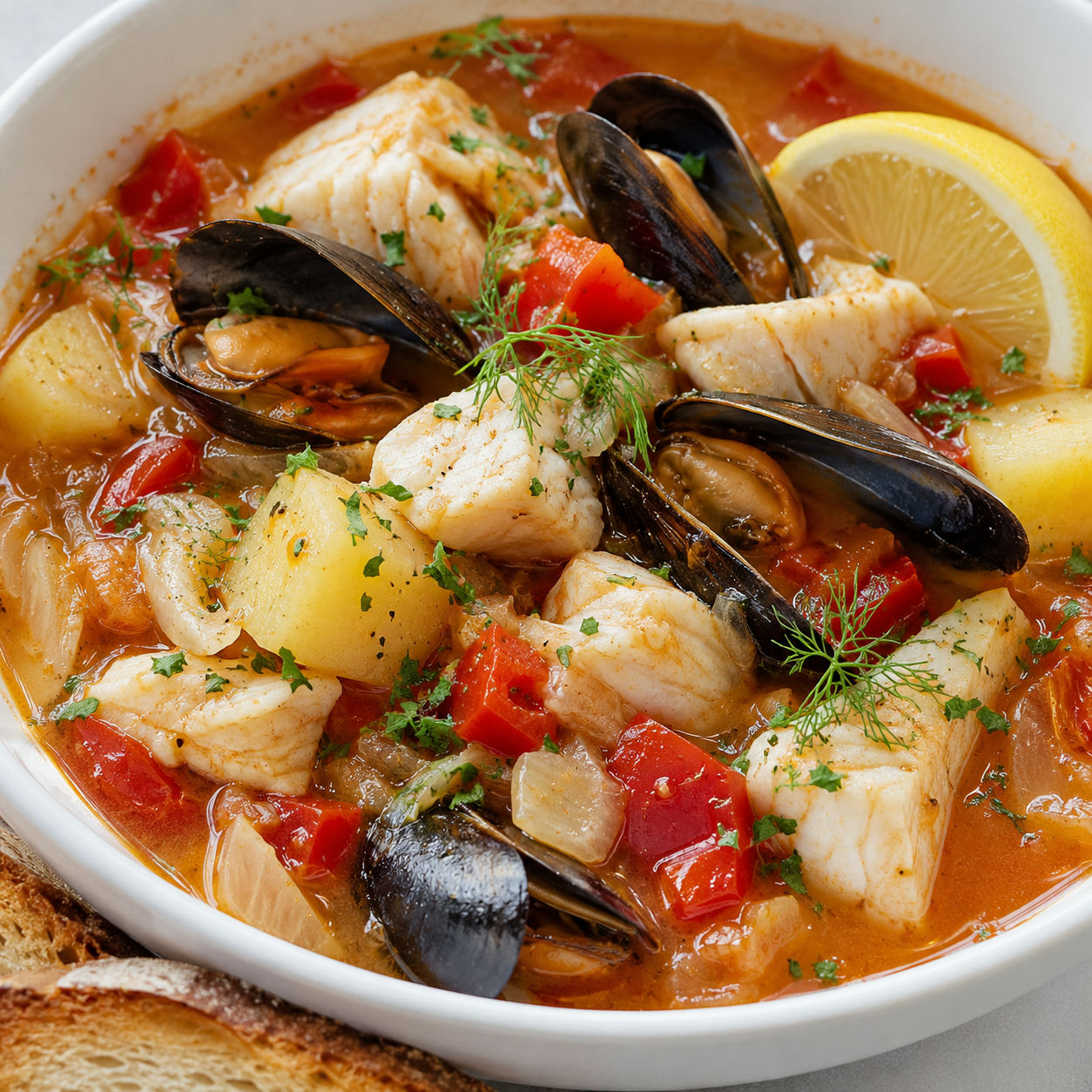
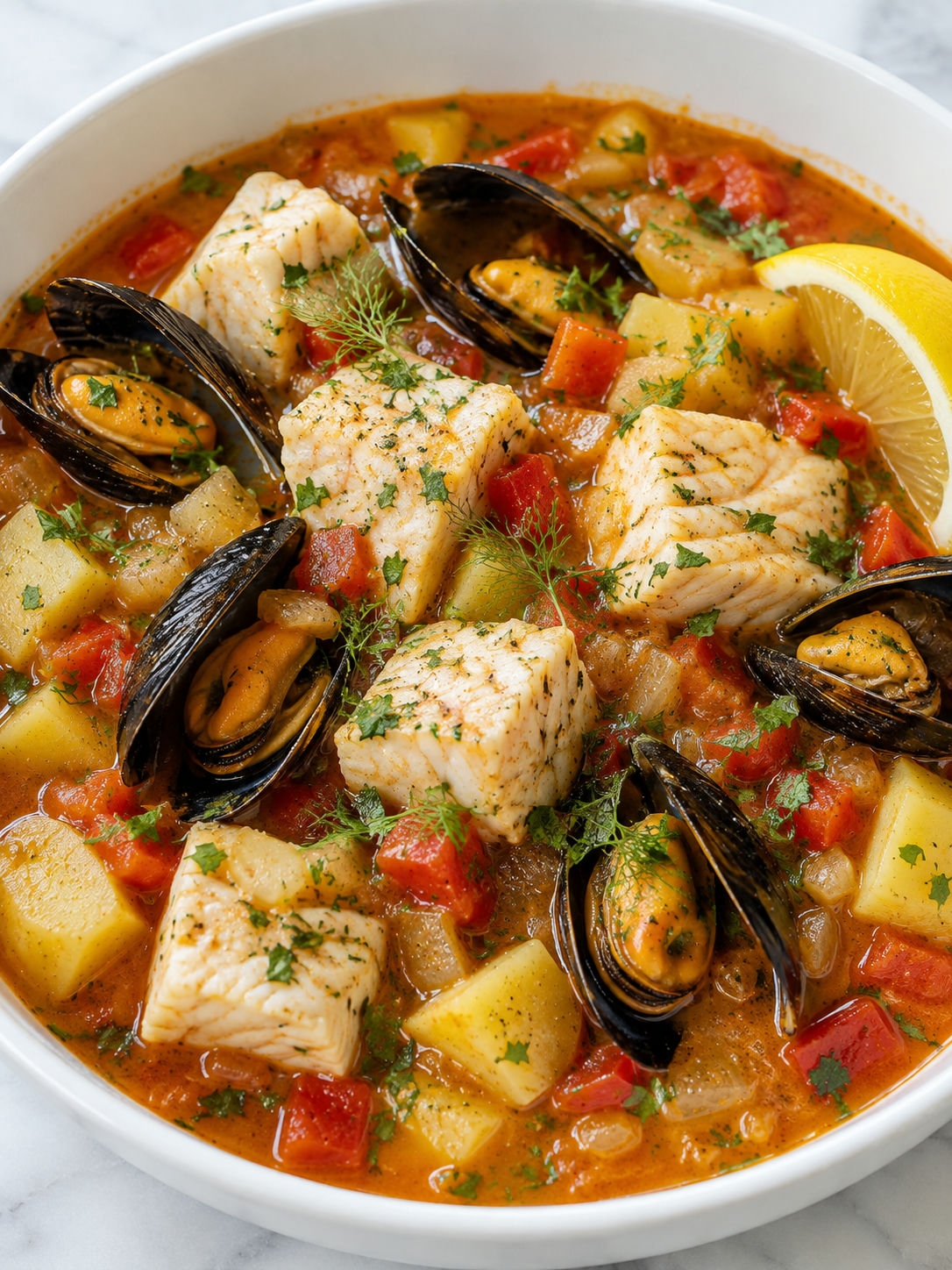
Ligurian fish soup is the kind of bowl that feels generous without being heavy. There is a special kind of magic that happens when you ladle warm, savory seafood broth over tender fish, potatoes and sweet fennel.
This version keeps the spirit of coastal Italian cooking but stays practical for a home kitchen. Use firm white fish, a handful of mussels or clams, and good broth. The soup tastes like it simmered all afternoon, but it lands on the table in under an hour.
Coastal Bowl Staples
Shop for seafood that smells clean and briny, not sharp. The broth is simple, so the fennel, tomatoes, herbs and fish all need to taste fresh.
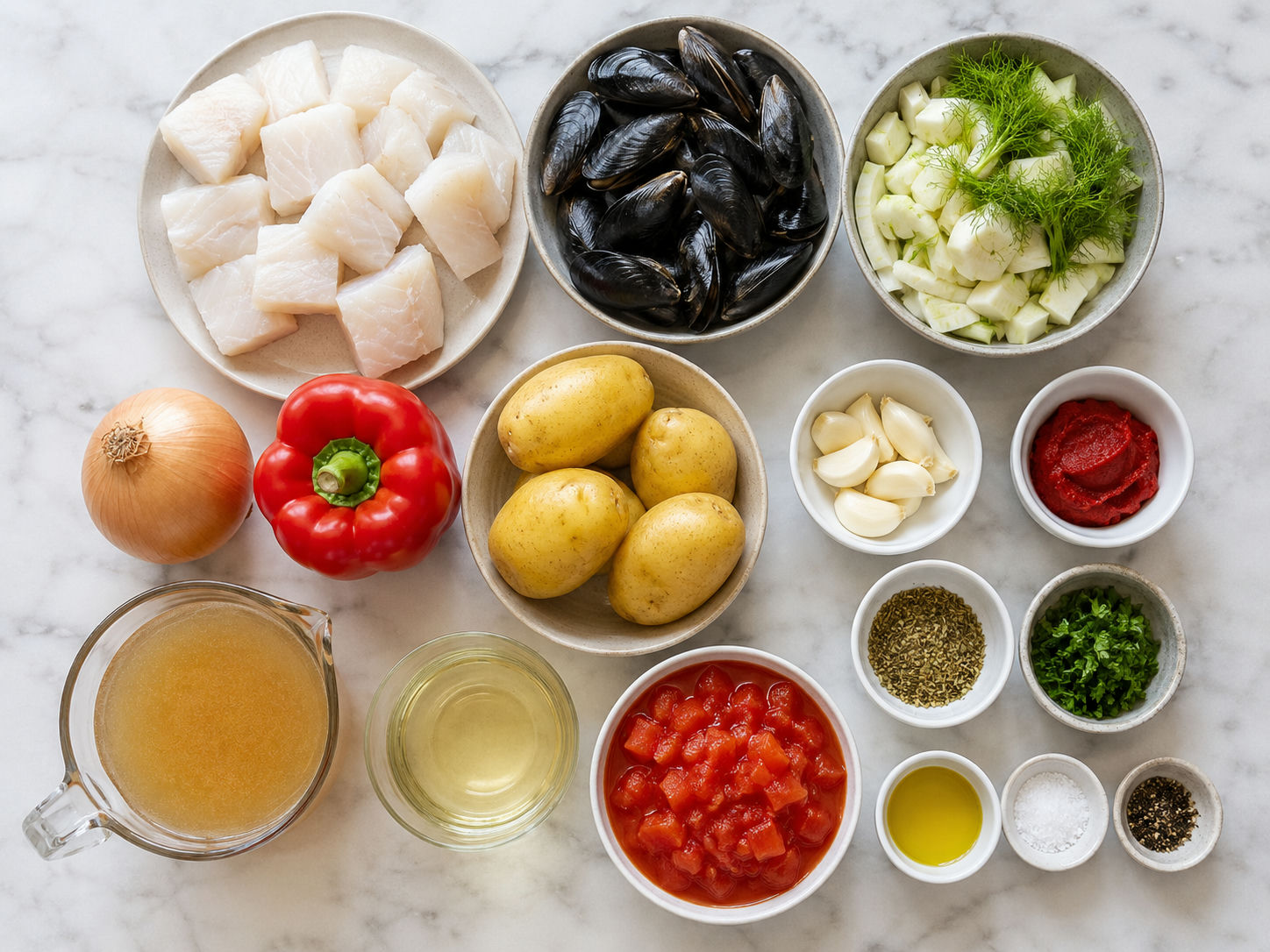
- Firm white fish. Cod, halibut or snapper gives the soup tender flakes that hold their shape.
- Mussels or clams. They add a clean ocean flavor and make the bowl feel special.
- Fennel. Its gentle anise note gives the tomato broth a Ligurian-style lift.
- Waxy potatoes. They turn the soup into dinner and stay creamy without falling apart.
- Diced tomatoes and tomato paste. They bring body, color and a sweet-savory base.
- Seafood broth and white wine. Together they make a lighter broth with real depth.
- Oregano, parsley and lemon. The herbs warm the pot and the lemon wakes up each bowl at the end.
Ligurian Fish Soup Method
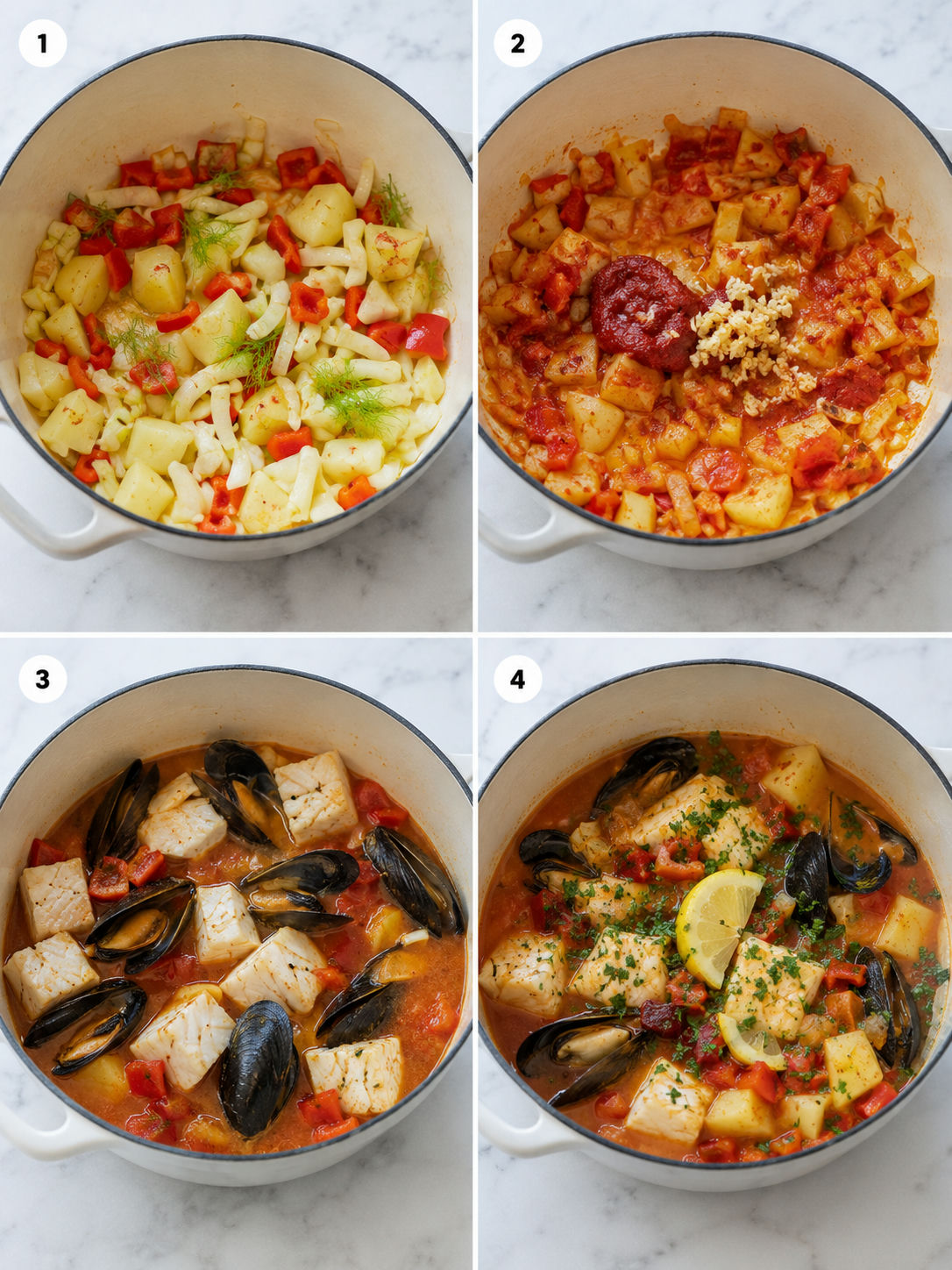
- Soften the vegetables. Cook onion, fennel, bell pepper and potatoes in olive oil until the onion turns glossy and the fennel starts to relax.
- Wake up the garlic. Stir in garlic and tomato paste for a minute. This keeps the broth from tasting flat.
- Simmer the broth. Add wine, tomatoes, seafood broth, oregano and bay leaf. Simmer until the potatoes are just tender.
- Add the seafood gently. Nestle in the fish and mussels, cover the pot, and cook just until the fish flakes and the shells open.
- Finish bright. Remove the bay leaf, stir in parsley, add lemon juice, and taste for salt before ladling into warm bowls.
Build The Broth First
The broth should taste complete before the seafood goes in. That means the fennel has softened, the wine has lost its raw edge, and the potatoes are almost tender. If you add fish too early, it gives everything it has to the broth and comes out tired.
Italian seafood soups often rely on simple fish, tomato, herbs and bread rather than cream. That is why a careful simmer matters. For another cozy bowl with deep Southern seafood flavor, save the Instant Pot Louisiana gumbo for a weekend night.
Keep Seafood Tender
Fish soup gets tricky only at the end. Keep the heat at a gentle simmer, not a hard boil. Firm white fish usually needs 5-7 minutes, depending on thickness. Mussels and clams are done when they open. The FDA seafood guide notes that fish should reach 145 F or turn opaque and flake easily.
If you enjoy a little heat with seafood, the quick broth in quick spicy shrimp soup is a faster weeknight cousin. This Ligurian version is gentler and more herbal, with fennel doing the quiet work.
Smart Swaps That Fit
No seafood stock on hand? Use vegetable broth plus bottled clam juice. No mussels? Clams work. No shellfish at all? Add more fish and finish each bowl with extra olive oil and lemon. Dry vermouth is a good stand-in for white wine because it already has herbal notes that flatter fennel.
For vegetables, keep the potatoes small and use waxy types like Yukon Gold or red potatoes. Russets can crumble and muddy the broth. A pinch of red pepper flakes is welcome, but keep it light. The soup should taste coastal and bright, not fiery. If you want something richer and creamier later in the week, try salmon and Cajun shrimp pasta.
Storing The Leftovers
Seafood soup is best the day it is made, but leftovers can still be good. Cool the soup quickly and refrigerate it in a shallow container for up to 2 days. Reheat gently on the stove until steaming. Do not let it boil hard or the fish will tighten.
If you are planning ahead, make only the broth in advance. It keeps well for 3 days in the refrigerator and can be frozen for 2 months. Bring it back to a simmer, then add fresh seafood when you are ready to serve. For another hearty, ladle-friendly dinner, the chicken wing and jambalaya ramen bowl brings a bolder spice profile.
Frequently Asked Questions
- What fish works best for Ligurian fish soup?
Use firm white fish that will hold together in hot broth. Cod, halibut, sea bass, snapper and monkfish all work well. Avoid very thin fillets because they can break apart before the shellfish opens.
- Can I make this without mussels or clams?
Yes. Use all white fish and add an extra splash of seafood stock or bottled clam juice for depth. You can also add shrimp during the last 3 minutes of cooking if you still want a shellfish note.
- Can Ligurian fish soup be made ahead?
The broth can be made a day ahead and refrigerated. Reheat it to a simmer, then add the fish and shellfish right before serving. This keeps the seafood delicate instead of dry.
- How do I know the seafood is cooked?
The fish should turn opaque and flake easily with a fork. Mussels and clams should open in the pot. Discard any shells that stay closed after cooking.
- What should I serve with this soup?
Toasted ciabatta, focaccia or a simple green salad are the easiest sides. The bread matters because it soaks up the tomato-fennel broth. A crisp white wine or sparkling water with lemon also fits nicely.
- Can I make it gluten-free?
The soup itself is naturally gluten-free if your broth and tomato paste are certified gluten-free. Skip the bread or serve it with gluten-free toast. Check packaged seafood stock because some brands use additives.
