
 Pin it
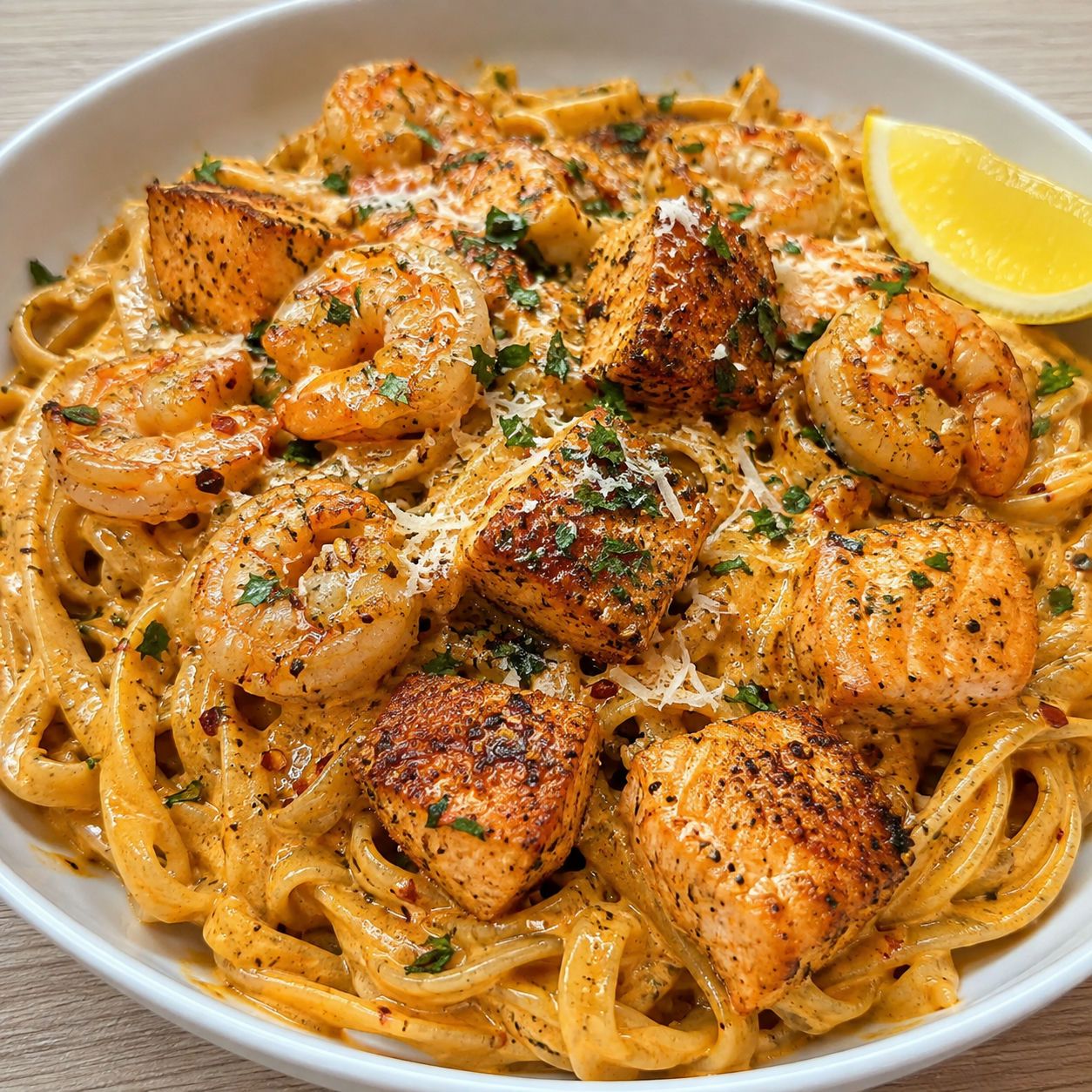
Salmon and Cajun shrimp pasta dinner is rich, smoky, and weeknight-friendly without feeling rushed. The salmon gives you buttery flakes, the shrimp bring sweetness, and the Cajun cream sauce pulls the whole skillet together.
The trick is timing. Cook the seafood in short bursts, build the sauce in the same pan, then toss everything gently so the salmon stays in real pieces instead of disappearing into the pasta.
Salmon and Cajun shrimp essentials
This recipe leans on bold seasoning, fresh seafood, and a sauce that is creamy without tasting flat. Choose center-cut salmon if you can, and buy shrimp that are already peeled and deveined when time is tight.
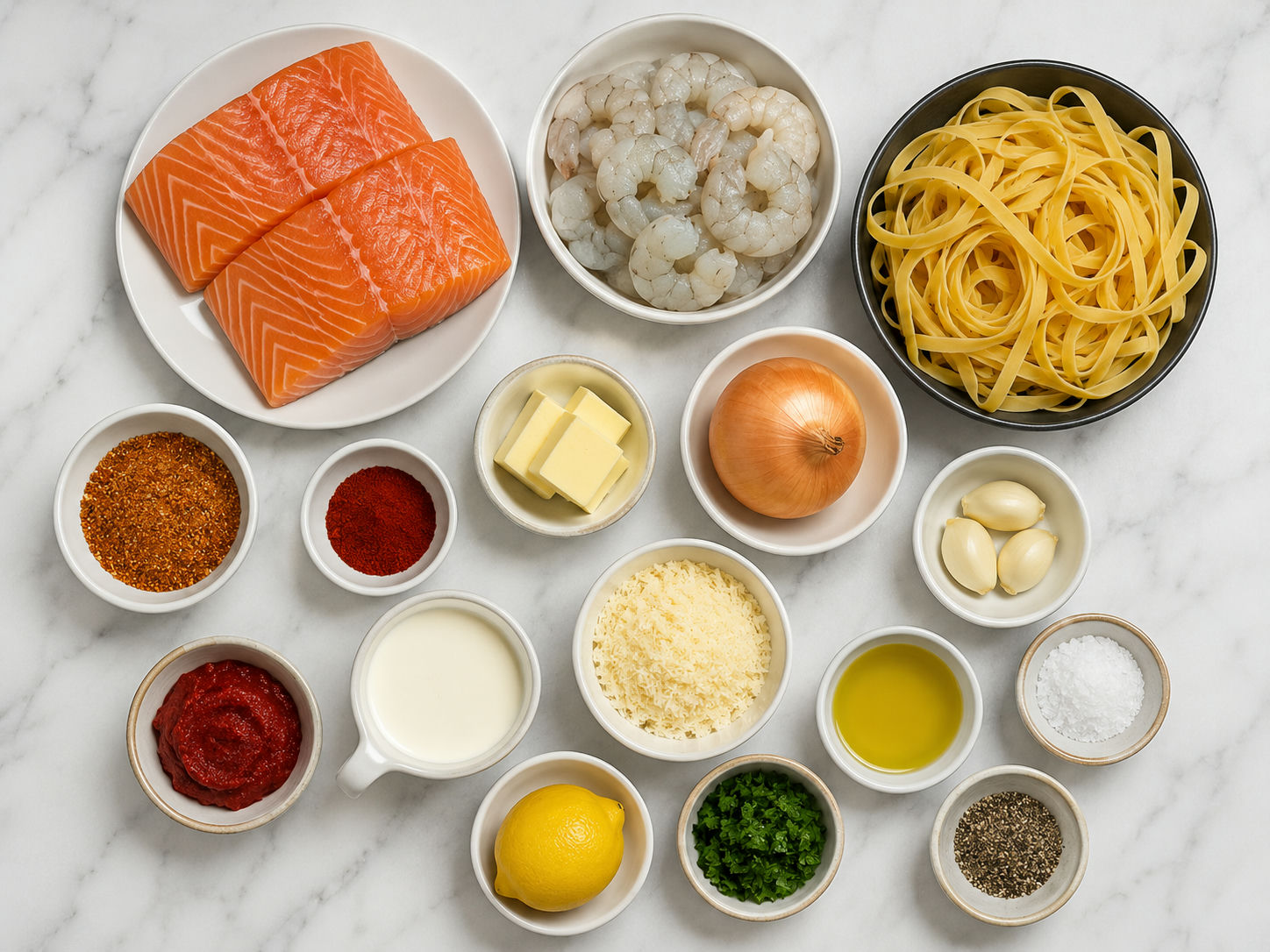
- Salmon fillets. Cut into chunky pieces so they sear on the edges and stay moist inside.
- Large shrimp. They cook quickly and add a sweet bite against the smoky Cajun seasoning.
- Cajun seasoning. Brings paprika, garlic, pepper, herbs, and heat in one spoonful.
- Fettuccine. Wide strands hold the cream sauce well without getting lost under the seafood.
- Garlic and onion. Build a savory base before the cream goes in.
- Tomato paste. Adds color and a deeper cooked flavor to the sauce.
- Heavy cream. Makes the sauce plush and helps carry the spice.
- Parmesan. Salty, nutty cheese thickens the sauce and rounds out the Cajun heat.
- Lemon and parsley. Brighten the final skillet so the dish tastes rich, not dull.
Build the skillet dinner
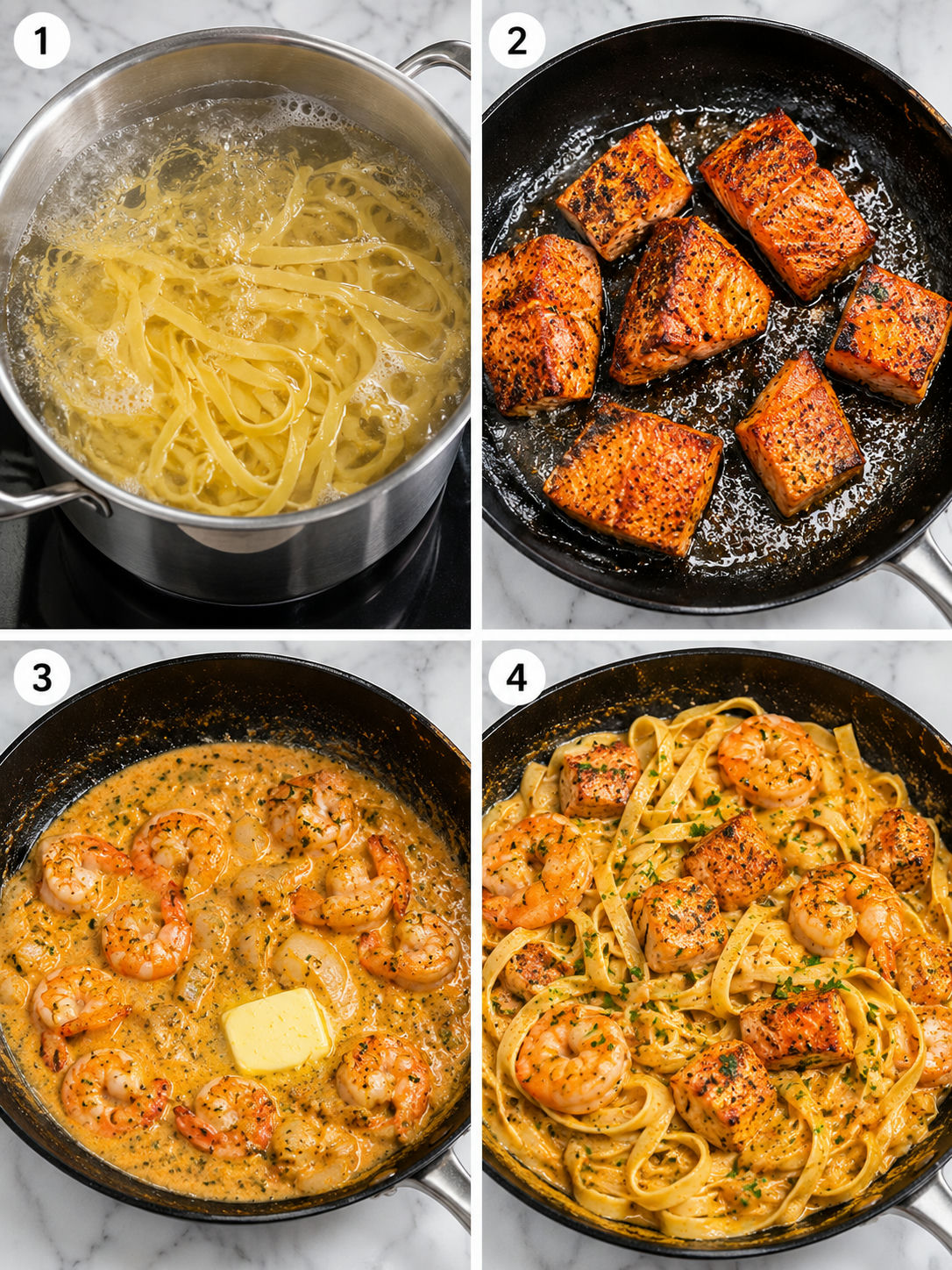
- Boil the pasta. Cook fettuccine in well-salted water until just shy of al dente. Reserve 1 cup of pasta water, then drain.
- Season the seafood. Pat salmon and shrimp dry. Toss each with Cajun seasoning, smoked paprika, salt, and pepper.
- Sear the salmon. Cook salmon chunks in a hot skillet with olive oil for 2-3 minutes per side until browned and mostly cooked. Move them to a plate.
- Sear the shrimp. Add the shrimp to the same pan and cook for 1-2 minutes per side until pink and opaque. Remove them with the salmon.
- Start the sauce. Melt butter in the pan. Cook onion until softened, then add garlic and tomato paste and stir until fragrant.
- Make it creamy. Add cream and a splash of pasta water. Simmer briefly, then stir in parmesan until smooth.
- Toss and finish. Add pasta and coat it in the sauce. Fold in salmon, shrimp, lemon juice, and parsley. Loosen with more pasta water as needed.
Why the sear matters
The best flavor in this Salmon and Cajun shrimp pasta dinner starts before the sauce. A hot skillet gives the salmon browned edges and lets the Cajun spices bloom in the oil. That seasoned oil stays in the pan and becomes the backbone of the cream sauce. If the seafood goes into a cool pan, it releases liquid and the seasoning tastes washed out.
Dry the salmon and shrimp with paper towels first. Season them right before cooking so salt does not pull too much moisture to the surface. For food safety, seafood should reach 145°F according to FoodSafety.gov temperature guidance. I still pull shrimp as soon as they turn opaque because carryover heat keeps working while the sauce comes together. For a salmon-only Cajun dinner, the same searing idea works in Cajun cream cheese salmon.
Keep the sauce smooth
Cajun cream sauce can split if it gets too hot after the cheese goes in. Keep the heat at medium-low, then let the cream bubble gently before adding parmesan. Stir in the cheese off the strongest heat and give it a minute to melt. If the sauce looks too thick, pasta water is better than more cream because the starch helps it cling.
Tomato paste is small but important here. It gives the sauce a warm red-orange color and a little sweetness that balances the black pepper and cayenne in the seasoning. If you like a heavier Alfredo style, borrow the mood of cheesy Cajun Alfredo pasta and add another handful of parmesan. For a shrimp-focused version, creamy Cajun shrimp pasta keeps the same spice profile with fewer moving parts.
Smart swaps for seafood night
This pasta handles swaps well as long as you protect the seafood from overcooking. Skinless cod, trout, or mahi mahi can stand in for salmon, but cut delicate fish into larger pieces. Scallops can replace shrimp if you sear them hard and move them only once. For a lighter sauce, use half-and-half, but simmer it gently and expect a thinner finish.
Whole wheat pasta brings a nuttier bite. Gluten-free pasta works too, but it can break if tossed too aggressively. Keep the sauce loose and fold rather than stir. If you want a brighter, less spicy salmon pasta later in the week, lemon dill salmon pasta is a good counterpoint. For a buttery shrimp dinner without cream, try garlic butter shrimp pasta.
Storage without rubbery seafood
This is best right after cooking, when the sauce is glossy and the seafood is tender. Leftovers are still good if you reheat them gently. Pack the pasta in a shallow airtight container and chill it within 2 hours. The FDA also recommends buying seafood cold and storing it properly, which you can check in its fresh and frozen seafood guide.
For reheating, skip high microwave heat if you can. Warm the pasta in a covered skillet over low heat with a splash of milk, cream, or water. Stir the pasta first, then tuck the salmon and shrimp in for the last minute. That keeps the sauce moving without turning the shrimp tight and chewy.
What to serve beside it
This pasta is already a full dinner, so the side should be crisp or simple. A green salad with lemon vinaigrette cuts through the cream. Roasted asparagus, broccolini, or green beans also work because their bitter edges play well with smoky Cajun seasoning. If you want bread, choose garlic toast or a warm baguette and use it for the extra sauce in the skillet.
For drinks, iced tea with lemon, sparkling water, or a not-too-sweet citrus spritzer fits the heat. If the seasoning turns out spicier than expected, add more lemon to the pasta and serve something cool on the side. A spoonful of plain yogurt whisked with lemon and herbs makes a quick sauce for the vegetables without fighting the Cajun flavor.
Conclusion
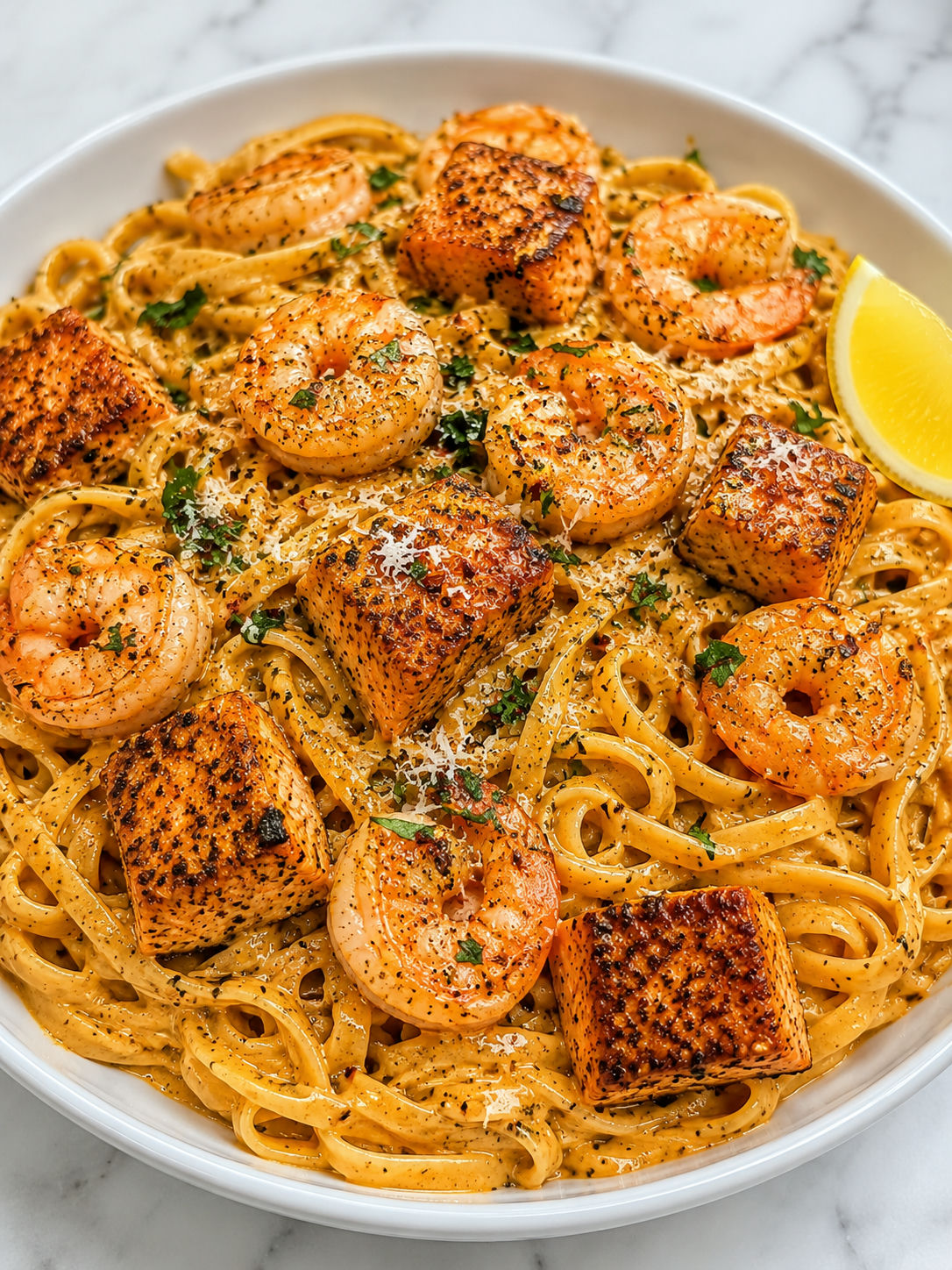
This creamy Cajun seafood pasta is built for a hearty dinner with clear steps, flexible swaps, and enough sauce to coat every forkful.
Frequently Asked Questions
- Can I use frozen salmon and shrimp?
Yes. Thaw both in the refrigerator overnight, then pat them very dry before seasoning. Extra surface moisture makes seafood steam instead of sear.
- What pasta shape works best?
Fettuccine, linguine, and penne all work well. Long pasta feels restaurant-style, while penne catches the creamy Cajun sauce inside each tube.
- Can I make this less spicy?
Use a mild Cajun seasoning and skip the cayenne or hot sauce. A squeeze of lemon at the end keeps the dish lively without adding heat.
- How do I keep the salmon from falling apart?
Sear the salmon in larger chunks and turn it only once. Add it back after the pasta is coated, then fold gently with a wide spoon instead of stirring hard.
- Can I make this gluten-free?
Yes. Use your favorite gluten-free pasta and check the Cajun seasoning label for wheat-based fillers. Save some gluten-free pasta water because it still helps loosen the sauce.
- How long do leftovers last?
Store leftovers in an airtight container in the refrigerator for up to 2 days for best seafood texture. Reheat gently in a skillet with a splash of milk or water.
