
 Pin it
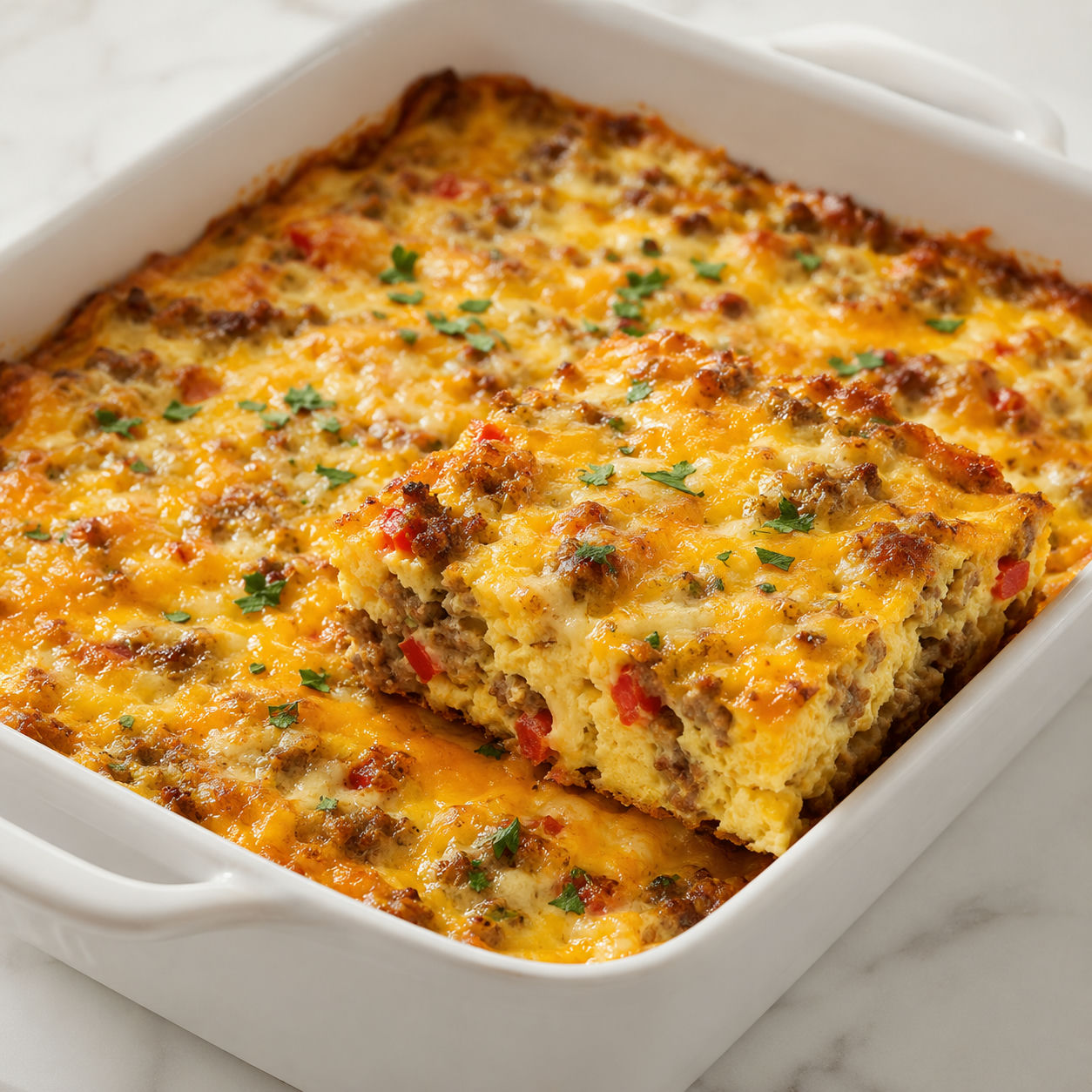
Make-Ahead Sausage, Egg & Two-Cheese Casserole is the kind of breakfast I want when the house is full and nobody wants to stand at the stove. You do the chopping, browning, and whisking the night before. In the morning, the pan goes straight into the oven.
The bread softens into a savory custard, but the top still gets golden around the edges. Cheddar brings sharpness. Monterey Jack melts into the eggs so every square tastes creamy without needing a sauce.
The Overnight Breakfast Lineup
Choose breakfast sausage with enough seasoning to carry the dish, then balance it with two cheeses that do different jobs. Slightly dry bread is better than fresh soft bread because it soaks up the custard without collapsing.
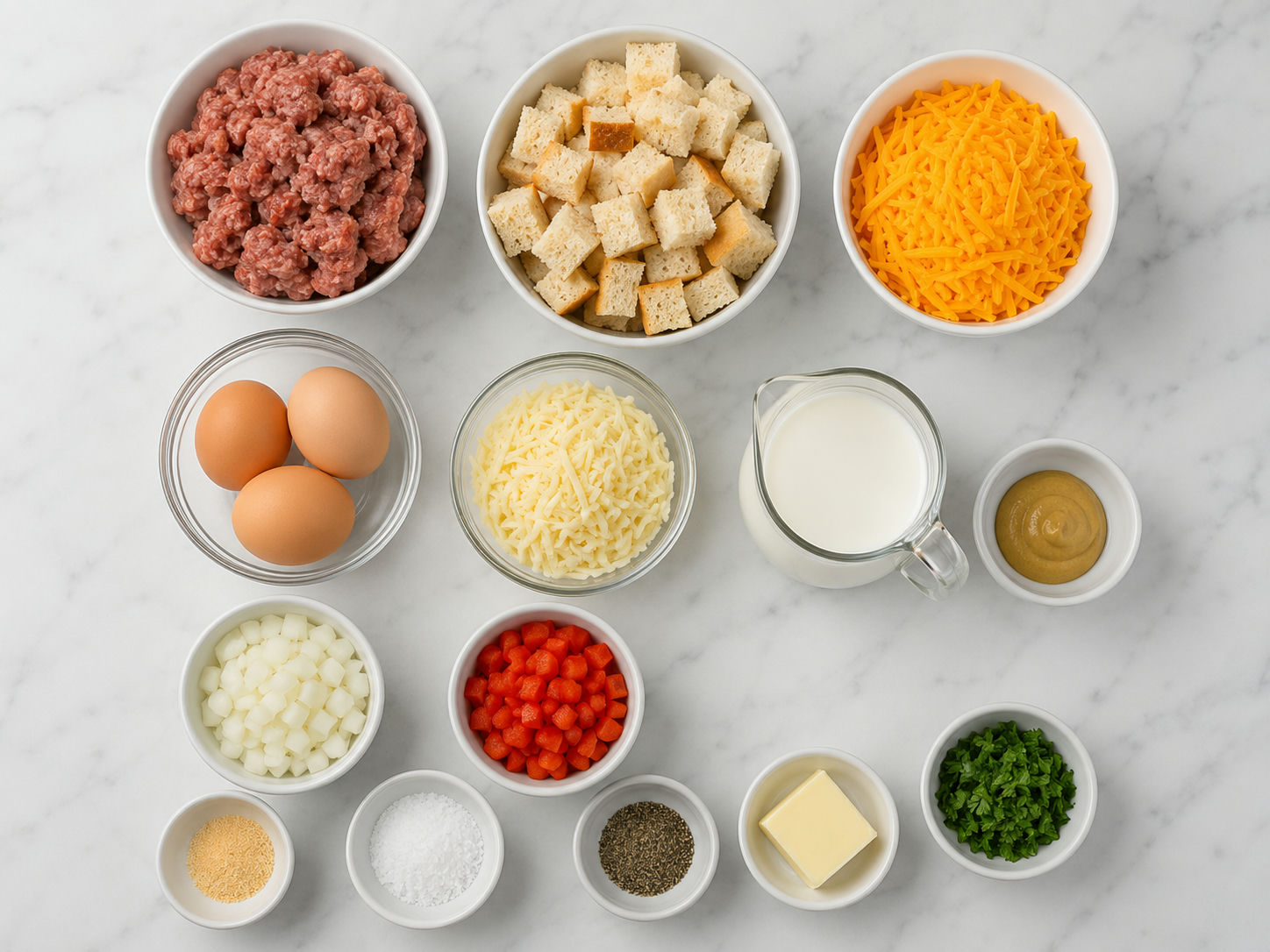
- Breakfast sausage. Browning it first gives the casserole its savory base and keeps excess grease out of the custard.
- Eggs. They set the casserole and bind the bread, sausage, and cheese into clean slices.
- Whole milk. It loosens the eggs so the bake turns tender instead of rubbery.
- Day-old bread. Cubes of firm bread drink up the custard and create a soft strata-style center.
- Sharp cheddar. It adds salty, tangy flavor that stands up to the sausage.
- Monterey Jack. It melts smoothly and keeps the center creamy.
- Onion and bell pepper. They add sweetness, color, and a little breakfast-skillet flavor.
- Dijon mustard. It wakes up the eggs without making the casserole taste mustardy.
Build It Before Bed
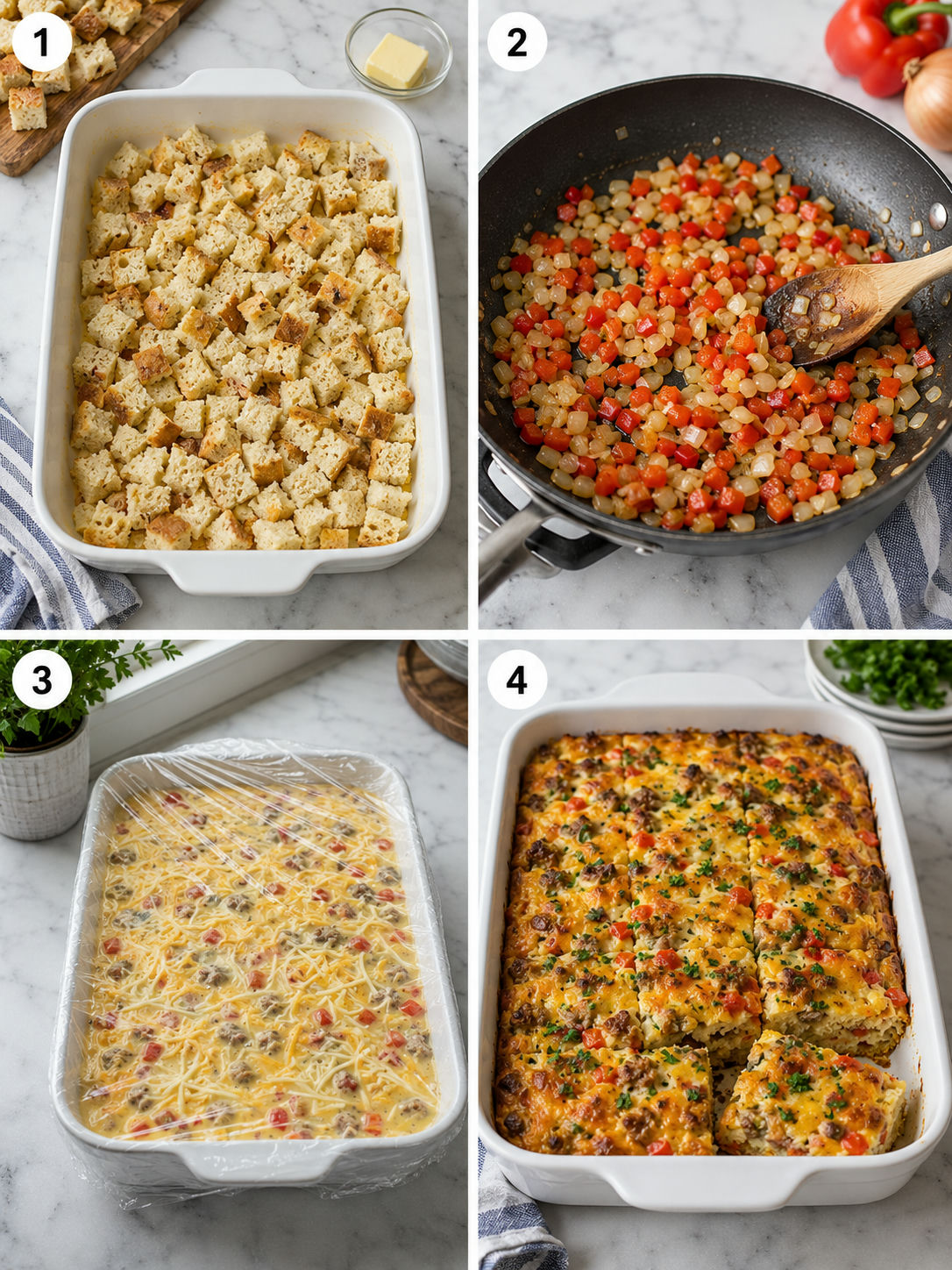
- Brown the sausage. Cook it in a skillet until no pink remains, breaking it into small crumbles so every bite gets some.
- Soften the vegetables. Cook the onion and bell pepper in the same skillet for a few minutes, then let the mixture cool slightly so it does not scramble the eggs.
- Whisk the custard. Beat the eggs with milk, Dijon, garlic powder, salt, and pepper until no streaks of egg white remain.
- Layer the pan. Spread the bread cubes in a greased baking dish, scatter over the sausage mixture, and add both cheeses.
- Soak overnight. Pour the custard evenly over the pan, press the bread down gently, cover, and refrigerate for 8 to 24 hours.
- Bake and rest. Bake at 350°F until puffed, golden, and set in the center, then rest 10 minutes before slicing.
Why The Soak Matters
The overnight rest is not just for convenience. It gives the bread time to absorb the egg mixture all the way through. If you bake right after mixing, the bottom can taste wet while the top dries out. After a long chill, the cubes soften evenly and the casserole cuts into sturdy squares.
If your bread is very fresh, cube it early and leave it on a sheet pan for an hour. You can also toast it lightly. That small step gives the custard somewhere to go and keeps the center from feeling heavy. For a hash brown version with similar make-ahead ease, try Sausage Egg Cream Cheese Hashbrowns.
Keep The Eggs Tender
Egg casseroles can go from creamy to bouncy when they bake too long. Start checking near the 45-minute mark. The edges should be set and lightly browned, while the center should look just firm. The USDA says egg casseroles should reach 160°F, so a quick thermometer check is the clearest answer.
Let the pan sit for 10 minutes after baking. The carryover heat finishes the center and the cheese settles enough for clean slices. If you love this breakfast style but want individual portions, Easy meal-prep breakfast cups are a handy freezer option.
Swaps For Busy Mornings
You can use hot sausage, maple sausage, or turkey sausage. Drain it well, especially if it is rich pork sausage. For the bread, French bread, sourdough, brioche, or sturdy white sandwich bread all work. Soft breads make a more custardy casserole. Crusty breads give the top a little chew.
For vegetables, keep the total amount modest. Too many watery add-ins can loosen the eggs. Mushrooms should be cooked until their moisture evaporates. Spinach should be squeezed dry. If you want another sausage-forward brunch dish with a flaky base, Cheesy sausage crescent wreath fits the same table.
Storage That Still Tastes Good
Refrigerate leftovers in shallow containers once the casserole cools. The USDA recommends keeping leftovers for 3 to 4 days, and that timeline works well for this recipe. Reheat slices covered in a 300°F oven until warm, or microwave one portion at a time at half power.
For freezing, bake the casserole first. Cool it completely, cut it into squares, and wrap each one tightly. Thaw overnight in the fridge for the best texture. A splash of milk around the slice before reheating helps revive the edges. For another hearty pan that reheats well, see Sausage Egg Cream Cheese Casserole.
How To Serve It
This casserole is rich, salty, and filling, so it likes something fresh nearby. Put out orange wedges, berries, sliced tomatoes, or a crisp salad if you are serving it for brunch. Hot sauce is welcome at the table, but I would not mix it into the whole pan unless everyone wants heat.
For a holiday morning, assemble the casserole before bed and set the coffee timer too. Pull the dish from the fridge while the oven heats. By the time everyone is awake, the kitchen smells like toasted cheese and browned sausage.
Conclusion
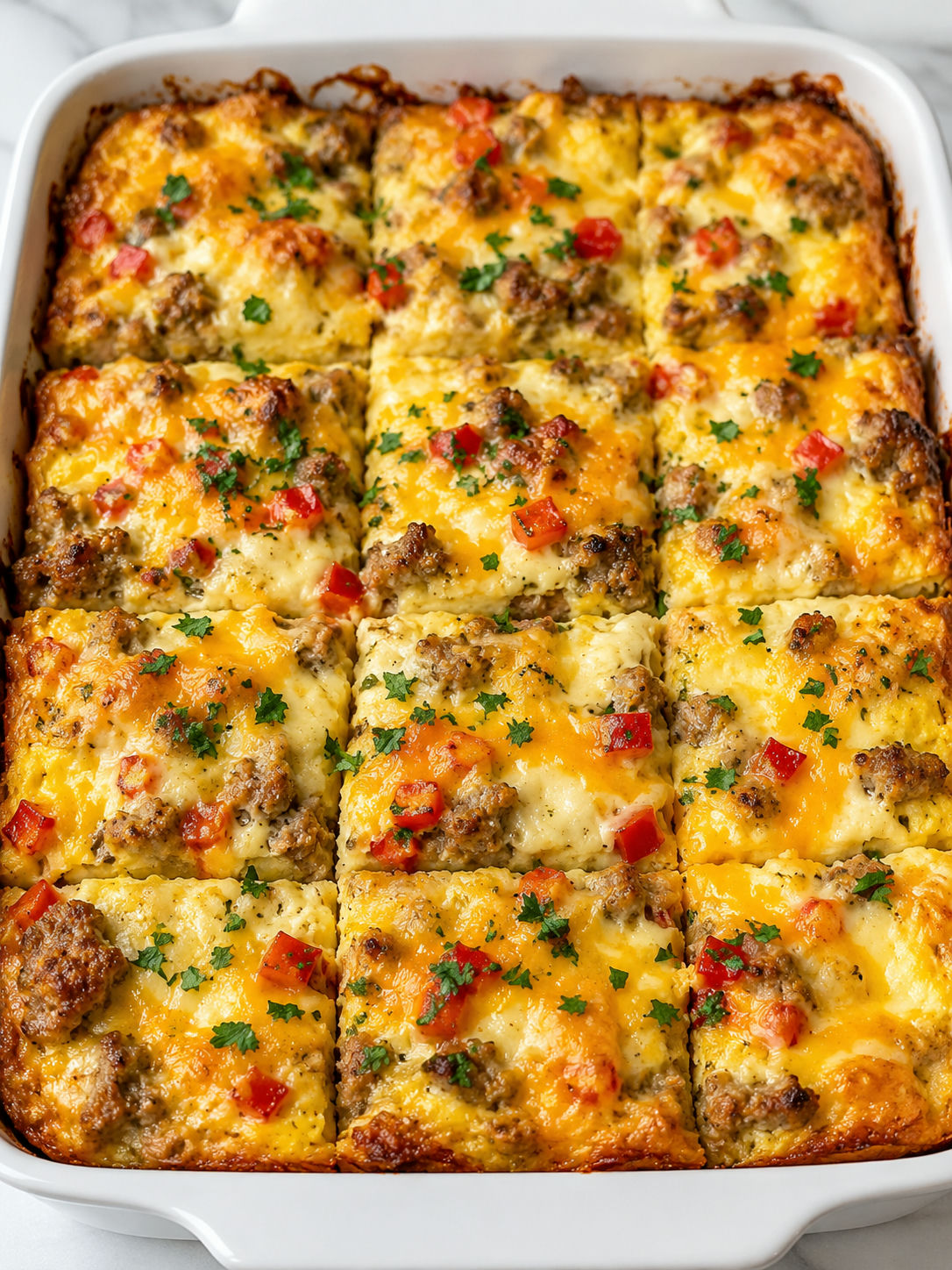
Serve this casserole warm after a short rest so the slices hold together cleanly. It is sturdy enough for holiday brunch, meal prep, or a breakfast-for-dinner night.
Frequently Asked Questions
- Can I assemble this sausage egg casserole the night before?
Yes. Assemble the casserole, cover it tightly, and refrigerate it for 8 to 24 hours. The bread absorbs the custard as it rests, which gives the baked casserole a tender, even texture.
- Can I use a different cheese?
Yes. Keep one sharp cheese, such as cheddar, for flavor and one good melting cheese, such as Monterey Jack, mozzarella, or Colby Jack. Avoid very dry pre-grated cheese if you can, since it melts less smoothly.
- How do I know when the casserole is done?
The top should be golden and the center should not slosh when you nudge the pan. For the most reliable check, use a thermometer in the center and cook it until it reaches 160°F for the egg mixture.
- Can I freeze sausage, egg, and cheese casserole?
Yes, baked slices freeze better than an unbaked custard. Cool the casserole, cut it into portions, wrap well, and freeze for up to 2 months for best texture.
- What can I serve with this casserole?
Fresh fruit, a simple green salad, roasted potatoes, or warm biscuits all work well. For a bigger brunch spread, add something sweet like pancakes or coffee cake.
- Can I make it gluten-free?
Yes. Use a sturdy gluten-free sandwich bread or gluten-free croutons and check the sausage label. Let gluten-free bread dry out a bit first so it does not turn mushy in the custard.
