
 Pin it
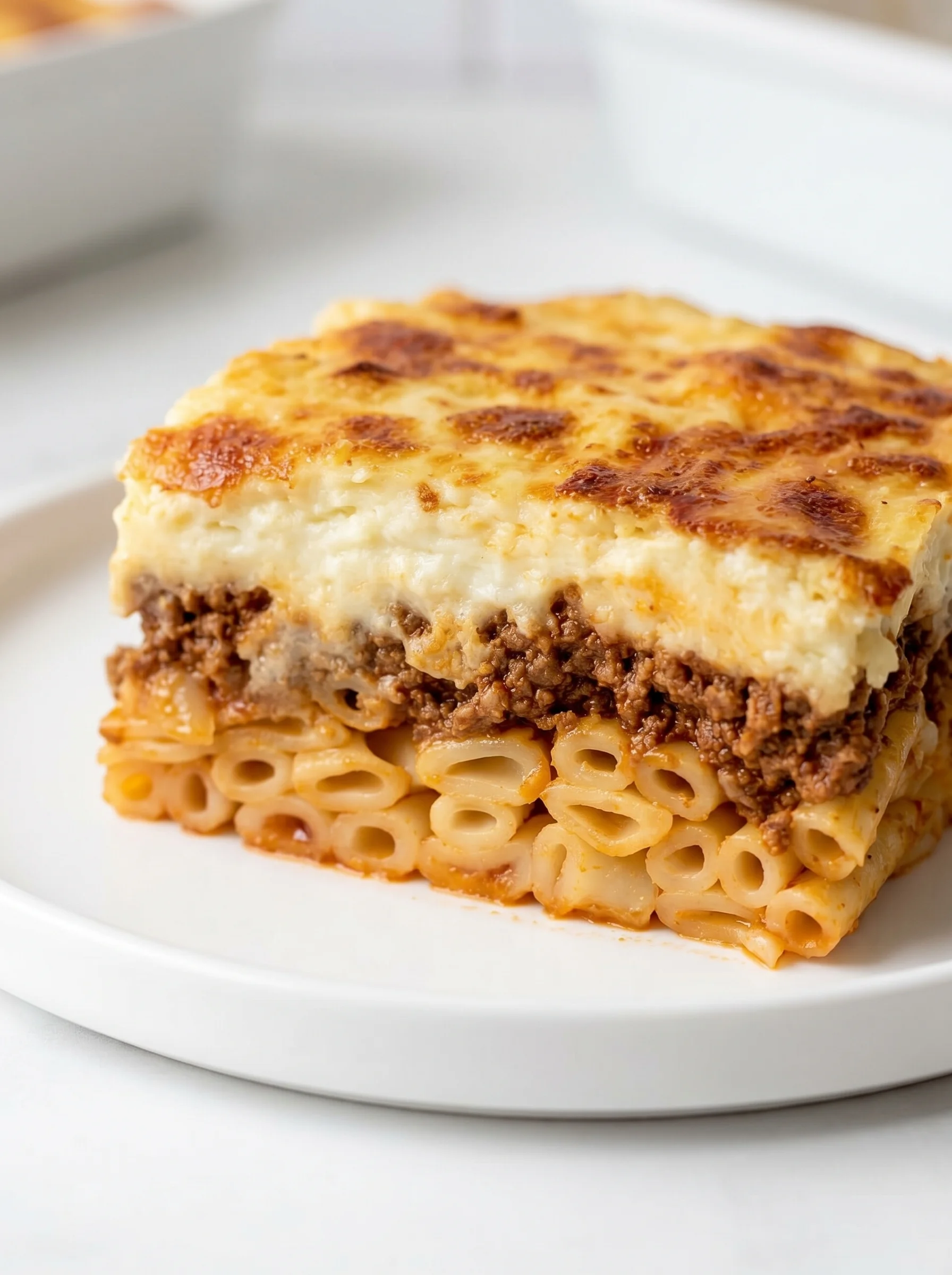
This authentic pastitsio is a comforting Greek baked pasta dish layered with tender noodles, a rich cinnamon-spiced beef sauce, creamy béchamel, and plenty of Kasseri cheese. It’s a recipe that takes time but rewards you with deep flavors perfect for gatherings and special dinners.
I remember making this pastitsio for a holiday dinner and watching everyone’s eyes light up with every bite. It’s truly one of those dishes that bring people together.
Ingredients
- Ground beef: three pounds provides the hearty savory base and browns nicely for rich flavor
- Large onion: chopped for sweetness and texture in the meat sauce
- Tomato sauce: from two 15-ounce cans creates a tangy, thick foundation
- Ground cinnamon: adds warmth and a subtle aromatic touch that is signature to pastitsio
- Coarse kosher salt: for seasoning throughout the recipe
- Pastitsio noodles or mostaccioli: you need the tubular pasta that holds sauce well; look for good-quality dried pasta
- Kasseri cheese: half a pound or more, grated about four cups, gives a tangy, melty layer; Asiago or Italian blend can be used if Kasseri is unavailable, but Kasseri is preferred for authenticity and melt
- Eggs: four total, used to bind the pasta and enrich the béchamel
- Unsalted butter sticks: one and a half total for béchamel and topping; use high-quality for better flavor and browning
- Flour: one cup for thickening the béchamel sauce
- Whole milk: five and a half cups makes the béchamel creamy and silky, whole milk is best for richness
Step-by-Step Instructions
- Make the Meat Sauce:
- Begin by heating a little olive oil over medium heat in a large pot. Add chopped onions sprinkled with a generous pinch of salt and cook until just translucent, which should take about five to eight minutes. Add the ground beef, breaking it up as it cooks until no pink remains. Stir in two cans of tomato sauce and a tablespoon of ground cinnamon. Bring to a simmer, season with salt to taste, cover with the lid slightly askew, and let the sauce stew gently for three hours, stirring occasionally. This slow simmer deepens the flavors. Let cool and refrigerate overnight.
- Prepare the Pasta and Cheese:
- When ready to assemble, bring the meat sauce to room temperature or warm it gently on low heat. Grate at least four cups of Kasseri cheese and set aside. Cook the pastitsio noodles in boiling salted water until just al dente, a minute or two shorter than the package suggests to avoid overcooking later. Drain and when cool enough to handle, toss with one beaten egg by hand to coat the noodles thoroughly.
- Layer the Pastitsio:
- Preheat your oven to 350 degrees Fahrenheit. Lightly oil or spray a large baking dish or lasagna pan. Spread all of the noodles evenly on the bottom. Sprinkle with about one-third of the grated cheese. Using a slotted spoon, spoon the meat sauce evenly over the noodles and cheese, leaving space on top for the béchamel. Sprinkle another third of the cheese over the meat. At this point you have a layered base of noodles, cheese, meat, and cheese.
- Make the Béchamel Sauce:
- In a heavy pot, melt one stick of butter over medium heat. Stir in the flour and whisk continuously for one to two minutes to cook out the raw flour taste without browning. Slowly pour in five cups of whole milk, whisking steadily to avoid lumps. Cook the sauce while whisking until it begins to bubble and thickens nicely. In a separate bowl, beat three eggs with half a cup of milk, then slowly mix this egg mixture into the béchamel off the heat. Return to medium-high heat and whisk constantly until thick and bubbly again. Remove from heat and let rest a few minutes.
- Finish Assembling and Bake:
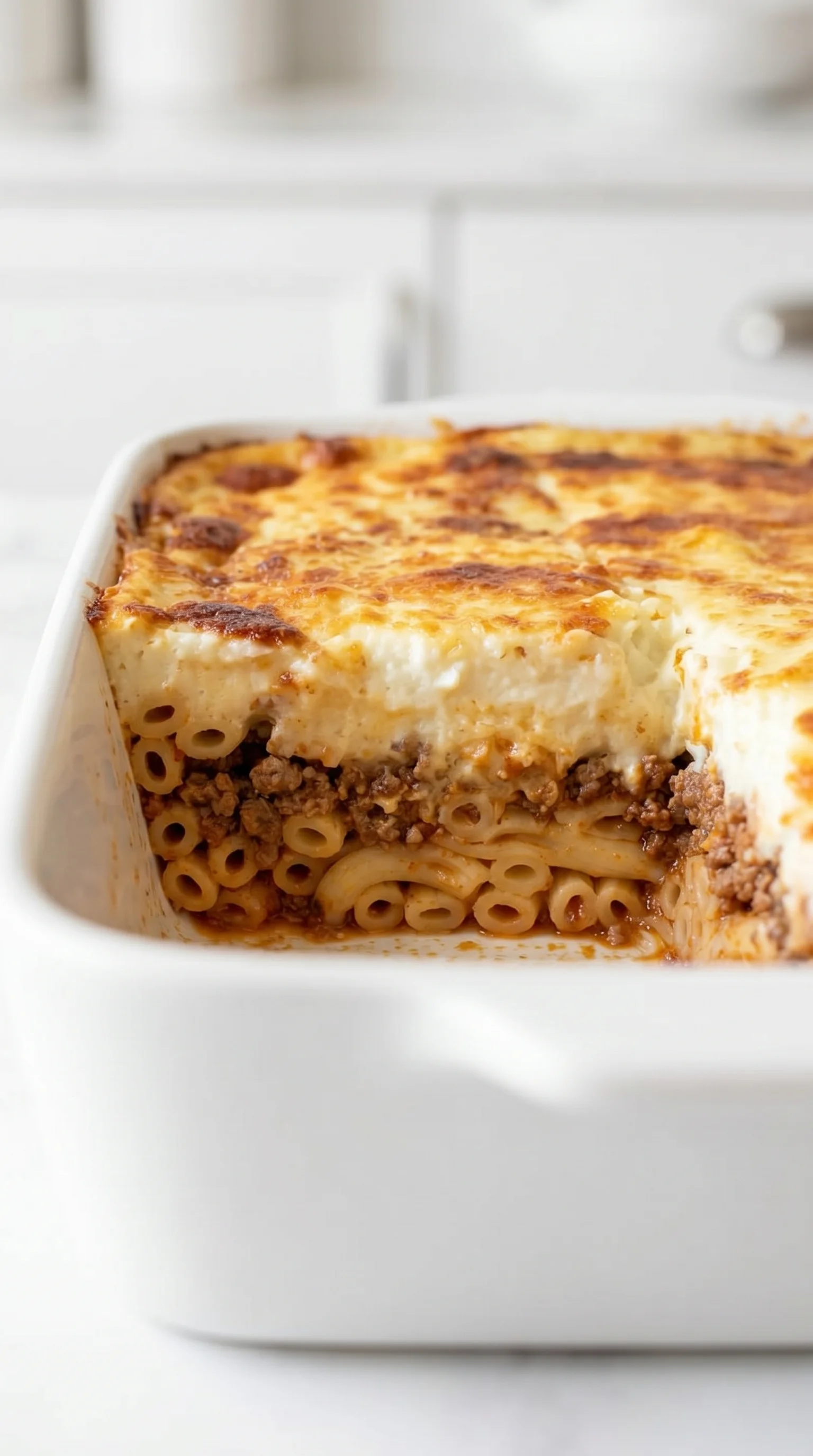
- Melt the remaining half stick of butter in a small saucepan. Pour the béchamel sauce evenly over the meat and cheese layers, spreading it out carefully. Sprinkle the remaining cheese on top of the béchamel. Drizzle or spoon the melted butter evenly over the cheese layer; this will help create a golden brown crust. Place the pan on a baking sheet to catch spills and bake for one hour until the top is browned and the center is hot. If the top needs more browning, broil for an additional three to five minutes, watching carefully to avoid burning. Let the pastitsio rest for ten minutes before cutting and serving.
Storage Tips
Wrap leftovers tightly in plastic wrap or foil and store in the refrigerator for up to four days. Pastitsio also freezes well; cut into portions, place into airtight containers, and freeze for up to three months. Thaw in the refrigerator overnight before reheating in the oven to preserve texture and flavor.
Ingredient Substitutions
If you cannot find pastitsio noodles or mostaccioli, penne pasta works as a substitute but may change the texture slightly. For cheese, Asiago or a mild Italian cheese blend can replace Kasseri, but the flavor intensity will differ. For ground beef, a mix of beef and lamb can add traditional richness if you want a more authentic Greek taste.
Serving Suggestions
Serve pastitsio warm with a simple Greek salad dressed with lemon and olive oil to balance the richness. Garlic bread or crusty rustic bread also pairs well to soak up any extra sauce. Leftovers are delicious reheated with a side of steamed greens or roasted vegetables.
Cultural Context
Pastitsio is a beloved Greek comfort food often enjoyed during holidays and special family gatherings. Its name comes from the Italian pasticcio reflecting Greece's culinary crossovers. The cinnamon in the meat sauce is a unique touch that connects the dish to broader Mediterranean flavor traditions, making it stand out from more familiar Italian lasagnas.
Frequently Asked Questions
- What type of pasta is best for pastitsio?
Pastitsio typically uses tubular pasta like mostaccioli or specialized pastitsio noodles. These hold layers well and absorb flavors without becoming mushy.
- How does cinnamon affect the flavor?
Cinnamon adds a warm, aromatic note that complements the tomato-based meat sauce, giving pastitsio its distinctive Mediterranean character.
- Can I substitute Kasseri cheese?
Yes, Asiago or an Italian cheese blend can be used if Kasseri is unavailable, providing a similar sharp and creamy taste.
- What makes the béchamel sauce so creamy?
The béchamel combines melted butter, flour, and milk, whisked until thickened, then enriched with eggs and extra milk for a smooth, velvety texture.
- Why is the meat sauce cooked for several hours?
Slow simmering deepens the flavors, tenderizes the meat, and allows the spices, especially cinnamon, to fully meld with the tomato sauce.
- How should pastitsio be served after baking?
Let it rest for about 10 minutes after baking to set the layers, making it easier to cut and enhancing the flavor melding.
