
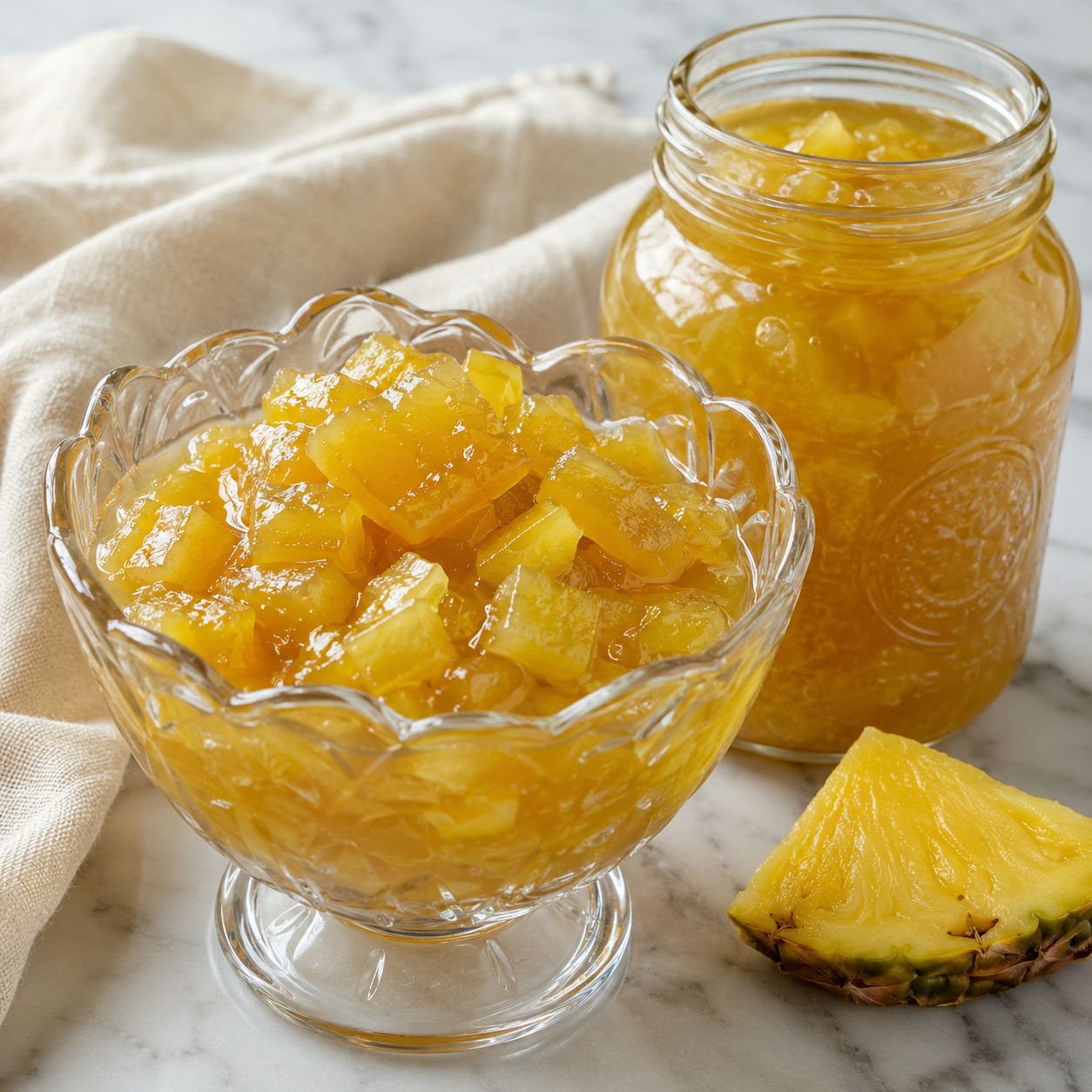
 Pin it
The strangest useful Zucchini Pineapple recipe from the 1980s sounds like a joke until you spoon it over cottage cheese or fold it into a cake batter. Peeled zucchini is mild enough to disappear, and pineapple juice gives it the sunny flavor people expect from canned pineapple.
I like this recipe because it solves the oversized-zucchini problem without pretending zucchini is exciting on its own. The texture lands somewhere between crushed pineapple and tender fruit preserves. It works best as an ingredient, especially in loaves, dump cakes, bars, and old-school salads.
For pantry storage, follow a tested canning version exactly. The acid comes from pineapple juice and bottled lemon juice, so this is not the place for casual swaps.
The odd little lineup
Choose big, mature zucchini for this recipe because peeling and seeding takes away the tough parts. Canned unsweetened pineapple juice gives the flavor, and bottled lemon juice keeps the acidity consistent for canning.
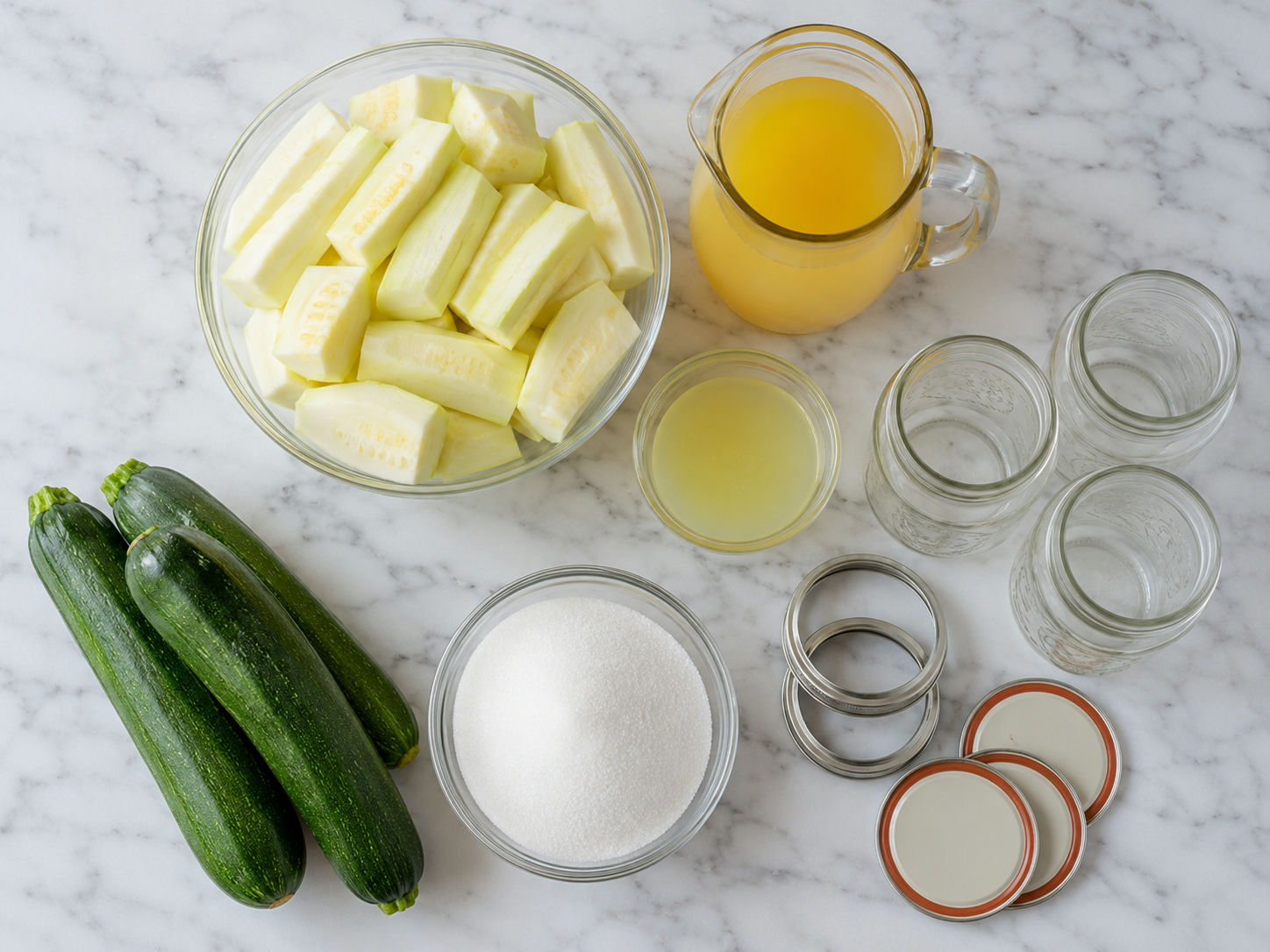
- Zucchini. The quiet base of the recipe. Once peeled, seeded, and simmered, it becomes tender and takes on the pineapple flavor.
- Unsweetened pineapple juice. Gives the zucchini its tropical taste and golden syrup.
- Bottled lemon juice. Adds reliable acidity for a tested canning recipe. Fresh lemon juice is not consistent enough here.
- Granulated sugar. Rounds out the sharp juice and helps the finished mock pineapple taste like a dessert ingredient.
- Hot prepared jars. Clean pint jars hold the hot mixture and liquid with the right headspace.
How zucchini becomes pineapple
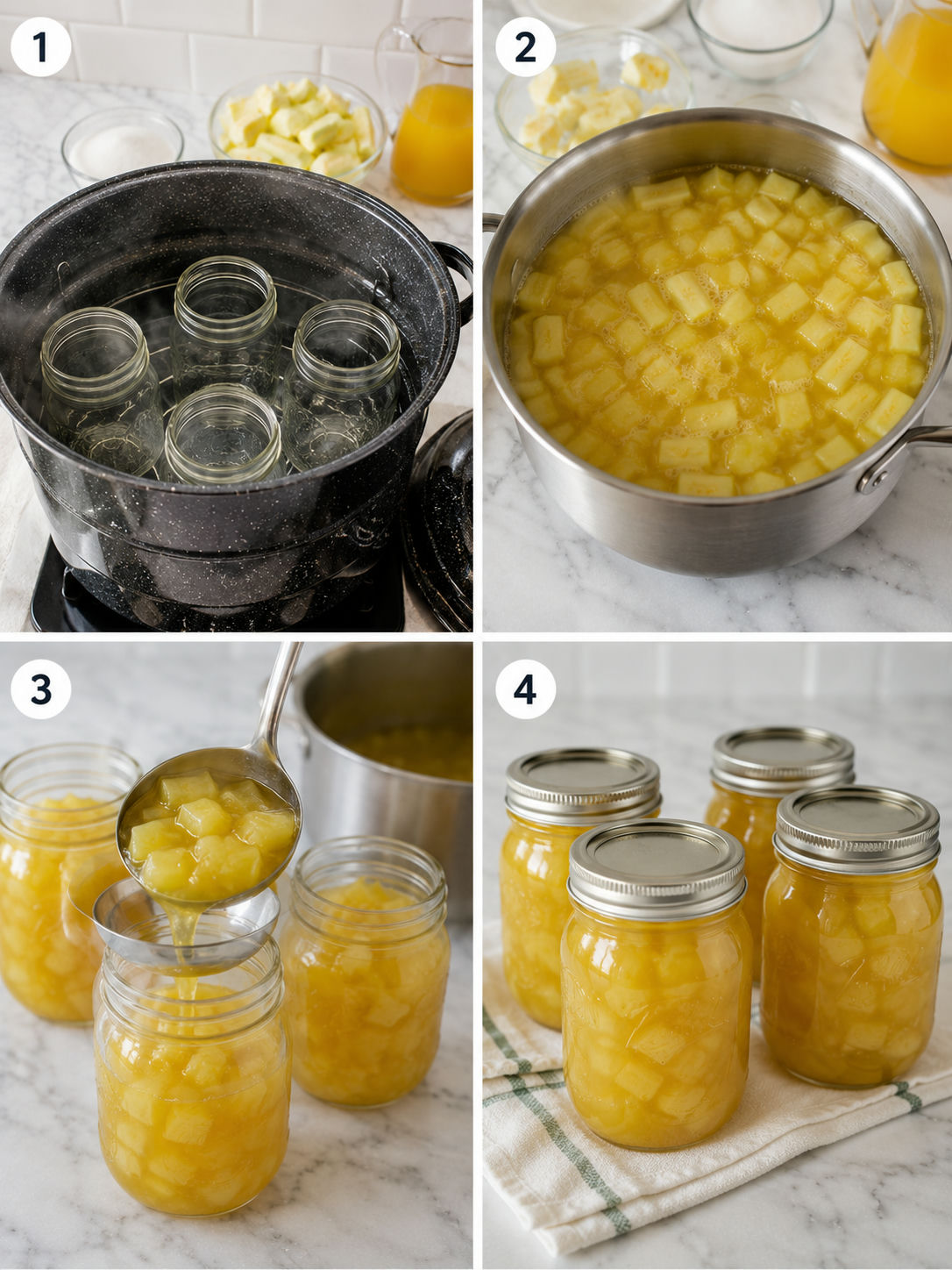
- Prepare the canner. Set up a boiling-water canner and warm clean half-pint or pint jars before the zucchini goes into the pot.
- Peel and cut. Wash the zucchini, peel it, and scrape out large seeds if needed. Cut it into 1/2-inch cubes for tidbits or shred it for a crushed-pineapple style.
- Simmer the mixture. Combine zucchini, pineapple juice, bottled lemon juice, and sugar in a large nonreactive pot. Bring it to a boil, then simmer uncovered for 20 minutes.
- Fill the jars. Ladle hot zucchini and cooking liquid into hot jars, leaving 1/2 inch headspace. Remove air bubbles and keep the solids covered with liquid.
- Process safely. Wipe rims, apply lids, and process in a boiling-water canner for 15 minutes at 0-1,000 feet. Increase the time to 20 minutes at 1,001-6,000 feet and 25 minutes above 6,000 feet.
- Cool and check. Let jars cool undisturbed for 12-24 hours. Check seals, label the jars, and store sealed jars in a cool dark place.
1980s zucchini pineapple method
This recipe came out of a very practical era of home preserving. Garden zucchini was cheap, huge, and everywhere, while pineapple still felt special in cakes and potluck salads. The current tested version is listed by the National Center for Home Food Preservation, with clear proportions and altitude processing times.
The trick is not magic. Zucchini has a gentle flavor and a soft, wet texture once cooked. Peel away the green skin, add enough fruit juice and acid, and it starts behaving like canned fruit in recipes. It is especially good in old-fashioned bakes like pineapple pound cake or a quick loaf where the fruit is folded into batter.
Cube or shred it
Cubes are best when you want pineapple tidbits. They hold their shape in fruit salad, glaze, and chunky dessert fillings. Cut them evenly so each piece cooks at the same pace. If the zucchini is very seedy, scrape the center out first. Those cottony seeds do not improve with cooking.
Shredded zucchini is the better choice for baking. It acts like crushed pineapple and disappears into batter. Try it in a cake similar to Hawaiian carrot pineapple cake, or spoon it into a no-bake filling when you want pineapple flavor without opening a can of fruit. If you already make cheesy zucchini breadsticks, this is another useful way to handle the same garden overload.
What not to change
The sugar can be adjusted for taste, but the acid should stay put. The Healthy Canning history and notes point back to tested extension and USDA-style versions, and the safety conversation is the whole reason modern recipes include processing times. Do not use fresh lemon juice for a shelf-stable batch. Do not skip the boiling-water canner. Do not pack plain zucchini into pineapple juice and call it close enough.
If you only want refrigerator mock pineapple, you have more flexibility. Cook it, cool it, and keep it chilled. For jars that sit in the pantry, boring precision is the point.
Best ways to use it
Treat zucchini pineapple as an ingredient rather than a snack cup. It shines in quick breads, muffins, cakes, gelatin salads, dessert fluff, and cooked glazes. Spoon off a little syrup if your batter already looks loose. Save that syrup for brushing onto warm cake or stirring into sparkling water.
It also fits the same sweet-tangy lane as pineapple bliss bars and no bake pineapple pie. If a recipe calls for drained crushed pineapple, drain this the same way. If it calls for pineapple in juice, use both the zucchini fruit and some of the syrup.
Storage and jar checks
Let processed jars sit where they will not be bumped. The next day, remove the rings and check that each lid is sealed. Any jar that did not seal should go into the fridge and be used within a week. Sealed jars keep best in a cool, dark cabinet.
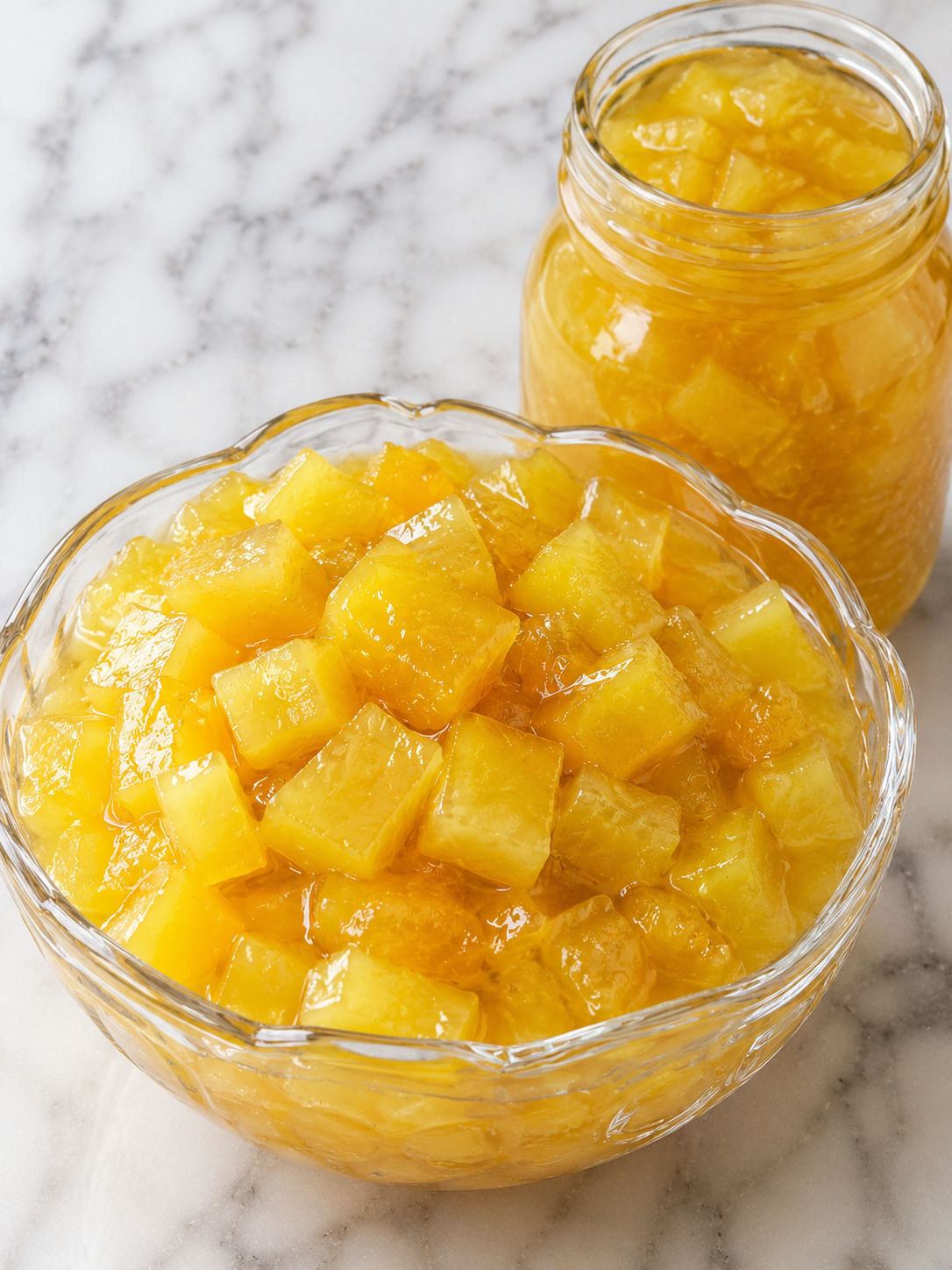
Before using a jar months later, look and smell. Discard anything with a failed seal, leakage, bubbling, mold, or an off odor. Good jars should look golden, glossy, and clear, with tender zucchini pieces suspended in pineapple syrup.
Conclusion
Use this mock pineapple anywhere you would use canned crushed pineapple in baking or chilled desserts. Keep the lemon juice amount intact for canning safety.
Frequently Asked Questions
- What is zucchini pineapple?
Zucchini pineapple, often called mock pineapple or faux pineapple, is peeled zucchini simmered with pineapple juice, bottled lemon juice, and sugar. The zucchini soaks up the fruit flavor and becomes useful anywhere you would normally use canned crushed or chunk pineapple.
- Does it really taste like pineapple?
It tastes most like pineapple when used in baking, fruit salads, and desserts where texture matters as much as flavor. Straight from the jar, you may notice the zucchini softness, but in cake, bars, or quick bread it is surprisingly convincing.
- Can I reduce the bottled lemon juice?
No, not if you are canning it for shelf storage. The tested recipe depends on the acid from pineapple juice and bottled lemon juice, so keep those amounts the same and adjust only the sugar if you want it less sweet.
- Can I use shredded zucchini instead of cubes?
Yes. Shredded zucchini gives you a crushed-pineapple texture, while 1/2-inch cubes feel more like tidbits. Peel the zucchini either way so the finished jars stay golden instead of green-gray.
- How long does canned zucchini pineapple last?
Properly processed jars with good seals are best used within one year for flavor and texture. Once opened, refrigerate the jar and use it within a week.
- Can I freeze it instead of canning?
Yes, freezing is a practical option if you do not want to process jars. Simmer the mixture, cool it, pack it into freezer-safe containers with headspace, and freeze for up to 6 months.
- What should I make with zucchini pineapple?
Use it in pineapple quick bread, carrot cake, dump cake, gelatin salad, baked ham glaze, or a chilled fluff dessert. It also works in recipes like pineapple bars where the fruit is mixed into a sweet filling.
