
 Pin it
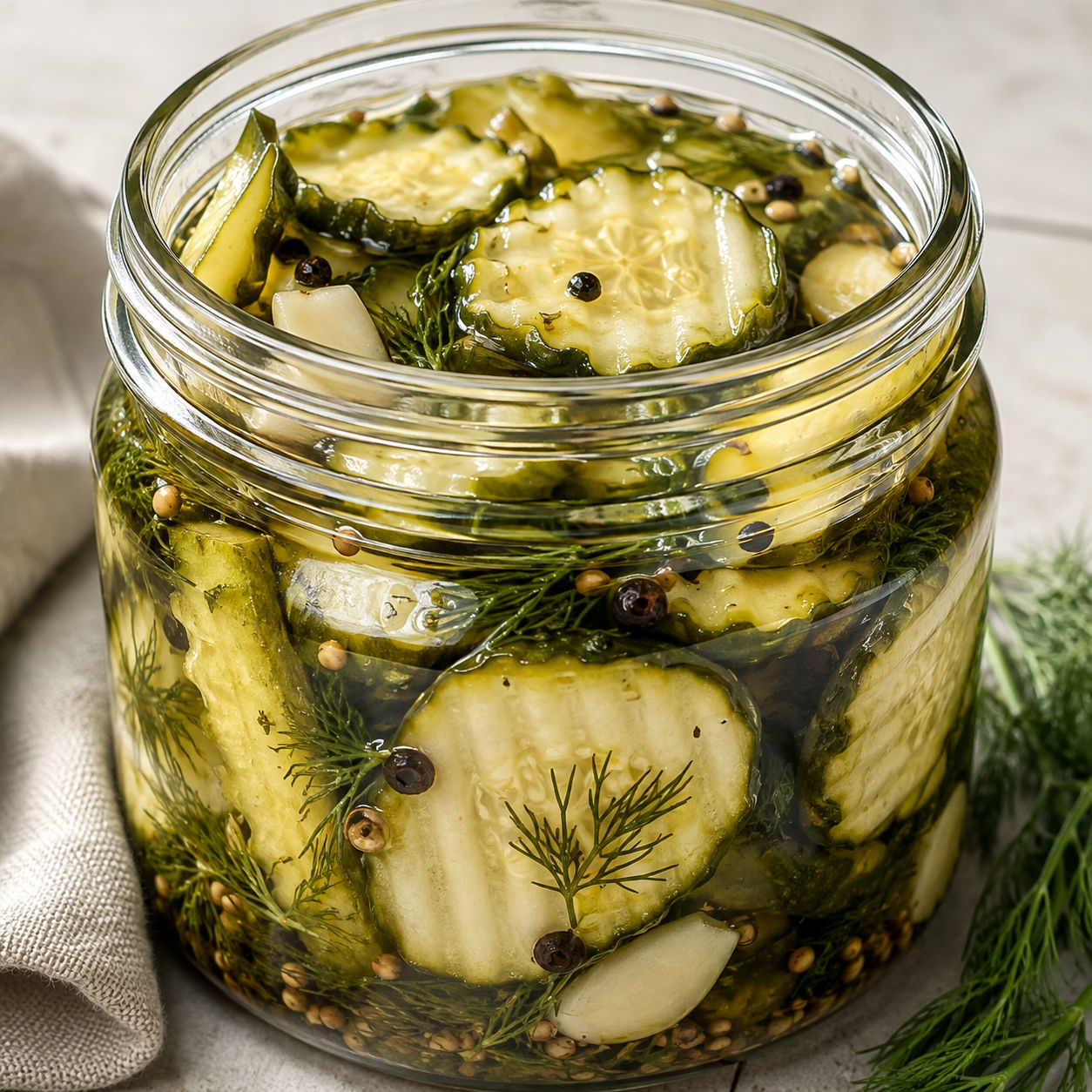
This Refrigerator Zucchini Pickles Recipe is what I make when the garden gives me more zucchini than dinner can handle. The slices turn snappy, tart, and garlicky after a night in the fridge.
There is no water bath canning here. You need clean jars, a small saucepan, and a brine strong enough to wake up mild zucchini without making it harsh.
A Crisp Garden Jar
Use zucchini that feels heavy and firm, with glossy skin and small seeds. Fresh dill and real garlic matter here because the brine is simple and the squash soaks up flavor quickly.
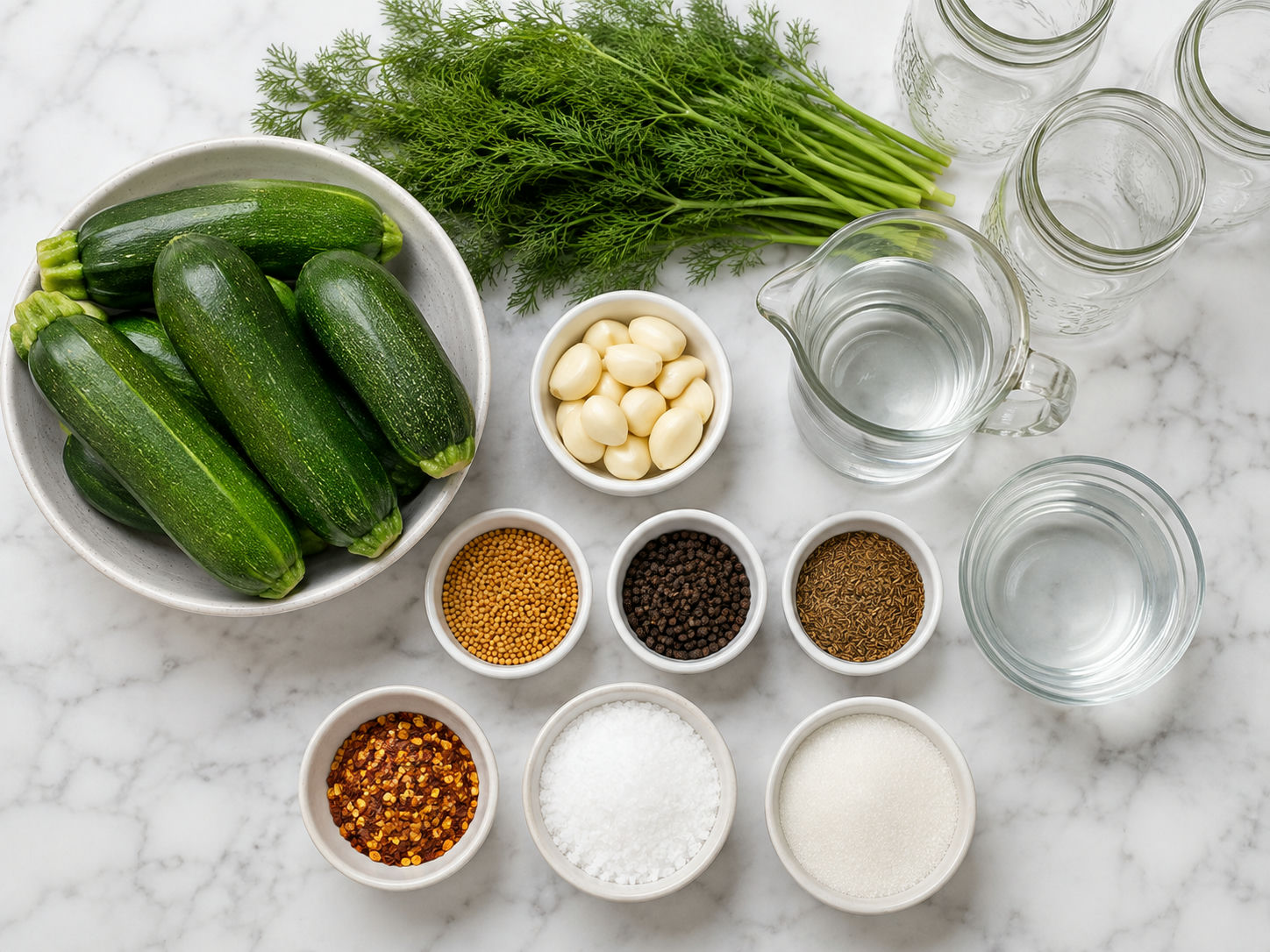
- Zucchini. Mild, tender squash that turns into crisp pickle chips or spears after chilling.
- Fresh dill. Gives the jars that clean pickle-shop smell as soon as you open the lid.
- Garlic. Adds a savory bite that keeps the brine from tasting flat.
- Mustard seeds. Bring gentle warmth and a classic pickle flavor.
- Black peppercorns. Add a dry, peppery finish without clouding the brine.
- Dill seed. Backs up the fresh dill and keeps the flavor bold after a few days.
- Distilled white vinegar. Makes a bright, clean brine with sharp pickle tang.
- Kosher salt. Seasons the zucchini and helps the texture stay lively.
- Sugar. Softens the vinegar edge without making these sweet pickles.
- Red pepper flakes. Add optional heat that blooms as the jars sit.
Pack, Pour, Chill
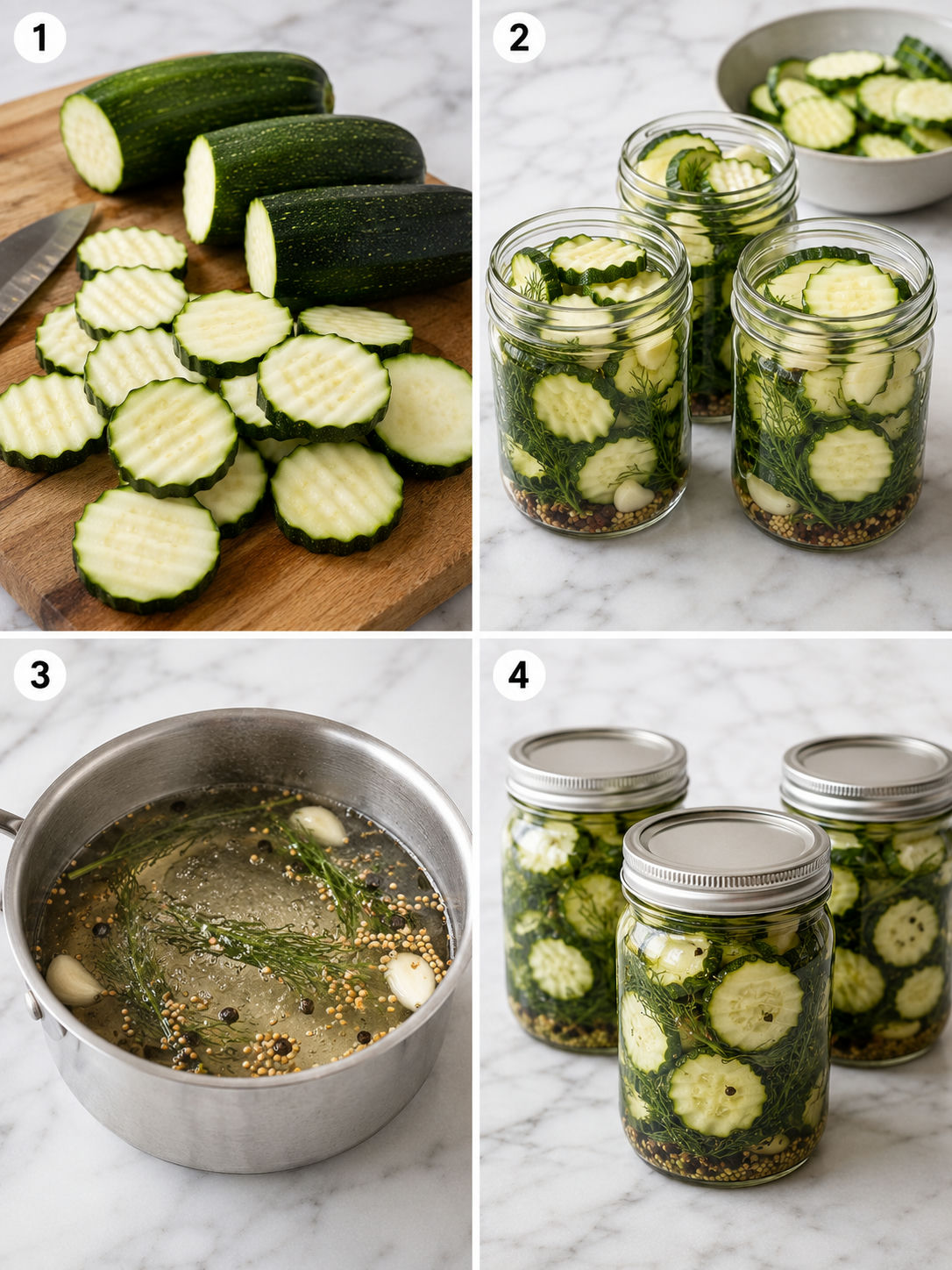
- Prep the zucchini. Wash and trim the squash, then cut it into 1/4-inch chips or sturdy spears so the pieces keep some crunch.
- Load the jars. Divide the garlic, dill, mustard seeds, peppercorns, dill seed, and red pepper flakes between three clean pint jars, then pack in the zucchini without crushing it.
- Make the brine. Bring vinegar, water, salt, and sugar to a simmer, stirring until the salt and sugar dissolve.
- Fill carefully. Pour the hot brine over the zucchini until covered, leaving about 1/2 inch of headspace. Tap the jars gently to release air pockets.
- Cool and refrigerate. Let the jars cool on the counter for about 30 minutes, then tighten the lids and refrigerate for at least 24 hours.
Refrigerator Zucchini Pickles Recipe
Zucchini takes on brine faster than cucumbers because the flesh is soft and porous. That is helpful, but it also means thin slices can go limp. I like chips around 1/4 inch thick for sandwiches and sturdy spears for snacking straight from the jar.
Do not pack the jars like you are stuffing laundry into a suitcase. Leave enough room for the brine to move around every piece. The pickles taste best when the dill, garlic, and seeds are spread through the jar instead of trapped at the bottom.
The Brine Should Bite
A balanced refrigerator pickle brine should taste too sharp by itself. Once it moves into the zucchini, the flavor softens. Distilled white vinegar keeps the color bright, and many quick pickle recipes call for 5 percent acidity vinegar for reliable tang, as noted in this refrigerator zucchini pickle guide.
Use kosher salt or pickling salt if you have it. Iodized table salt can make brines look cloudy, and the fine grains make it easier to oversalt. The sugar here is not meant to make bread-and-butter pickles. It just rounds off the vinegar enough that you want another bite.
A Crunchier Optional Soak
If your zucchini is very fresh, you can skip a pre-soak. If it is a little tired or you want extra snap, salt the cut zucchini for 20 minutes, rinse it well, then cover it with ice water for 30 minutes before packing. Martha Stewart's zucchini dill pickle method uses salting and ice water to help keep the pieces crisp.
Dry the zucchini after soaking so you do not water down the jar. This small step is worth it for spears, especially if you plan to serve them on a snack tray with crunchy cornmeal fried pickles and other salty bites.
How I Serve Them
These pickles are sharp, so they love rich food. Layer them onto crispy hot honey chicken sliders, tuck them beside grilled sausage, or chop them into egg salad. A spoonful of diced zucchini pickles also wakes up tuna, potato salad, and creamy dips.
For a zucchini-heavy summer table, serve the jars cold next to cheesy zucchini breadsticks or easy crispy air fryer zucchini. The pickles bring the acid those cheesy and fried sides need.
Fridge Life And Leftover Brine
Keep the jars cold and use a clean fork every time. The pickles are best in the first 2 weeks, though they often hold nicely for up to 3 weeks if the zucchini stays covered by brine. If the jar smells yeasty, looks fizzy, or the texture turns slimy, throw it out.
Leftover brine is useful, but do not reuse it for another full batch of pickles. Splash a little into vinaigrette, spoon it over sliced onions for a quick garnish, or whisk it with olive oil for a bright marinade.
Conclusion
These quick zucchini pickles are bright, crunchy, and useful on sandwiches, snack boards, burgers, and fried foods.
Frequently Asked Questions
- Can I make refrigerator zucchini pickles without canning?
Yes. These are quick refrigerator pickles, so the jars are chilled instead of processed for shelf storage. Keep them refrigerated the whole time and do not store them in the pantry.
- How long before zucchini pickles are ready?
They taste good after 24 hours. For a stronger dill and garlic flavor, wait 48 hours before opening the first jar.
- Can I use large zucchini?
Small and medium zucchini stay firmer, but large zucchini can work. Scoop out the seedy center first, then cut the firm outside flesh into spears or thick chips.
- Can I use apple cider vinegar instead of white vinegar?
Yes, as long as the vinegar is 5 percent acidity. Apple cider vinegar gives the brine a rounder, fruitier taste and a slightly darker color.
- Why are my zucchini pickles soft?
The zucchini may have been overripe, sliced too thin, or packed while the brine was still boiling hot for too long on the counter. Use firm squash, cut 1/4-inch chips, and move the cooled jars to the fridge promptly.
- What do zucchini pickles go with?
They are sharp enough for burgers, grilled cheese, pulled chicken, tuna salad, and snack boards. They are also good beside rich fried foods because the vinegar cuts through the oil.
