
 Pin it
Slow cooker Reuben casserole brings the iconic sandwich right into your kitchen with far less fuss. It captures all the savory, tangy, and cheesy flavors of a classic Reuben but layered in a warm, comforting casserole. This dish is perfect for turning leftover corned beef into a cozy dinner that can feed the whole family with minimal effort.
I first made this casserole after a big St. Patrick’s Day dinner and loved how it gave the corned beef a delicious second life. Now, it’s become my go-to comfort food when I want something easy but full of flavor.
Ingredients
- Cooked corned beef: a great way to use leftovers or buy pre-cooked for convenience
- Rye bread: toasted for texture and its signature flavor that complements the corned beef
- Sauerkraut: rinsed and well-drained so it adds tang without making the dish soggy
- Thousand Island or Russian dressing: adds creamy, zesty moisture that ties all the flavors together
- Swiss cheese: torn into pieces for melty creaminess that blankets the casserole beautifully
Step-by-Step Instructions
- Sauté the Layers:
- Spray your slow cooker generously with cooking spray so nothing sticks. Place the toasted rye bread pieces evenly on the bottom creating a sturdy base.
- Add the Corned Beef:
- Layer the cooked corned beef over the bread pieces making sure it covers as evenly as possible.
- Spread the Sauerkraut:
- Evenly distribute the sauerkraut on top of the meat being mindful to shake off extra moisture to keep the casserole hearty.
- Add the Dressing:
- Spread the thousand island or Russian dressing over the sauerkraut layer gently to avoid mixing the layers too much.
- Top with Cheese:
- Sprinkle torn Swiss cheese pieces all over the top so they melt into a golden, gooey crust.
- Cook:
- Set your slow cooker on LOW and let the casserole cook for two to three hours until it is hot throughout and the cheese is melted, bubbly, and inviting.
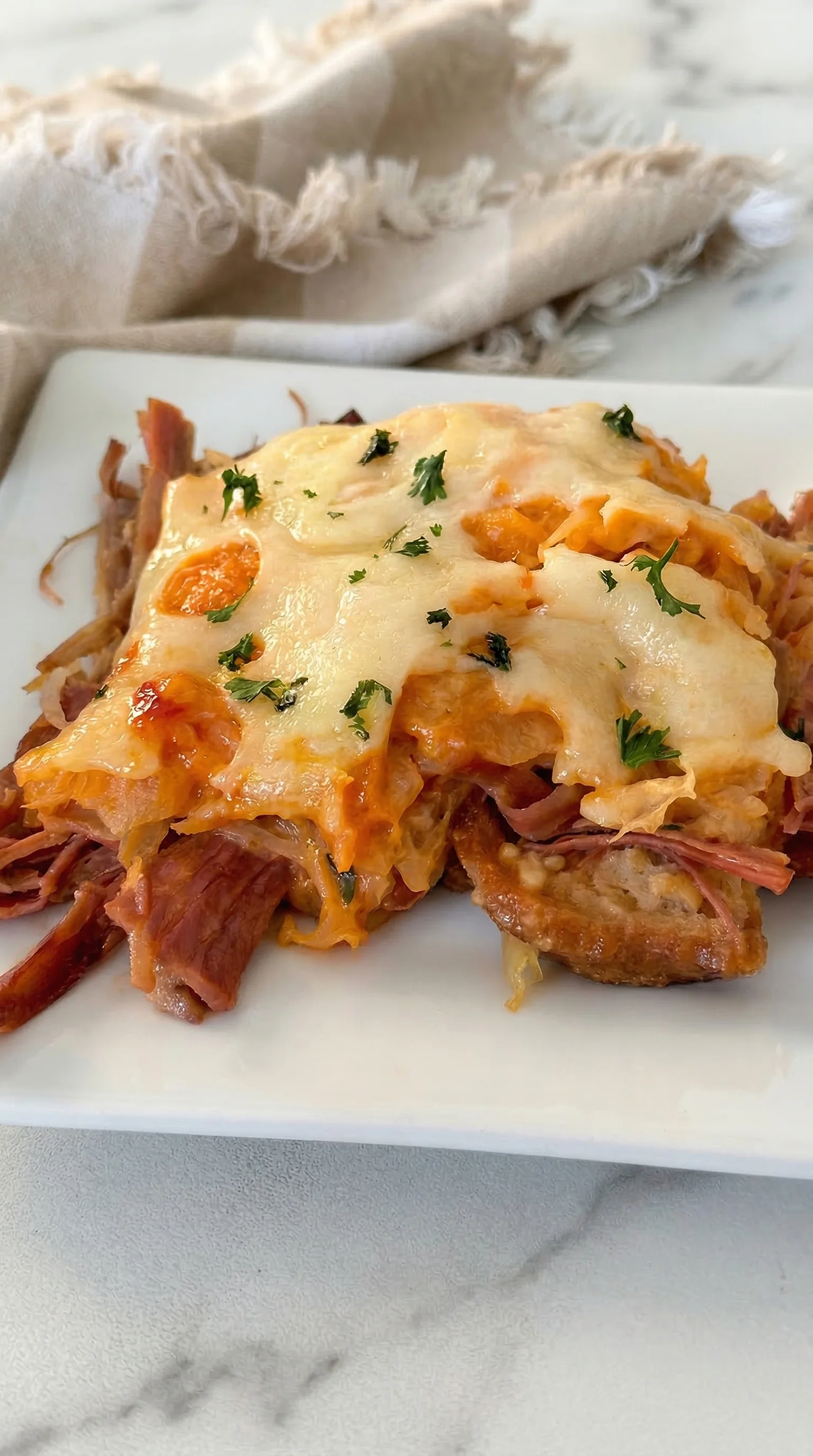
Swiss cheese is my favorite ingredient here because it melts so well and balances the tang of sauerkraut without overpowering it. I still remember my family gathered around the table after a Saint Patrick’s Day feast when this casserole made everyone forget about the usual sandwich form and fall in love with Reuben all over again.
Storage Tips
Store leftovers tightly covered in the refrigerator for up to three days. This casserole reheats best in the oven or a slow cooker on low to keep it tender and melty. Avoid microwaving for too long as it can dry out the bread layer.
Ingredient Substitutions
- Use pastrami or roast beef in place of corned beef for a slightly different twist
- Swap rye bread for pumpernickel if you prefer a sweeter bread flavor that still pairs well
- Thousand Island dressing can be replaced with a homemade mix of mayo ketchup and pickle relish for a fresher version
Serving Suggestions
- Serve with a crisp green salad or simple coleslaw to cut the richness
- A side of boiled new potatoes or a light vegetable soup rounds out the meal nicely
- Try some dill pickles on the side for that extra burst of classic deli flavor
Cultural Context
The Reuben sandwich has roots that trace back to Jewish and Irish American communities and has become a beloved staple in American delis. This casserole version embraces the traditional flavors but adapts them for slow cooking which is perfect for busy home cooks wanting to savor those flavors without the assembly hassle.

Frequently Asked Questions
- Can I use fresh corned beef for this dish?
Yes, cooked corned beef works best. Use leftover corned beef or cook fresh corned beef beforehand and shred it for layering.
- What kind of bread is recommended?
Toasted rye bread provides classic flavor and texture that complements the tangy sauerkraut and cheese.
- How long should it cook in the slow cooker?
Cook on low heat for 2 to 3 hours until the cheese melts and flavors blend fully.
- Can I substitute the dressing used in this dish?
Thousand Island or Russian dressing adds creaminess and tang; however, similar creamy dressings can be used based on preference.
- Is rinsing the sauerkraut necessary?
Rinsing and draining sauerkraut removes excess liquid, preventing the casserole from becoming too wet while retaining its signature tang.
