
 Pin it
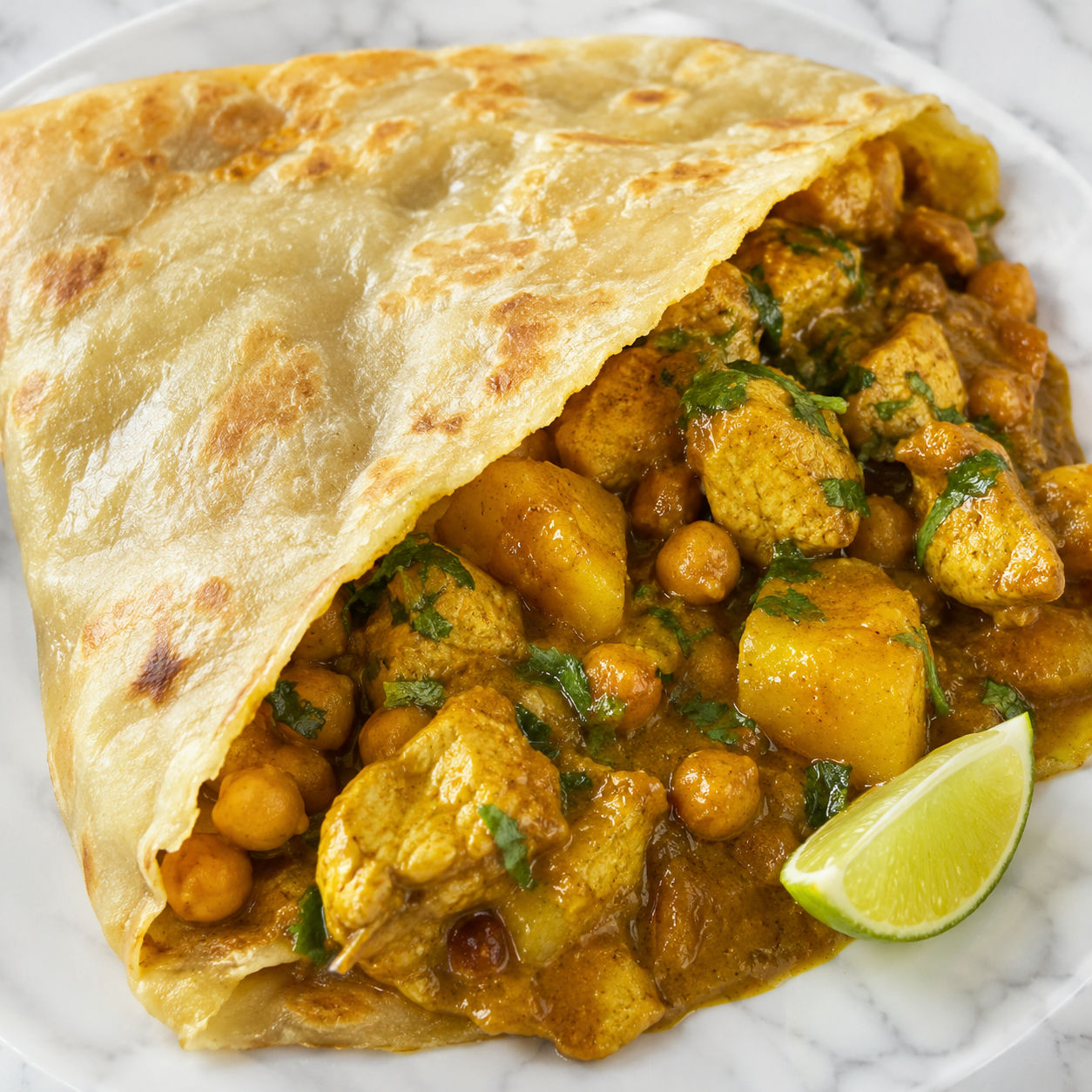
Trinidad Curry Chicken Roti with Potatoes is the kind of meal that makes the whole kitchen smell alive. The curry is earthy and warm, the potatoes soften into the sauce, and the roti catches every spoonful of gravy.
I like boneless chicken thighs here because they stay juicy and make the roti easy to eat by hand. The main trick is giving the curry powder time in the hot oil before the liquid goes in. That small step changes the whole pot.
Trinidad Curry Chicken Roti with Potatoes
The best pot starts with a quick green seasoning and a curry powder that smells fresh when you open it. Use waxy or yellow potatoes so the edges soften without turning the whole curry grainy.
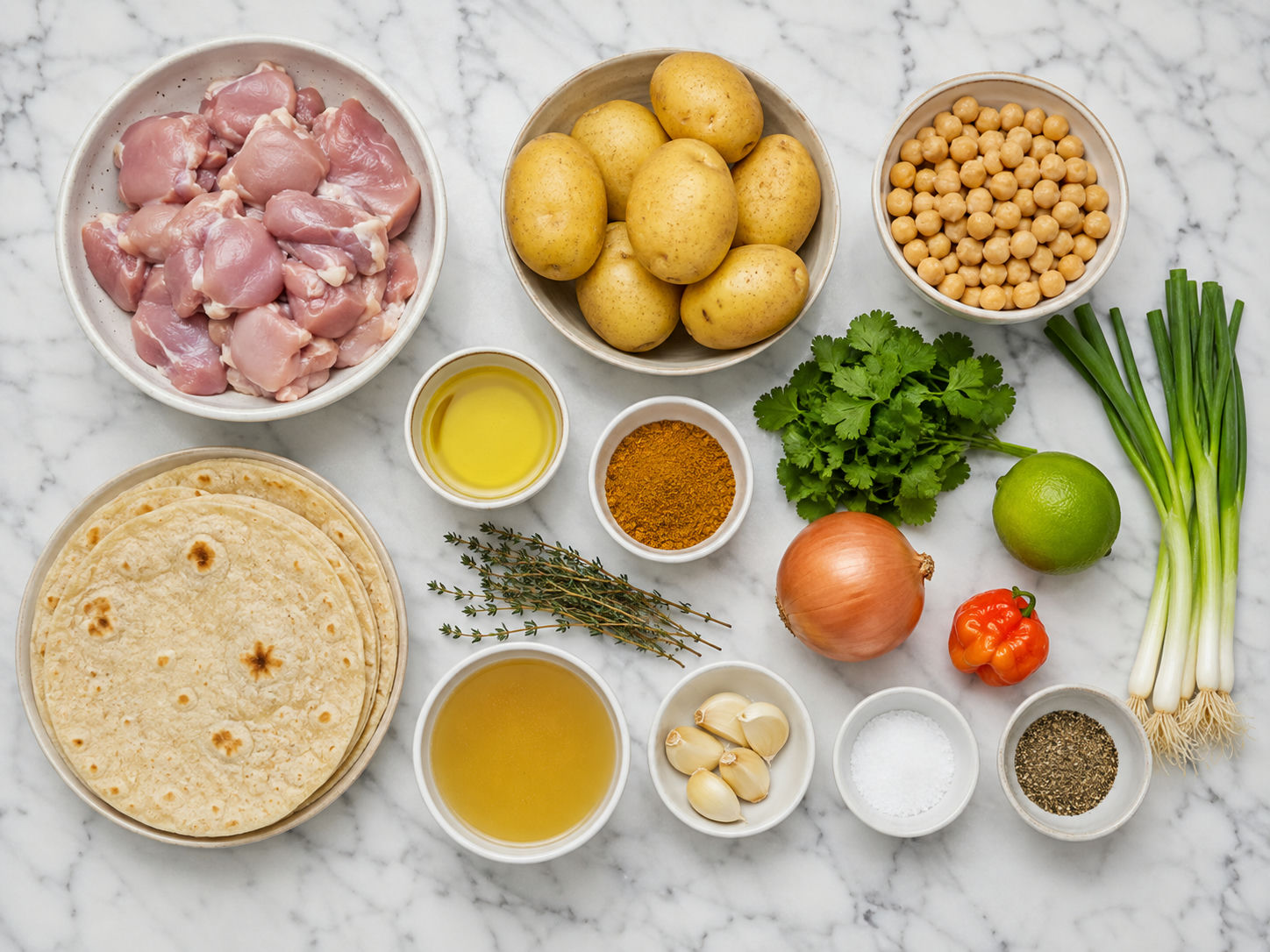
- Chicken thighs. Boneless thighs stay tender through the simmer and make the wrapped roti easier to eat.
- Trinidad-style curry powder. This gives the dish its deep color and warm, earthy backbone.
- Potatoes. They soak up curry gravy and help thicken the sauce as they cook.
- Chickpeas. They add body and make each roti feel generous without needing extra meat.
- Green seasoning. Cilantro, scallion, garlic, thyme, and lime season the chicken from the inside out.
- Onion and garlic. They sweeten in the oil and form the base of the curry gravy.
- Scotch bonnet pepper. Use it whole for fragrance or chopped for real heat.
- Dhal puri roti skins. Soft roti wraps the curry and holds the sauce when folded.
Build The Curry Properly
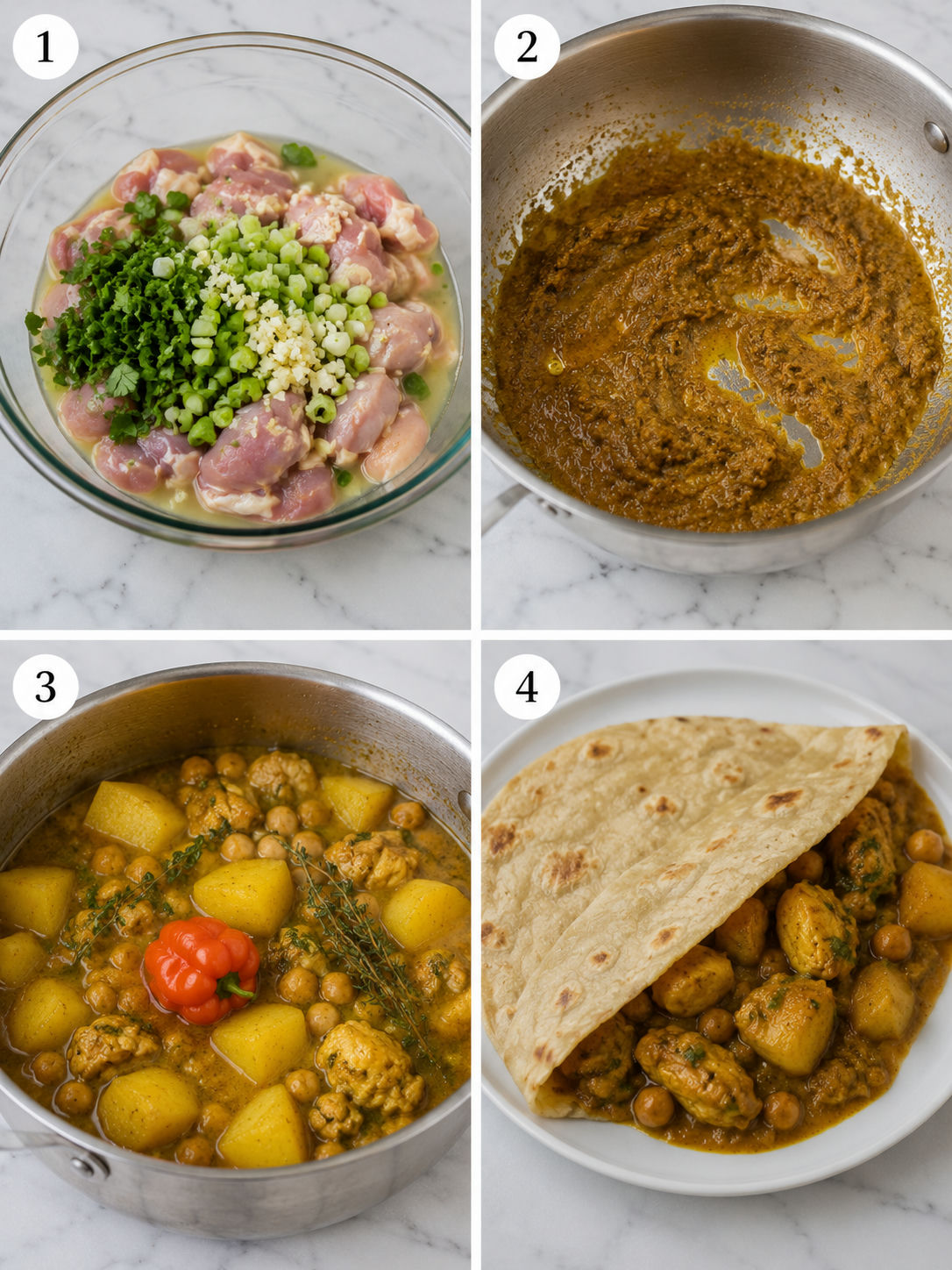
- Season the chicken. Toss chicken with lime juice, green seasoning, salt, black pepper, and a little curry powder. Rest it at least 30 minutes so the seasoning reaches the meat.
- Cook the curry paste. Stir curry powder with water, then fry it in oil with onion and garlic until darker and fragrant. Add small splashes of water if it sticks.
- Brown the chicken. Add the marinated chicken and stir until every piece is coated. Let some moisture cook off so the curry clings instead of tasting raw.
- Simmer with potatoes. Add potatoes, chickpeas, thyme, pepper, and stock. Simmer until the chicken is tender and the potatoes are soft.
- Thicken the gravy. Mash a few potato pieces against the pot and stir them back in. The sauce should coat a spoon but still flow.
- Fill the roti. Warm each roti skin, spoon curry into the center, add pepper sauce if you like, then fold the sides over into a firm packet.
Cook Out The Curry
Raw curry powder can taste dusty if it only gets stirred into liquid. Mix it with a little water first, then cook that paste in hot oil until it darkens and smells nutty. This is the move I learned from Trinidad-style curry methods like Roger Mooking's curry chicken roti. Keep the heat moderate and stir often. If the paste starts grabbing the bottom of the pot, add one tablespoon of water and keep going.
Keep The Filling Spoonable
A wrapped roti needs curry with body. Too much liquid runs out the folds, while a dry curry eats heavy. Potatoes help solve that. When they are tender, press two or three pieces against the side of the pot and stir them back into the gravy. Chickpeas do the same job and make the filling hearty. If you enjoy chicken and potato dinners, this has a warmer spice profile than One-Pan Chicken and Potatoes but the same comfort-food pull.
Heat Without Losing Flavor
Scotch bonnet brings fruitiness as much as fire. For gentle heat, pierce it once and simmer it whole, then remove it before serving. For a hotter curry, mince a small piece and cook it with the onion. Be careful with your hands and cutting board. A spoonful of mango chutney or cucumber on the side cools the bite without flattening the curry.
Make It Meal-Prep Friendly
The curry can be made two days ahead and stored separately from the roti. It thickens in the fridge, so loosen it with a splash of stock or water while reheating. FoodSafety.gov lists 165°F as the safe internal temperature for poultry, and leftovers should also be reheated to 165°F. You can check the safe temperature chart if you cook larger chicken pieces.
Serve It Trinidad Style
Warm dhal puri on a dry skillet until soft, then fill it while it is pliable. Fold left and right sides over the curry, then fold the top and bottom into a snug packet. Serve with pepper sauce, cucumber, or a cold drink. For another Trinidad-inspired dinner on the site, pair this with Trinidad Chicken Pelau Dish on a weekend table, or keep the potato theme going with Baked Feta Lemon Potatoes as a bright side for a crowd.
Conclusion
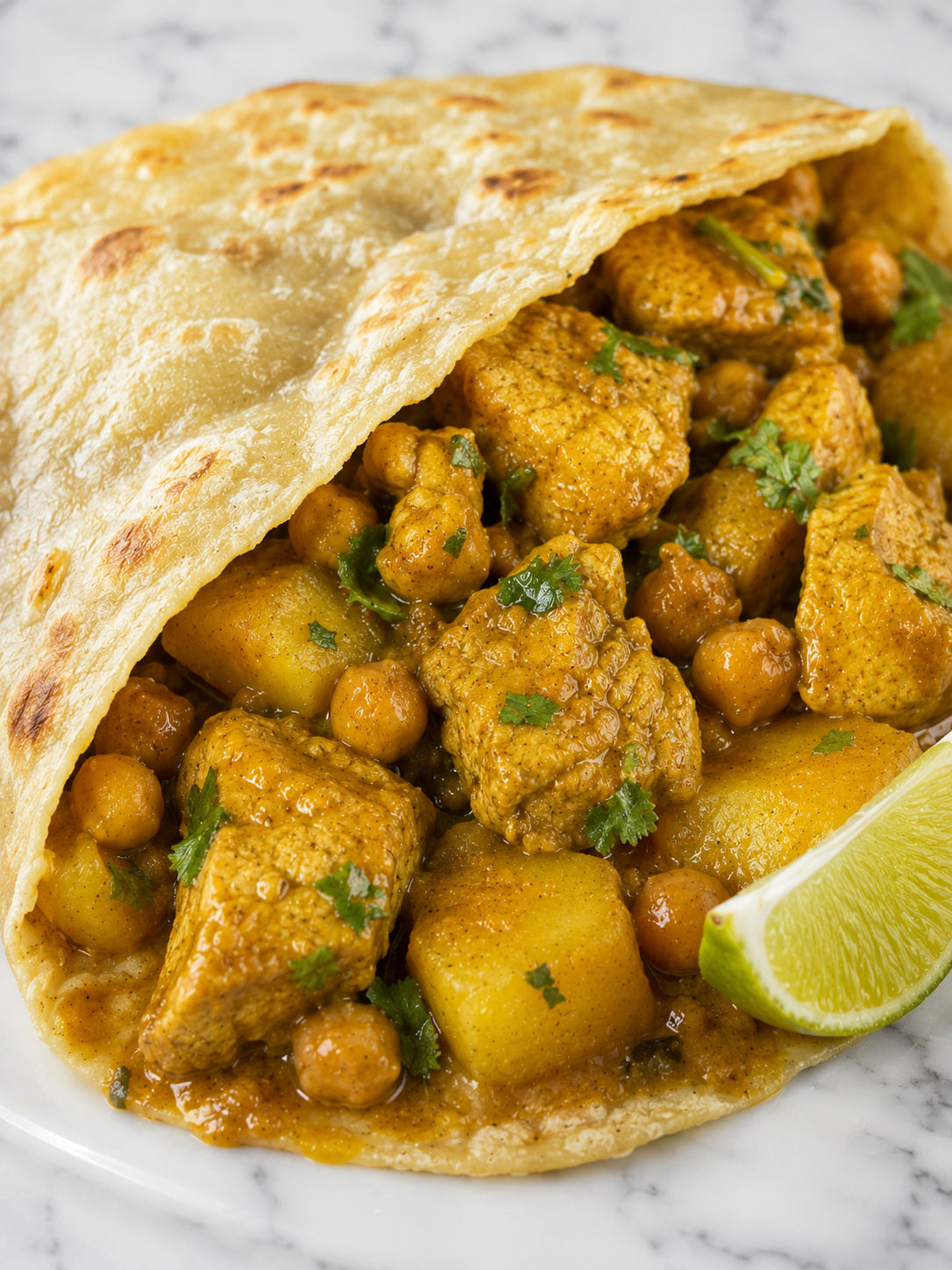
This curry chicken roti is hearty enough for dinner and practical enough to prep ahead. Keep the curry saucy, warm the roti right before serving, and fold each one around an even scoop of chicken, potatoes, chickpeas, and gravy.
Frequently Asked Questions
- What kind of roti should I use for Trinidad curry chicken roti?
Dhal puri roti is the classic choice because it is soft, sturdy, and filled with ground split peas. Paratha roti, often called buss up shut, also works well if you prefer flaky layers.
- Can I use chicken breast instead of thighs?
Yes, but thighs are more forgiving during the simmer. If using breast meat, cut it into larger pieces and check early so it does not dry out.
- Can I make the curry ahead?
Yes. The curry tastes even deeper the next day after the spices settle into the gravy. Reheat it gently with a splash of water or stock until loose and hot.
- How spicy is this recipe?
It has warmth from curry powder and black pepper, but the Scotch bonnet is optional. For mild roti, leave the pepper whole while simmering or skip it completely.
- How do I keep the roti from getting soggy?
Let the curry thicken before filling and use a slotted spoon if it looks too loose. Warm the roti just before folding so it stays flexible without turning wet.
- What can I serve with chicken roti?
It is filling on its own, but cucumber salad, mango chutney, pepper sauce, or a simple cabbage slaw are all good alongside it. Rice also works if you want to serve the curry bowl-style.
