
 Pin it
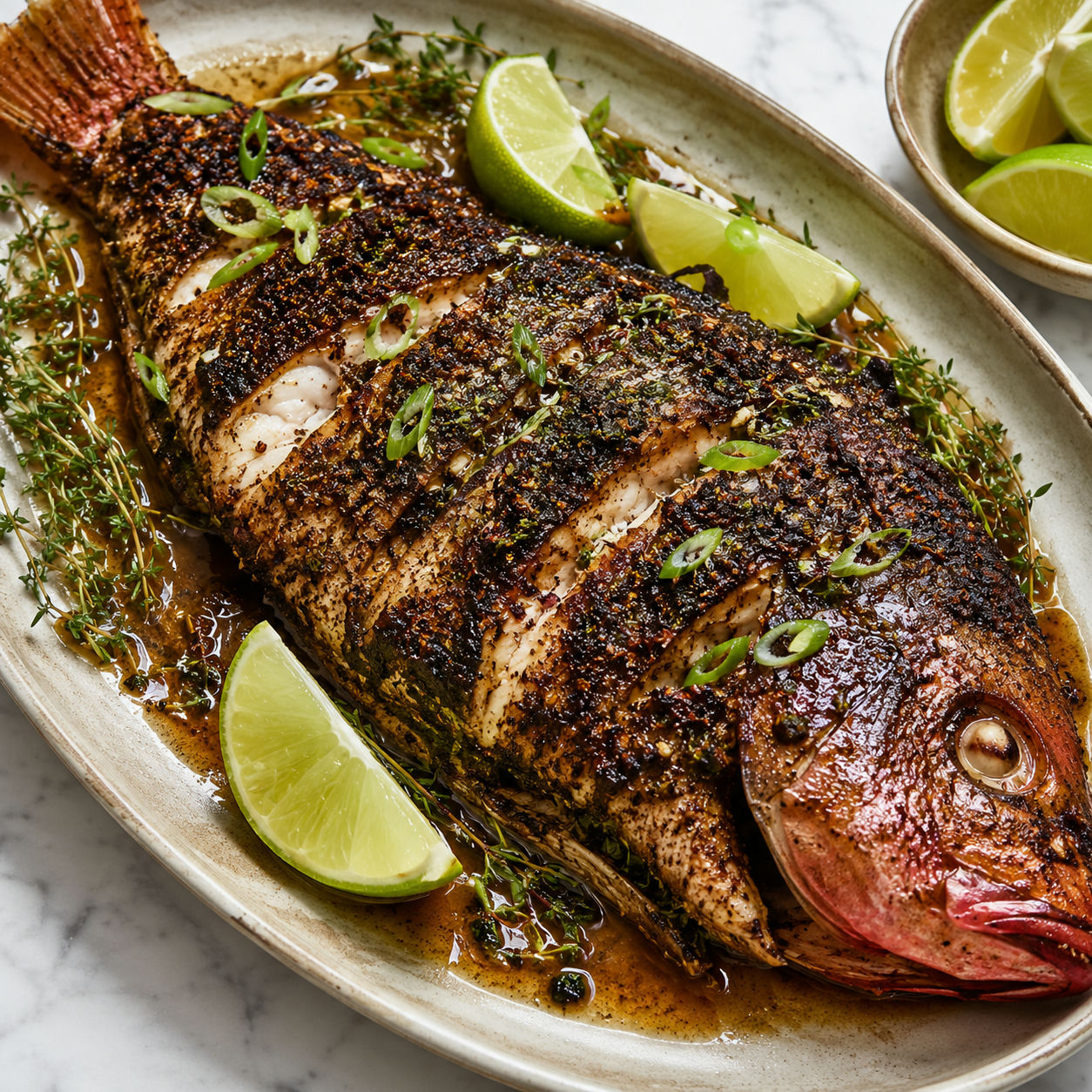
Whole Jamaican Jerk Fish with Lime is bold without being heavy. The fish stays sweet and flaky while the jerk paste turns deep, spicy, and fragrant around the scored skin.
I like this method because it gives you the feel of a grill-night dish even when you use the oven. Scotch bonnet brings heat, allspice brings that warm jerk backbone, and lime keeps the whole plate lively.
Whole Jamaican Jerk Fish Lineup
Start with a fish that smells clean and looks bright at the eyes and gills. Ask the fish counter to scale and gut it, then pat it very dry at home so the jerk paste grips the skin.
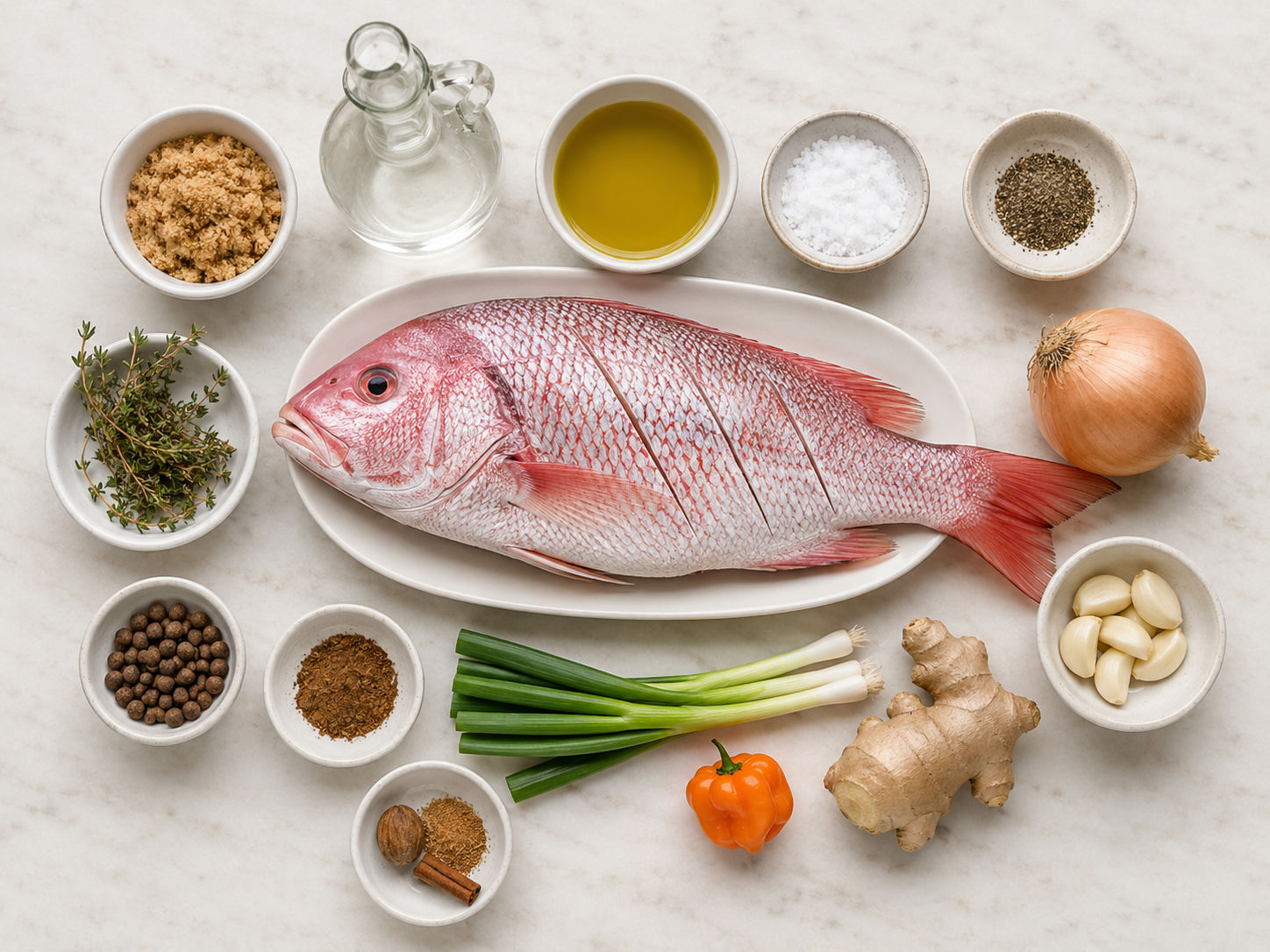
- Whole snapper. The bones protect the meat and keep the fish juicy while the skin chars at the edges.
- Lime. Brightens the marinade and gets squeezed over the hot fish right before serving.
- Scotch bonnet pepper. Gives jerk its fruity heat. Use gloves if your skin is sensitive.
- Scallions and thyme. Bring the green, savory flavor that makes the paste taste fresh.
- Allspice berries. Also called pimento, they add warm clove-like depth that belongs in jerk seasoning.
- Garlic and ginger. Build sharpness and aroma without needing a long marinade.
- Brown sugar. Helps the paste darken and cling without making the fish sweet.
- Vinegar and oil. Vinegar sharpens the paste while oil helps it spread into the scored cuts.
Score Season And Roast
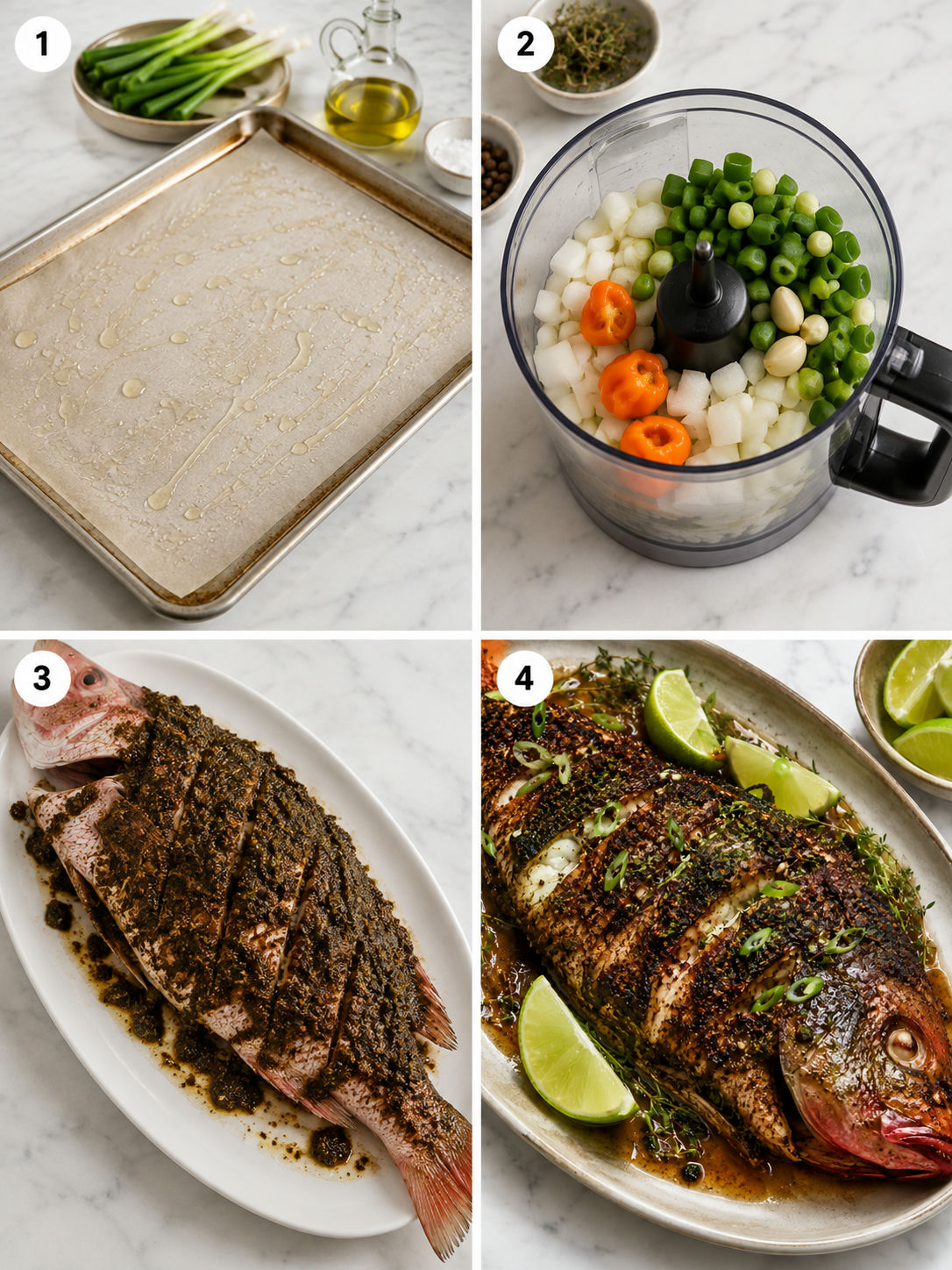
- Dry and score. Pat the fish dry inside and out, then cut three deep slashes on each side down toward the bone so the seasoning can reach the thick flesh.
- Blend the jerk paste. Pulse scallions, thyme, Scotch bonnet, garlic, ginger, allspice, lime juice, vinegar, oil, brown sugar, salt, pepper, cinnamon, and nutmeg into a rough green-brown paste.
- Rub every surface. Massage the paste over the fish, inside the belly, and into the slashes. Let it sit for 30 minutes, or up to 1 hour in the refrigerator.
- Roast hot. Place the fish on an oiled sheet pan and roast at 425°F for 20-25 minutes, depending on thickness.
- Finish with lime. Rest the fish for 5 minutes, then scatter sliced scallion over the top and squeeze fresh lime over the hot skin.
Why Scoring Matters
Whole fish cooks differently than fillets. The thick flesh near the head needs help taking on flavor, while the thinner tail can dry if the heat is too harsh. Scoring solves both problems. It opens channels for the jerk paste and gives you more seasoned edges.
Cut with a sharp knife at a slight angle. Stop when you feel the bone. Do not saw back and forth, because ragged cuts make the fish harder to lift cleanly. If you like the lime-garlic side of seafood, Thai lime garlic steamed fish is a gentler cousin to this recipe.
Heat Without Losing Flavor
Jerk should taste like more than heat. Visit Jamaica notes the key flavors behind jerk include pimento, thyme, scallion, onion, garlic, and Scotch bonnet. That balance matters here because fish is delicate.
If you want less fire, use one small Scotch bonnet with the seeds removed. If you want more, add a second pepper or brush the fish with extra paste halfway through roasting. Avoid swapping in plain hot sauce as the main seasoning. It gives heat, but not the warm, herbal depth that makes jerk taste like jerk.
Grill Or Oven Choices
The oven is steady and forgiving. A hot sheet pan gives the fish dark edges and keeps the flesh moist. If you grill, oil the grates well and use a fish basket if you have one. Cook over medium heat and turn the fish only once.
Traditional jerk is tied to smoke, pimento wood, and live fire, but a weeknight oven version can still be very good. The James Beard Foundation whole jerk fish method also uses a hot oven for a quick whole-fish cook. For another seafood dinner with a fuller broth, try Ligurian fish soup.
Serve It Bright
This fish wants something fresh on the plate. Lime wedges are not optional for me. The juice wakes up the allspice and cuts through the chile heat. Add rice and peas if you want a fuller dinner, or serve it with cabbage slaw and cucumber for crunch.
If you are building a seafood spread, this pairs naturally with Jamaican shrimp creamy pasta or air fryer fish tacos. Keep sauces simple. A little extra lime, chopped scallion, and pan juices are enough.
Leftovers Stay Useful
Whole fish is best right after cooking, when the skin is still tacky and the meat lifts in moist flakes. Leftovers are still worth saving. Pull the meat from the bones while it is cool enough to handle, then refrigerate it in a shallow airtight container.
FoodSafety.gov says most seafood should cook to 145°F for safe serving. For reheating, keep the heat low and add a spoonful of water so the fish warms without drying out. The flakes are also excellent cold over greens with avocado and a squeeze of lime.
Conclusion
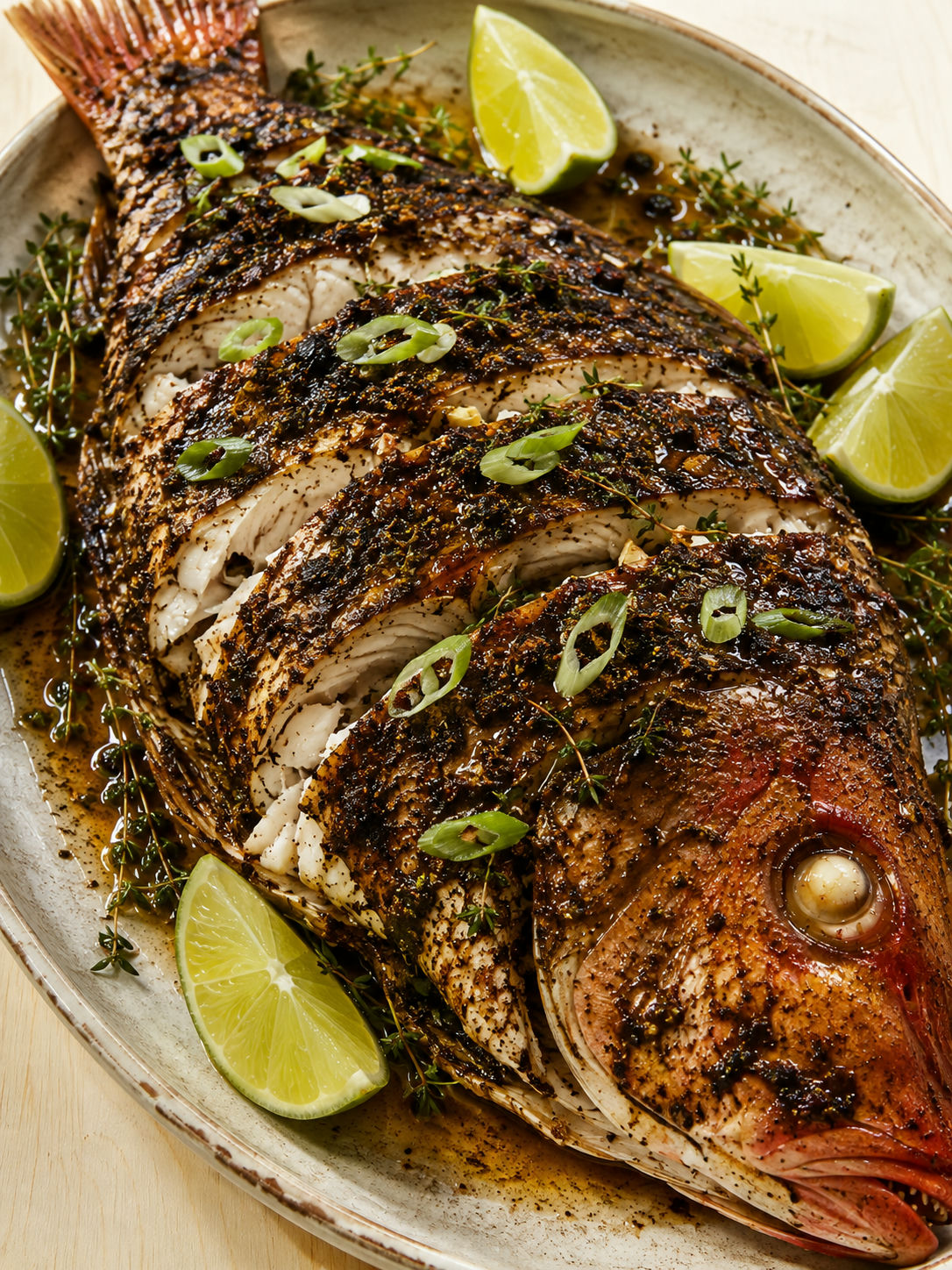
Serve the fish hot with lime wedges, rice and peas, grilled vegetables, or a crisp salad.
Frequently Asked Questions
- What fish is best for whole Jamaican jerk fish?
Red snapper is my first choice because it is firm, mild, and easy to score. Branzino, sea bream, porgy, or small grouper also work if they are cleaned and scaled.
- Can I use fish fillets instead of a whole fish?
Yes, but reduce the marinating time to about 15 minutes and roast or grill gently. Fillets cook faster and can break if you flip them too much.
- How spicy is this jerk fish?
It has a clear Scotch bonnet heat, but it should not bury the fish. For milder jerk, use half a pepper and remove the seeds. For hotter fish, use two peppers and keep some seeds.
- How do I know the whole fish is cooked?
The thickest part near the head should be opaque and should flake easily. For food safety, most seafood should reach 145°F, so use a thermometer if the fish is large.
- Can I make the jerk paste ahead?
Yes. Blend the marinade up to 3 days ahead and keep it covered in the refrigerator. Stir it before using because the oil and lime juice may separate.
- What should I serve with jerk fish?
Rice and peas, fried plantains, slaw, cucumber salad, or roasted sweet potatoes are all good. For a lighter plate, serve it with limey greens or the fresh flavors in shrimp avocado mango lime bowls.
- How should I store leftovers?
Pull the fish from the bones and refrigerate it in an airtight container for up to 2 days. Reheat gently in a covered skillet with a splash of water or tuck the cold flakes into tacos.
